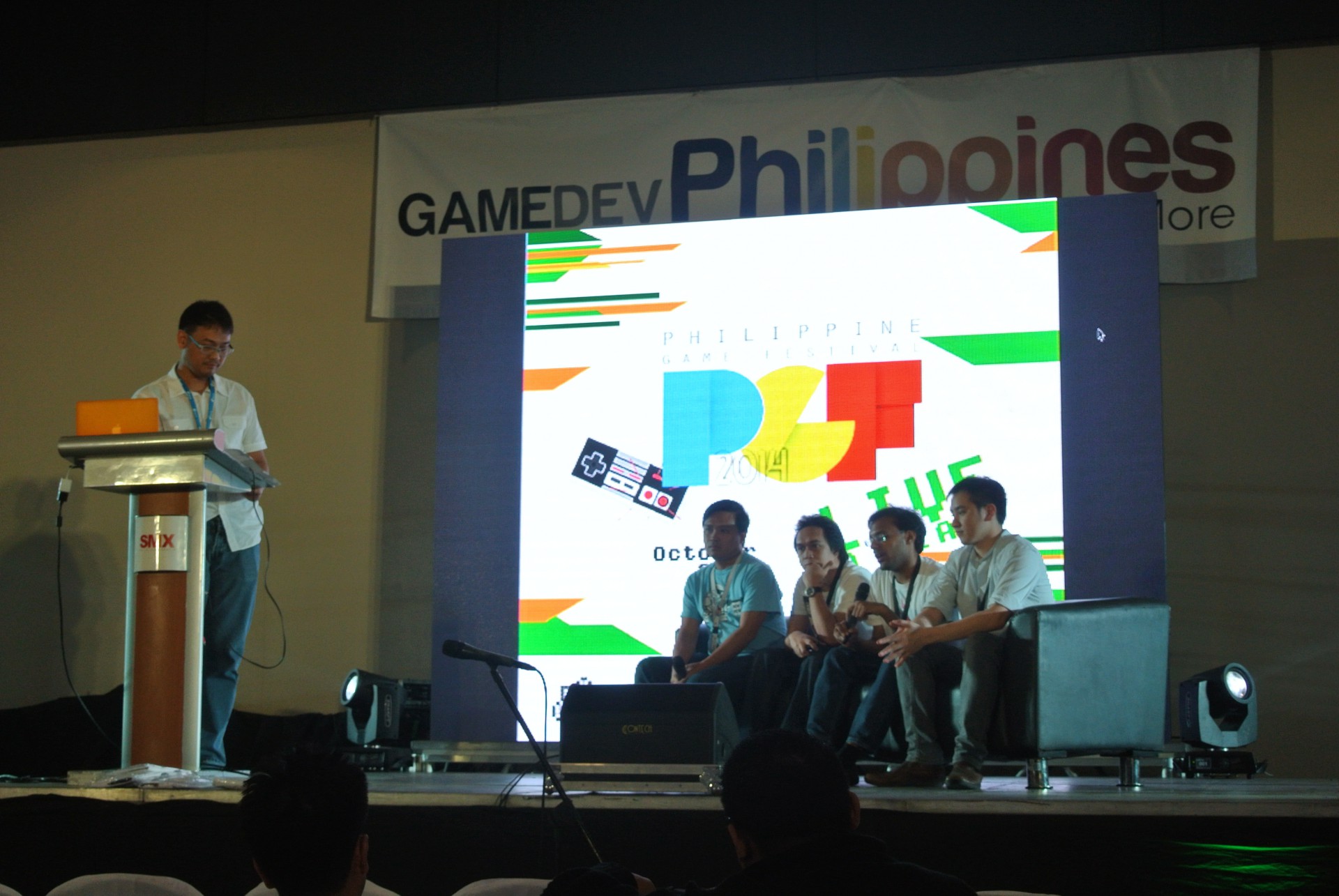
Philippine Gaming Festival 2014

8 10 2014

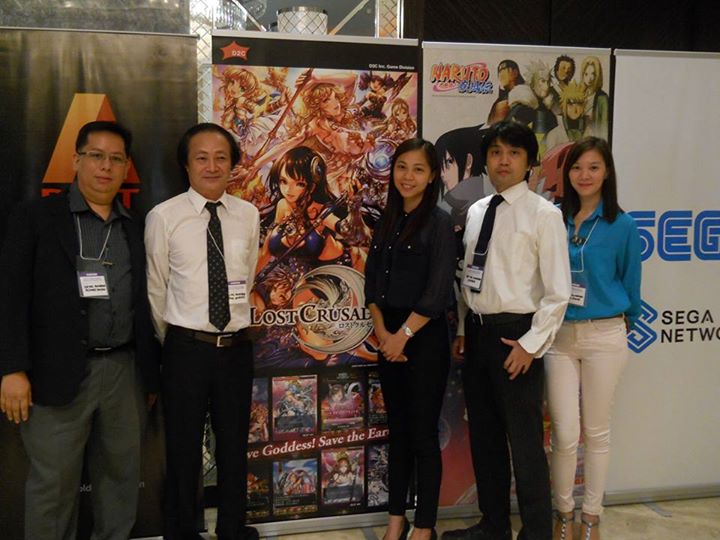
1601291_708372579239704_7027430394023944420_n

     I was kind of frustrated that Alstaire Sarthou was not able to attend any seminar on gaming due to his hectic schedule at the Tokyo Game Show. Before he left for Tokyo, he mentioned there was at least one seminar on September 21 that he could probably squeeze into his schedule so that we could learn more about gaming. But on the 21st, there were too many people at the entrance and he could not enter the venue, so he just left the site and visited his aunt somewhere in Tokyo and the next day he went back to Manila.

     Although Alstaire’s experience in Tokyo was a big help, it lacked the guidance of as to how are we going to proceed to develop our planned casual mobile game from hereon and avoid the many pitfalls we may encounter as a new indie game publisher. Five days after Alstaire arrived in Manila, Grace emailed me about a conference on gaming sponsored by the Game Developer’s Association of the Philippines (GDAP) to be held at the SMX Convention Hall on October 3 to 4, 2014. At first, I was hesitant to attend since I have some plans on the 4th and no one from Top Peg was attending, since all of them were busy. But after reviewing the topics and the number of speakers, I decided to pay for the 2 day conference within 2 days.

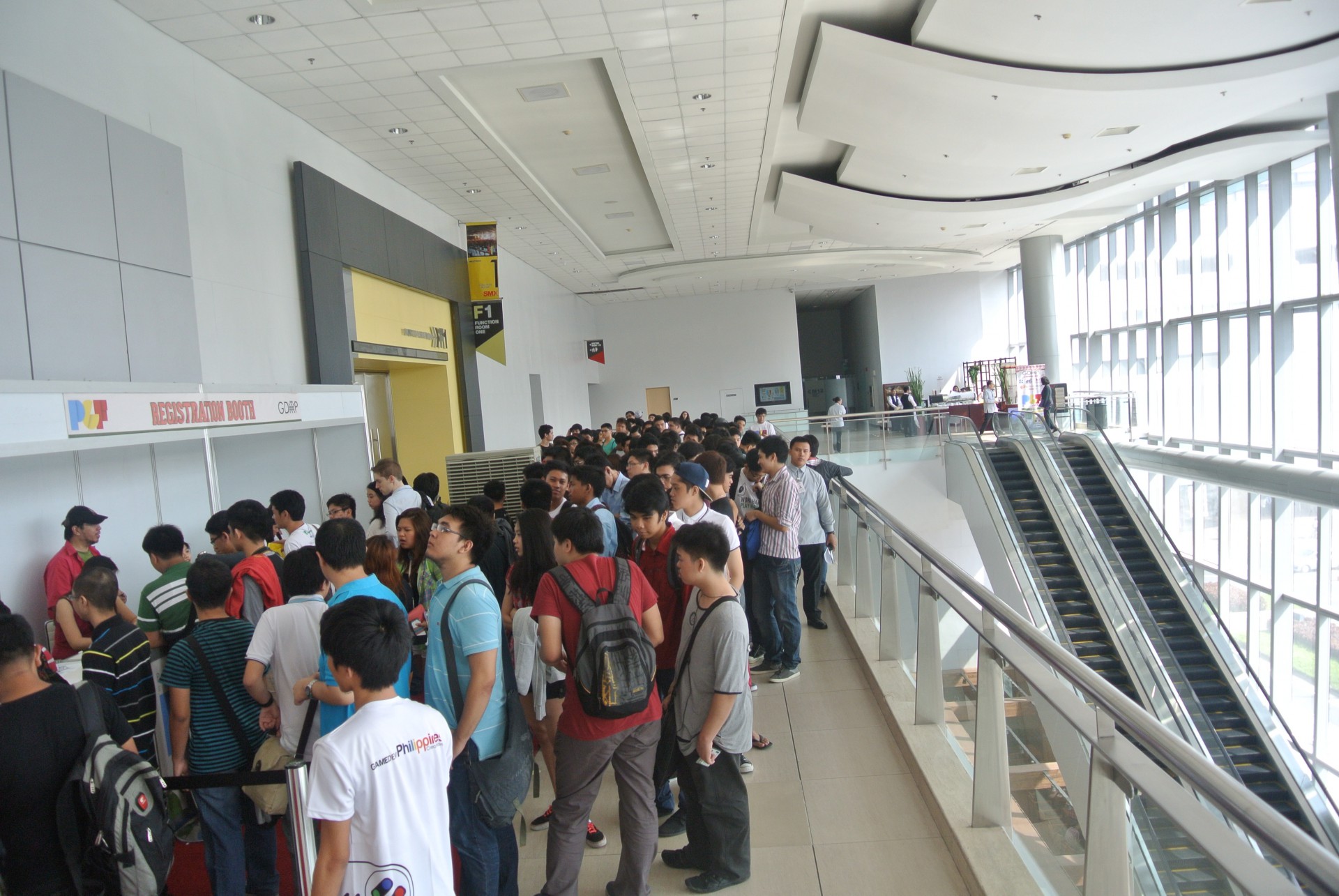
     At first I thought the conference was going to be a bummer, as the registration was still not prepared at 8 am when the announcement said that registration will start at 7 am, plus the personnel were kind of clueless also. To make the long story short, the conference started around 9:30 am and I thought  this may not end well after having a bad start.
DSC_6384

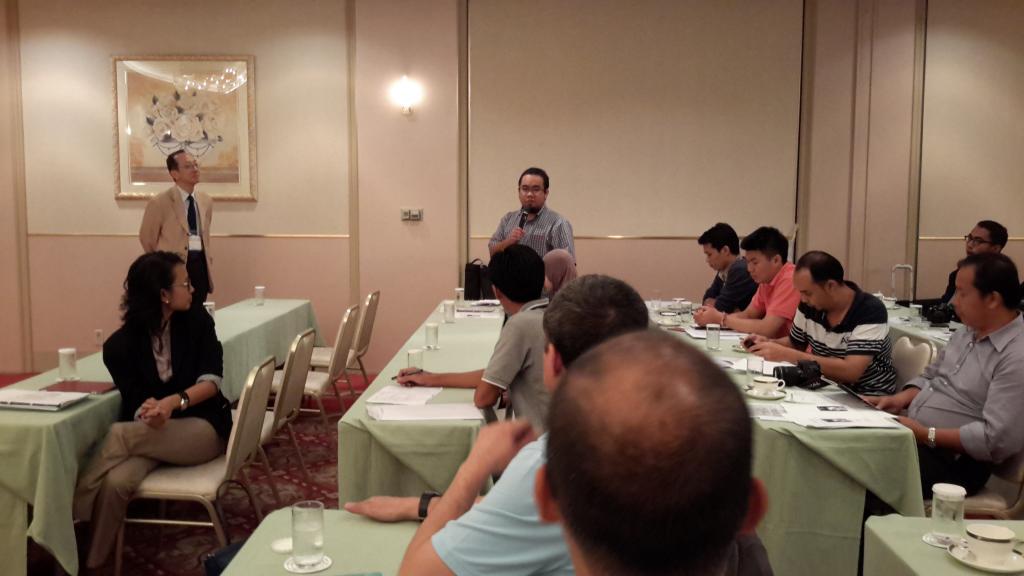
     My first impression quickly changed as the president of GDAP started talking about gaming in the introduction. The succeeding speakers were all competent, engaging  and had  interesting topics as well. I think that this was the best seminar that I attended in my life; the seminar fee was a real bargain (P3,500 for the first day and P300 for the second day) as one could never get this kind of information anywhere. Add another P200, then one can have access to to many other workshops about game development held in two other halls for two days, although I did not have time to attend the workshops anymore.

     I got a lot of practical insights and information before starting to develop a game. What the conference gave me was a reality check and some contacts with industry players. At least now we are better equipped to avoid major pitfalls and not expect too much as we are just going to develop a casual game as an extension to our property rather than making games as our main business.

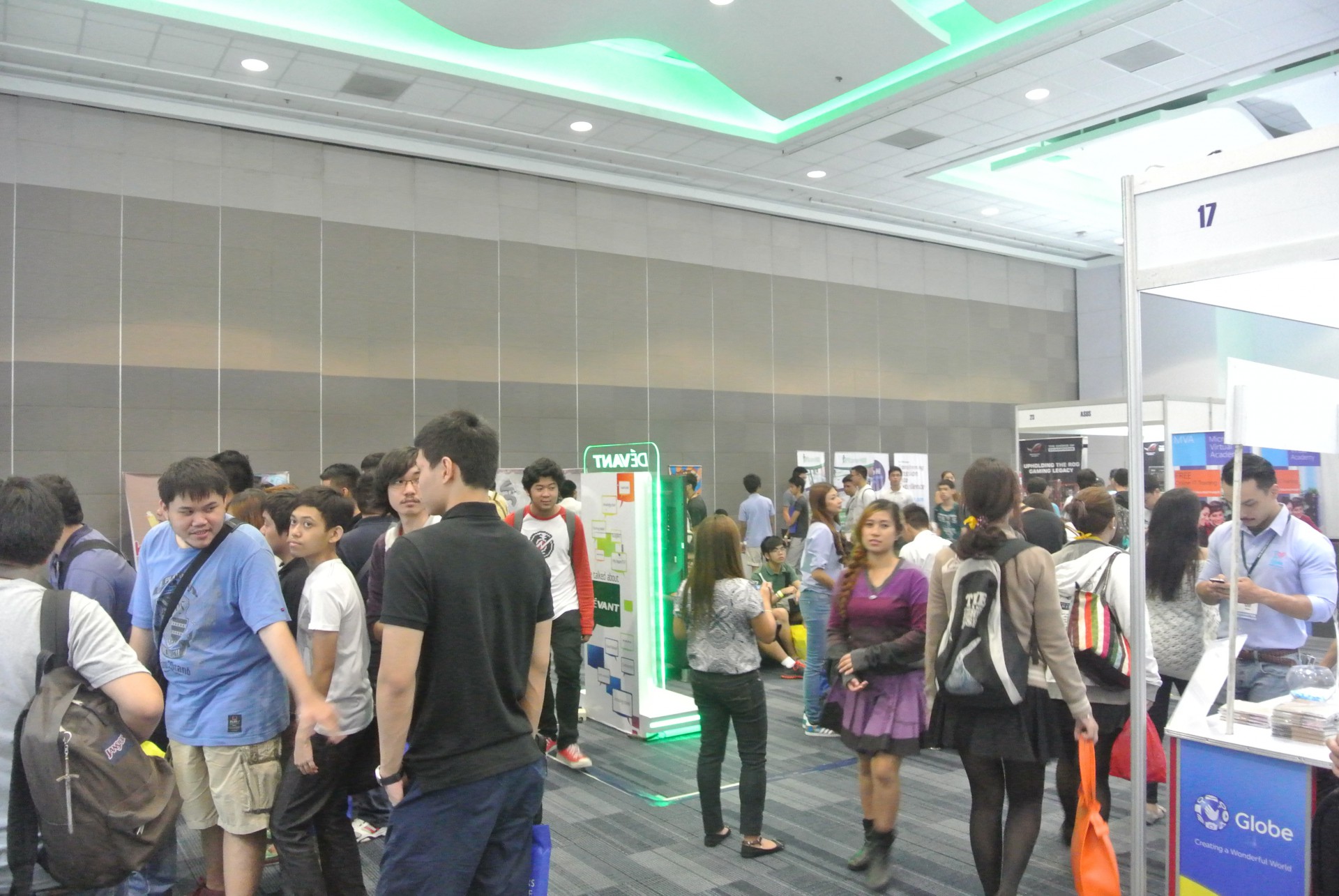
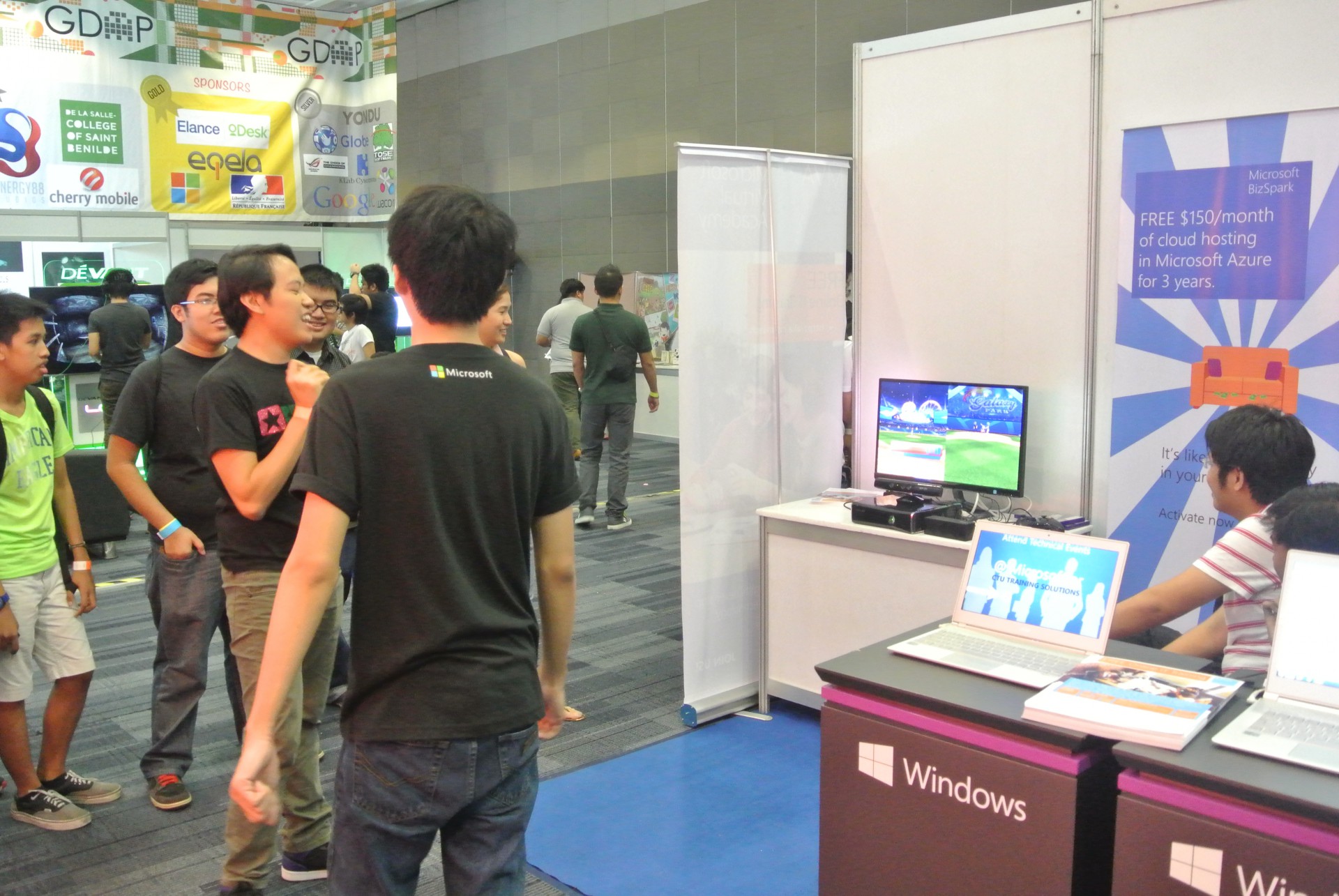
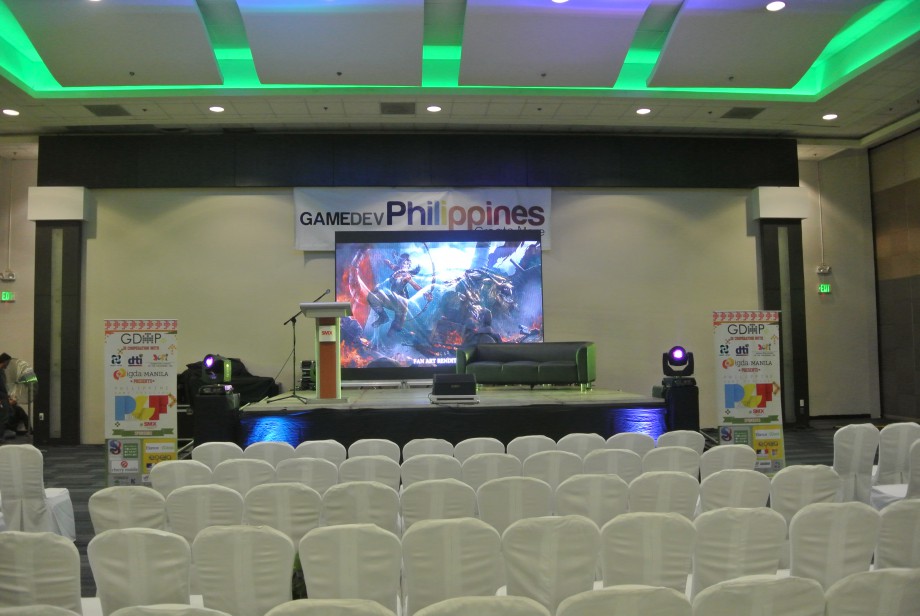
     In my estimate, the 2 day conference was attended by 90% college students and most of these students came from the College of St. Benilde. There were more people for the second day but the conference hall was never full, since some were attending the workshops and many were trying out the games outside the conference hall.
DSC_6379

DSC_6535

DSC_6596

DSC_6537

DSC_6595

DSC_6598

DSC_6644

DSC_6648

October 3, 2014 – Summary of Topics Discussed

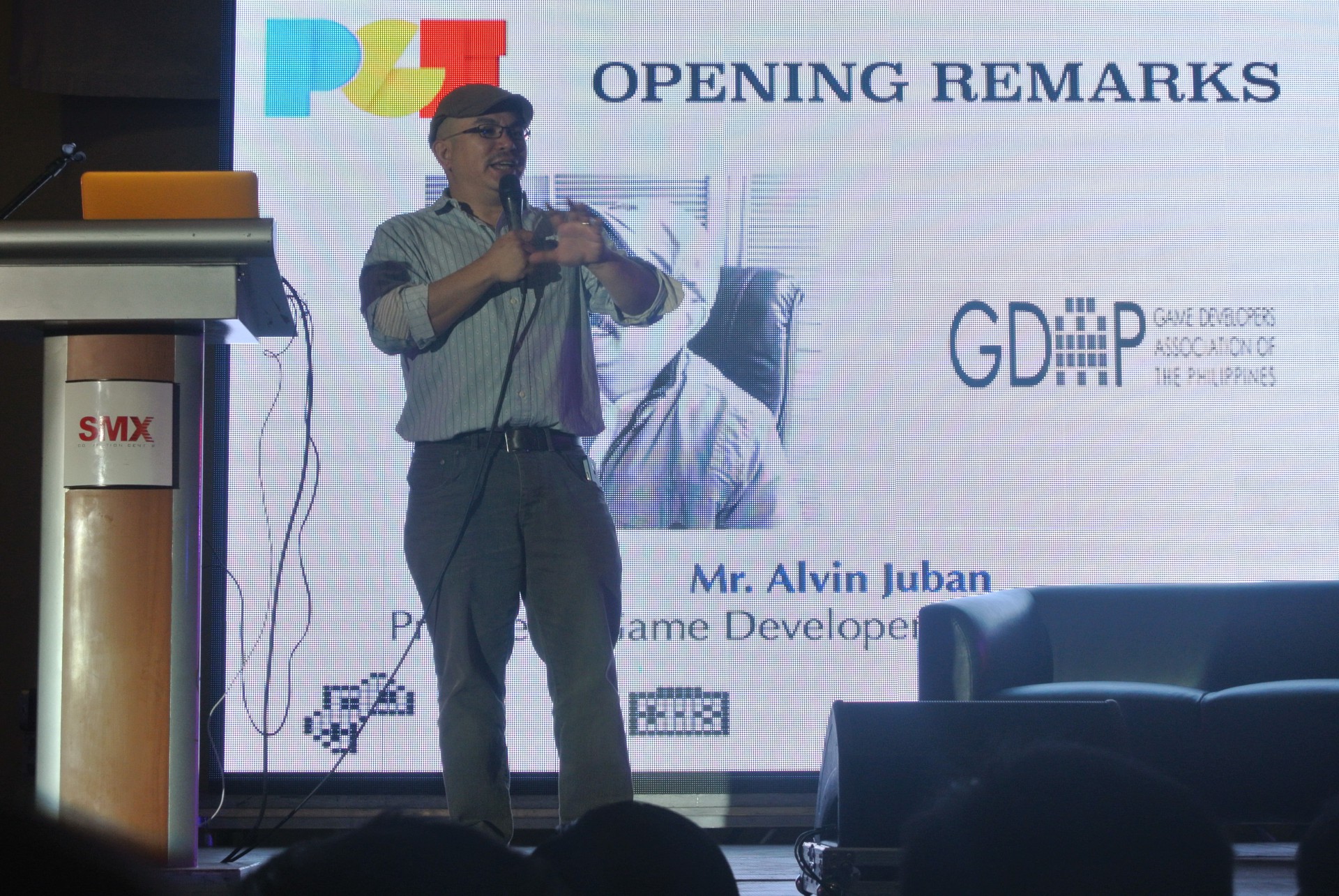
Mr. Alvin Juban – President of GDAP – Introduction
DSC_6387

     Alvin is a very ebullient and infectious guy that he reminds me of the game character Super Mario. Despite the many challenges game development has in the country, Alvin remains optimistic. His mission is to increase the business side or number of game studios in the country within a 3 to 5 year time frame. To make gaming more visible and progressive, GDAP constantly coordinates and seeks assistance from government institutions such as the Board of Investments (BOI), the Department of Trade and Industry (DTI) and the Commission on Higher Education (CHED).

     GDAP together with the DTI is on a mission to promote and educate other countries of the existence of a gaming industry in the country by attending conventions on gaming abroad, such as as the XDS (External Development Summit) in Vancouver Canada last September 10 to 12, Tokyo Game Show last September 16 to 21, G-Star in Busan, South Korea on November 20 to 23, and GDC in San Francisco in 2015. GDAP also held the Philippine Game Festival (PGF) on its 5th year for the first time that was held publicly outside school grounds.

     In the recent XDS, Alvin says the Canadians were very surprised to learn that Filipinos can speak English and use computers. Alvin says that two things are positive points for us in the gaming industry: 1) Filipinos are naturally creative. 2) We can speak English well.

1) Senator Paulo Benigno “Bam: Aquino – “The Rise of the Philippine Gaming Industry”

DSC_6396

     Senator Aquino says he grew up with computers and is a gamer all his life. He believes that the gaming industry in the country is like where the Business Process Outsourcing (BPO) industry was 10 to 15 years ago. He says that Filipinos have all the elements to make his fearless forecast a reality, so he is pushing for the support of the BOI and DTI for this industry. If this sector grows, it can drive the economy forward and enable us to have the technology and discipline to make our own high value-added games. He hopes with the growth, more investors will start coming to the country.

2) Mr. Jeff Saez of NuWorks – “Using Games for Customer Engagement”

     Jeff comes from the advertising industry and he first gave some Philippine statistics from Nielsen. Of the 100 million Filipinos: the Internet penetration is 49%, social network penetration is 48%, mobile phone penetration is 70%, smart phone penetration is 16% and tablet penetration is 4%. Jeff also gave some statistics in terms of media consumption, top ten activities in the Internet and other statistics.

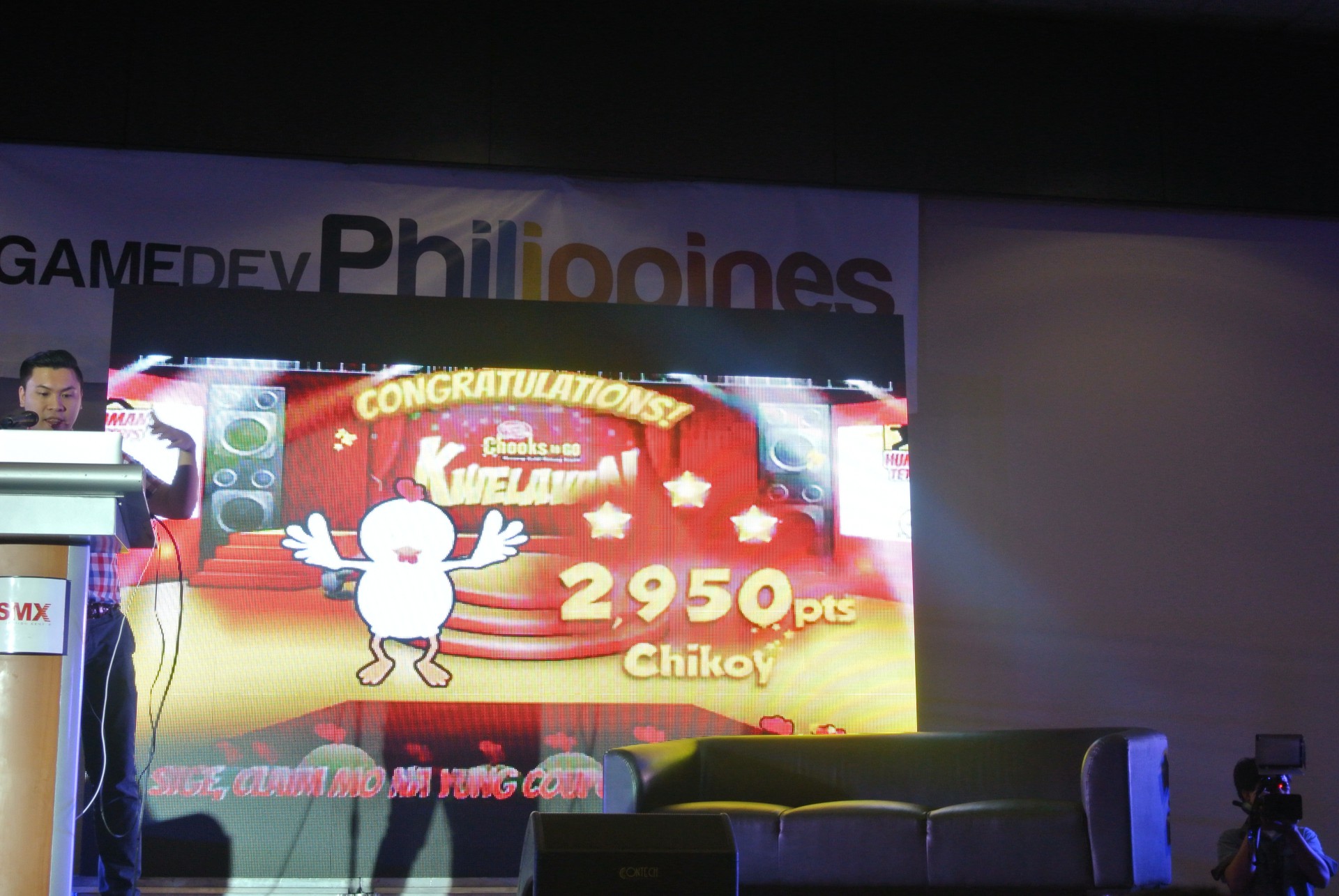
     Jeff then talked about the power of gamification, which is applying game principles to everyday activities. It uses the core drives of people and makes new uses for games. The participants are given rewards such as social recognition, progress or leader badges if they succeed in doing some of the activities required in the game. Local brands such as Sky Flakes uses vending machines located in malls and teaches people to dance their way for a few minutes for fun and fitness. Chooks to Go applies the vending machines in malls to increase brand awareness by engaging people to do some chicken moves and the participants have some fun with it. Gamification in these cases introduces game concepts, design and development to encourage product purchases.
DSC_6403

     Gamification is also introduced for agriculture, wherein buyer of agricultural products are informed of how their purchasing decisions help the farmers.

DSC_6408

     In other countries, gamification changes social behavior in driving more slowly, urinating in public urinals instead of anywhere and improving the submission of health records by just tapping the smart phone for children with cancer. The said children have little energy and motivation to record their daily health with paper and pencil. The gamification of the health record is tied up with a police TV series and the children are awarded some virtual badges.

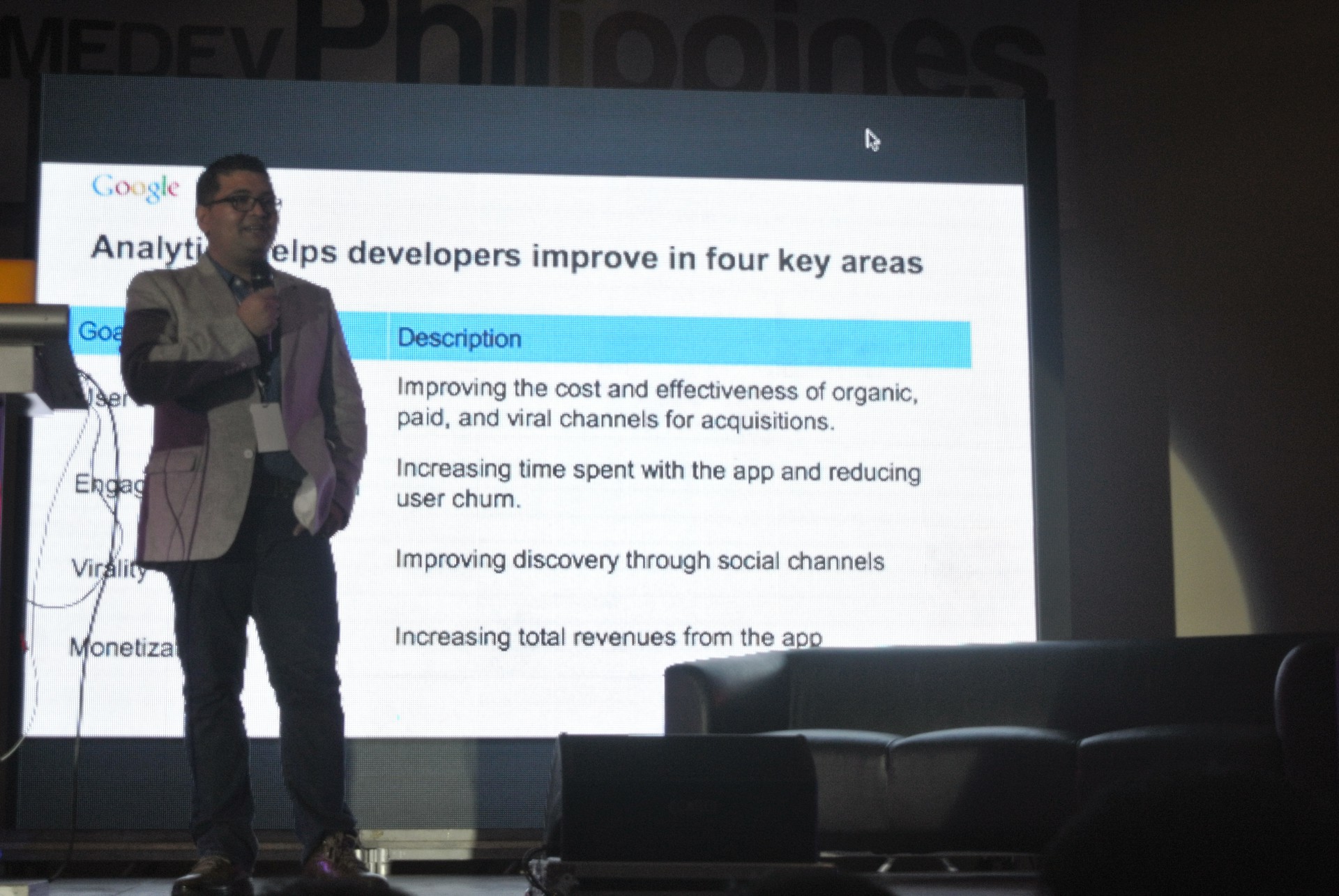
3) Mr. Vincent Tanwar, Strategic Partner Lead Gaming Google – “Retaining and Monetizing Your Mobile Games  with Game Analytics”
DSC_6437

          To maximize revenues and lifetime value, one should harness the power of analytics. Vineet stressed the importance of analytics in analysing user behavior to have good business decision and and have a sustainable business. Gaming has a lot of things to measure where Google analytics can help like in user demographics, tracking marketing return on investment, engagement and retention rate, virality, social event, tracking ratings and reviews, tracking moetization, identifying and destroying road blocks, segmenting your audience, Google analytics in Admob and host of other information to track.

4) Mr. Markku Kero of Eqela – “Maximizing Cross Platform Technology for Game Developers”

DSC_6461

    Markku’s topic is about the technical limitations encountered with softwares in making games. The cross platforms can help in enhancing softwares. Although there are issues with cross platforms, it can still be improved. One thing that needs to be addressed is how to program the game without eating too much battery power.

DSC_6450

5) Mr. Gabby Dizon of Altitude Games – “Making Games for the Asean Market”

DSC_6481

    Gabby talked about how start-ups can manage with a small budget to improve their game. He talked about his experience with his current mobile game “Super V” which is currently at Google play. With only $60 as a budget, he was able to reach 55,264 page reach. He started with only one level with quick art and tested it in Singapore’s Casual Connect. From there, he learned what players positively reacted to – the theme was well received and artwork loved but the negative was confusion on the structure. So with the feedback, he improved on the parts that needed some adjustments.

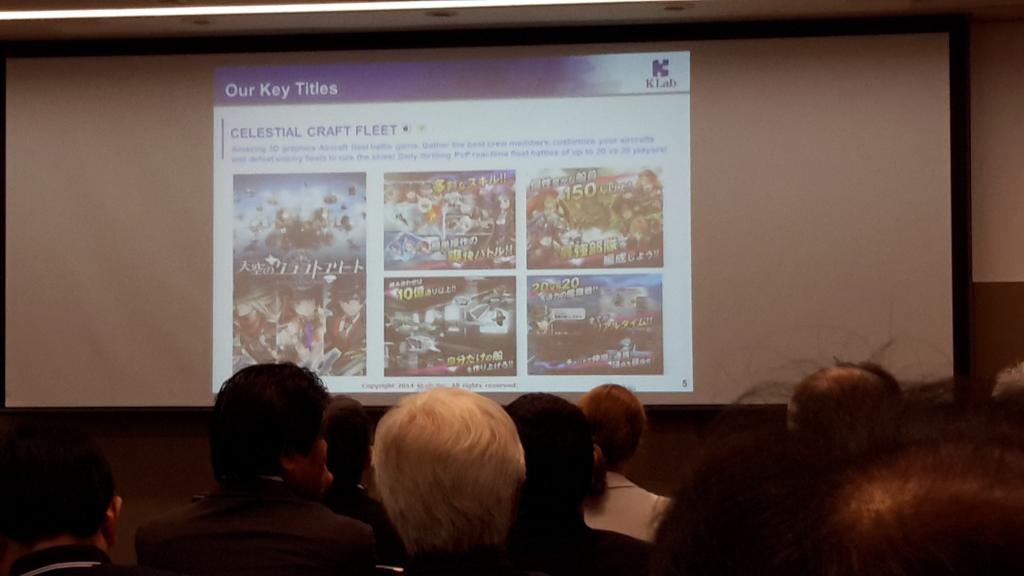
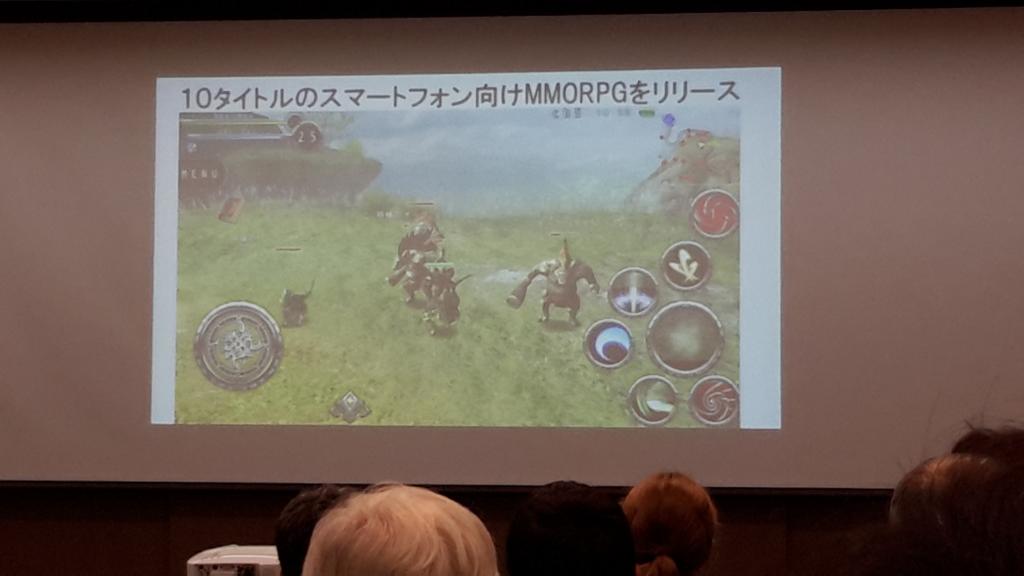
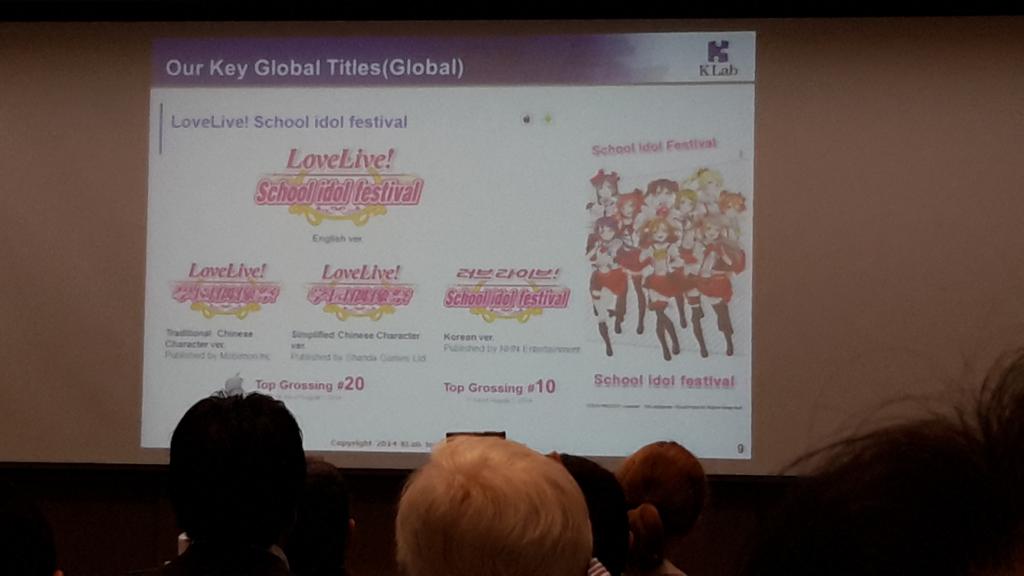
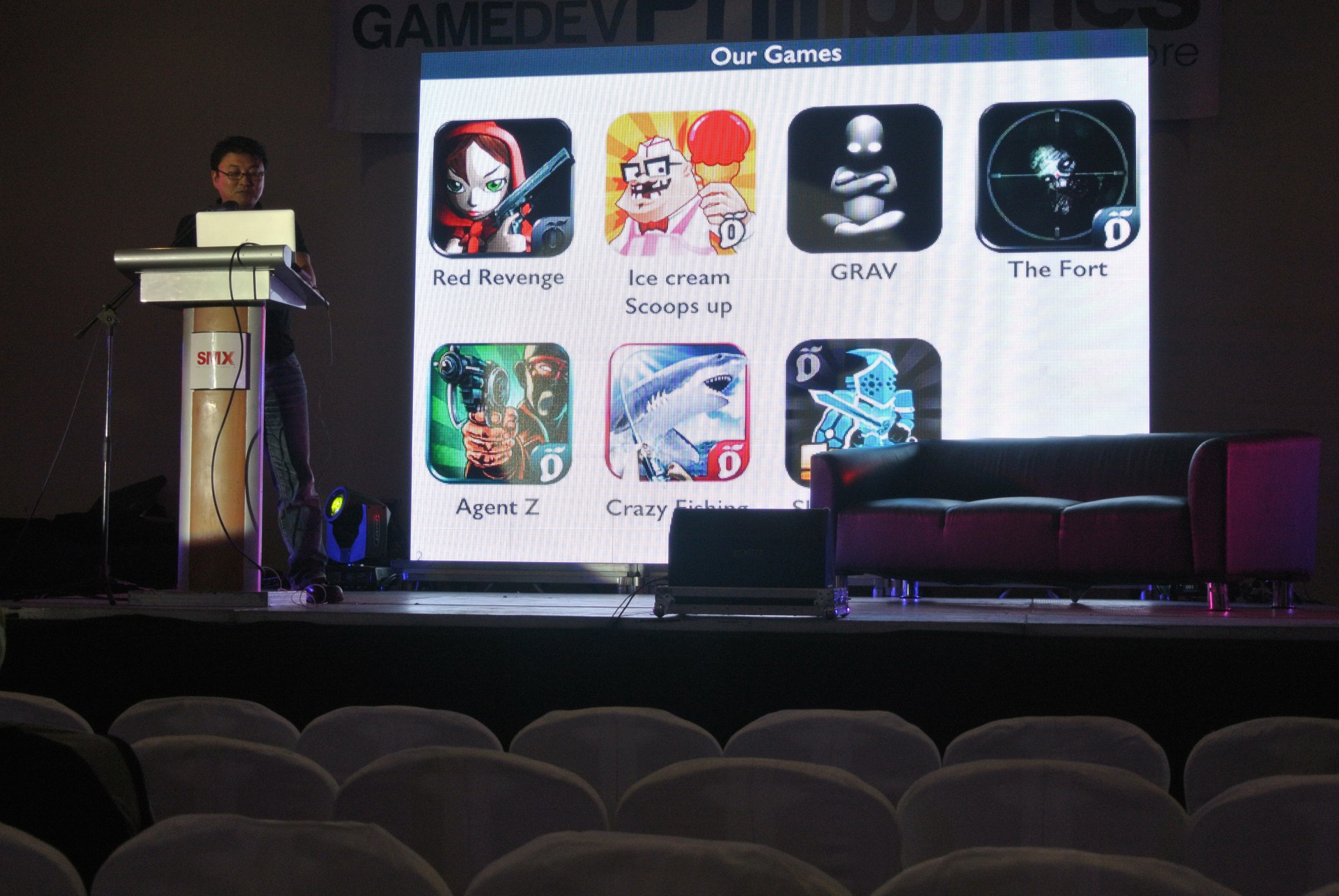
6) Mr. Kimi Iwasaki of Klab Cyscorpions – “Designing Japanese Mobile Games”
DSC_6504

DSC_6509

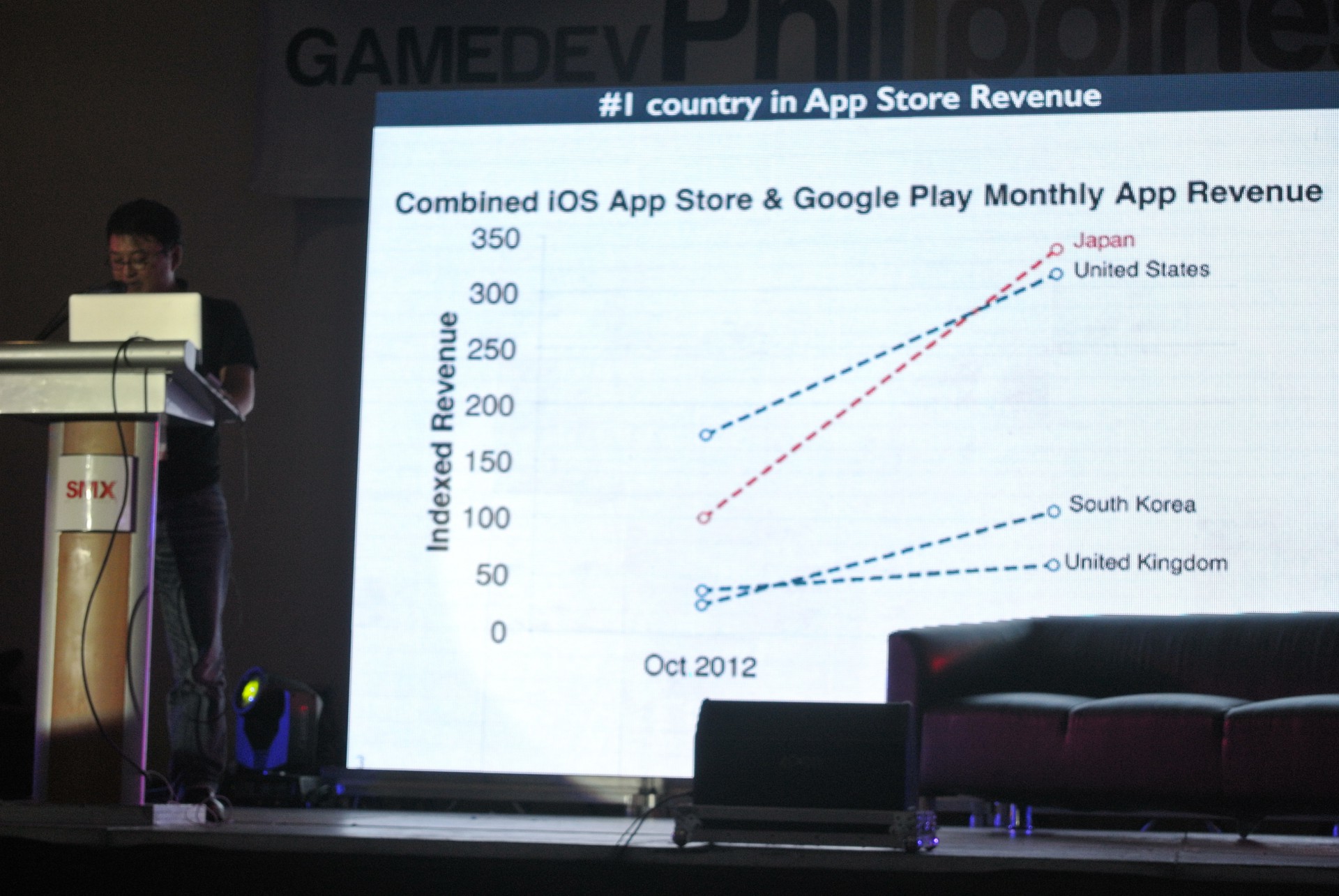
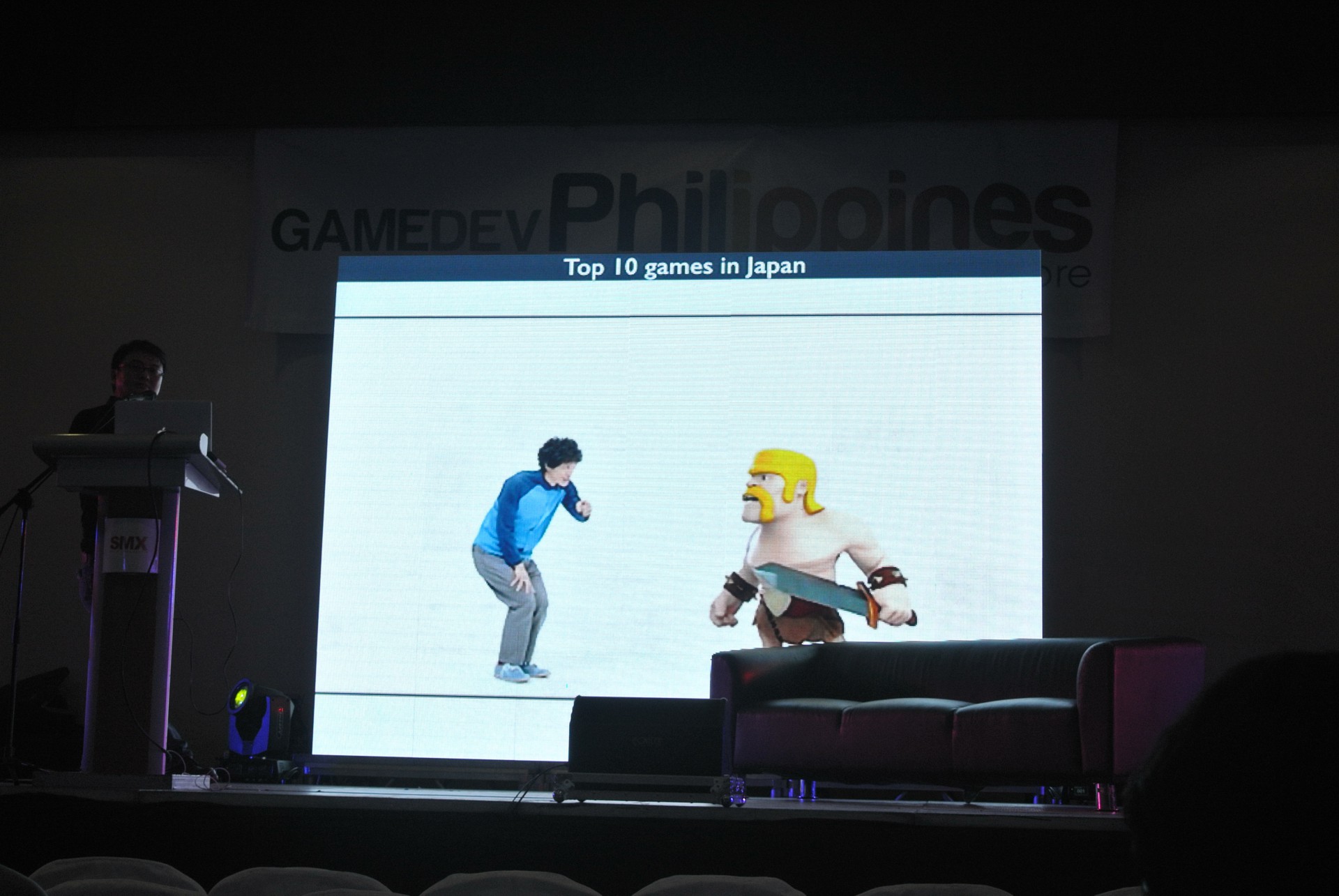
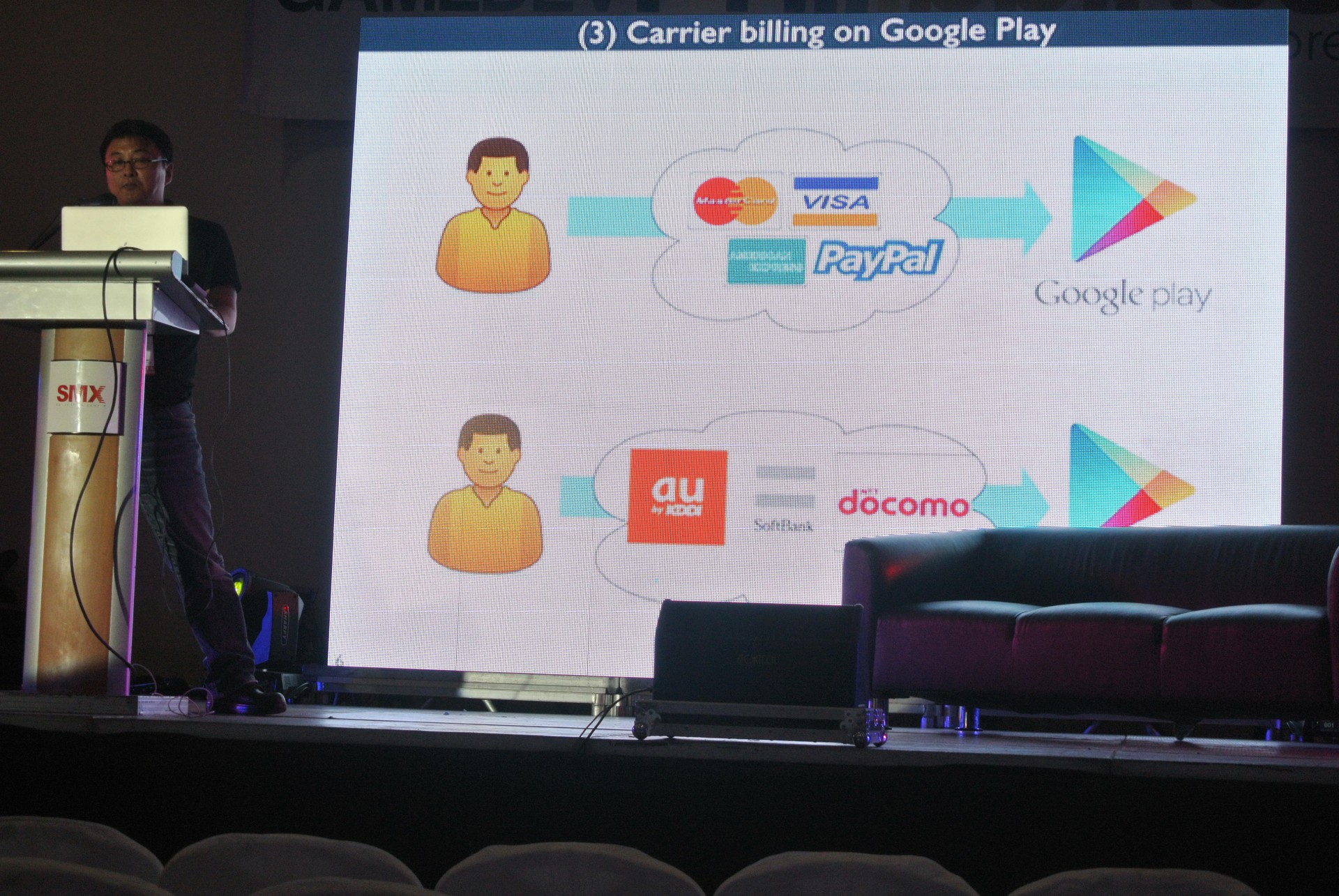
    Klab Cyscorpions has an office at the Fort and it exclusively develops games for the Japanese market. Kimi gave some statistics that Japan now is the leading market for mobile games in the world, surpassing the US. Part of the reason is an easier payment scheme. Of the top 10 games in Japan, he cited 3 common points: 1) Good graphics and sound 2) Marketing on television which could reach $1M to $5M  3) Large budget
DSC_6515

DSC_6511

DSC_6526

DSC_6533

DSC_6523

7) Mr. Miker Rivero of ABS-CBN Interactive – “Games for Filipinos”
DSC_6545

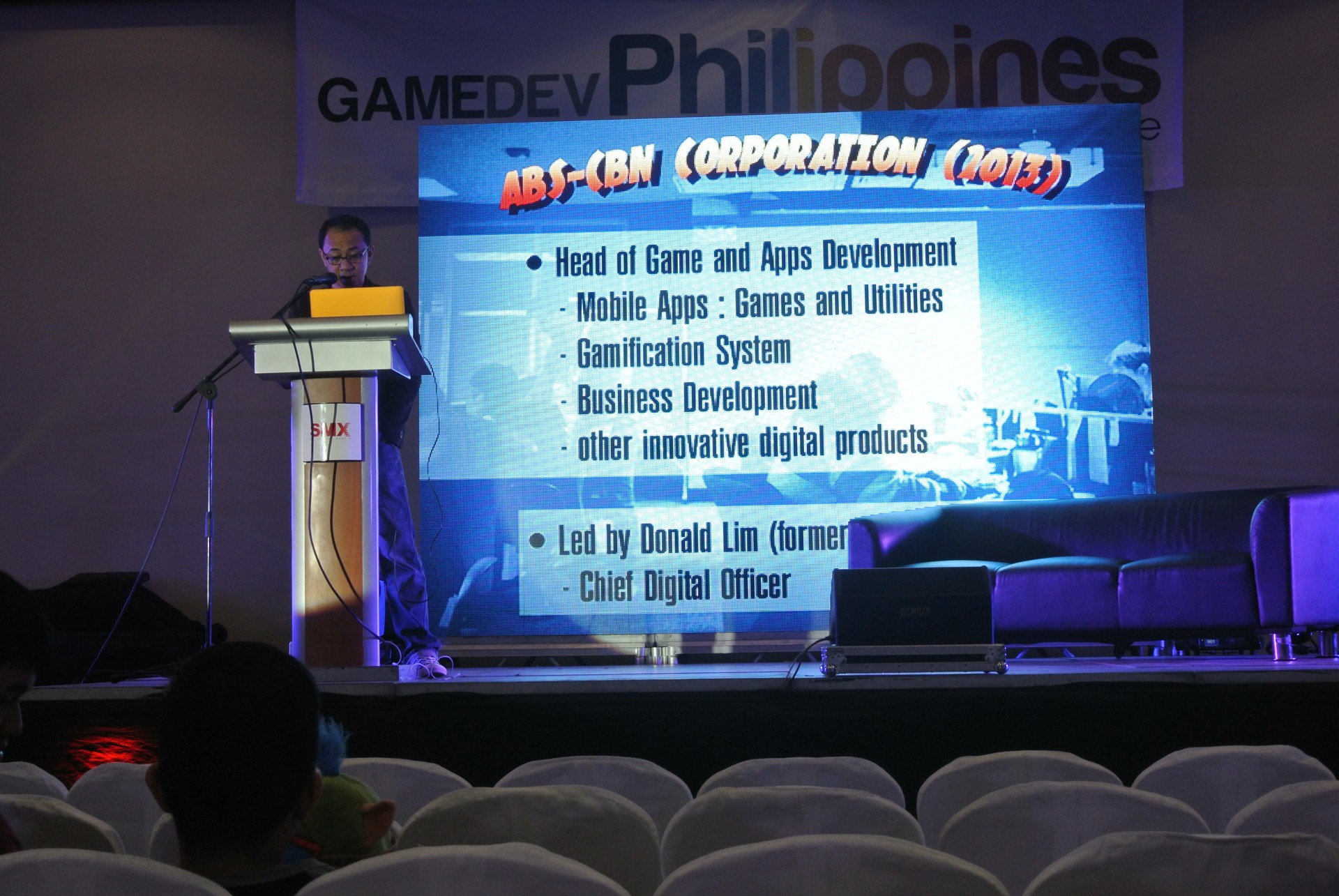
    Miker is one of the pioneers of gaming in the country; he showed the history of his works through the decades and how he started as a game developer/manager. At first it was trial and error where he experienced many ups and downs, some studios he worked for also closed down. He started in advertising, then went onto self-publishing and consultancy, until his current work. He gave some tips in new product design which should cover the following aspects: marketability, feasibility and originality. He is an advocate of developing a Filipino game that can be famous as some famous games. Game themes should be universal rather than localized.

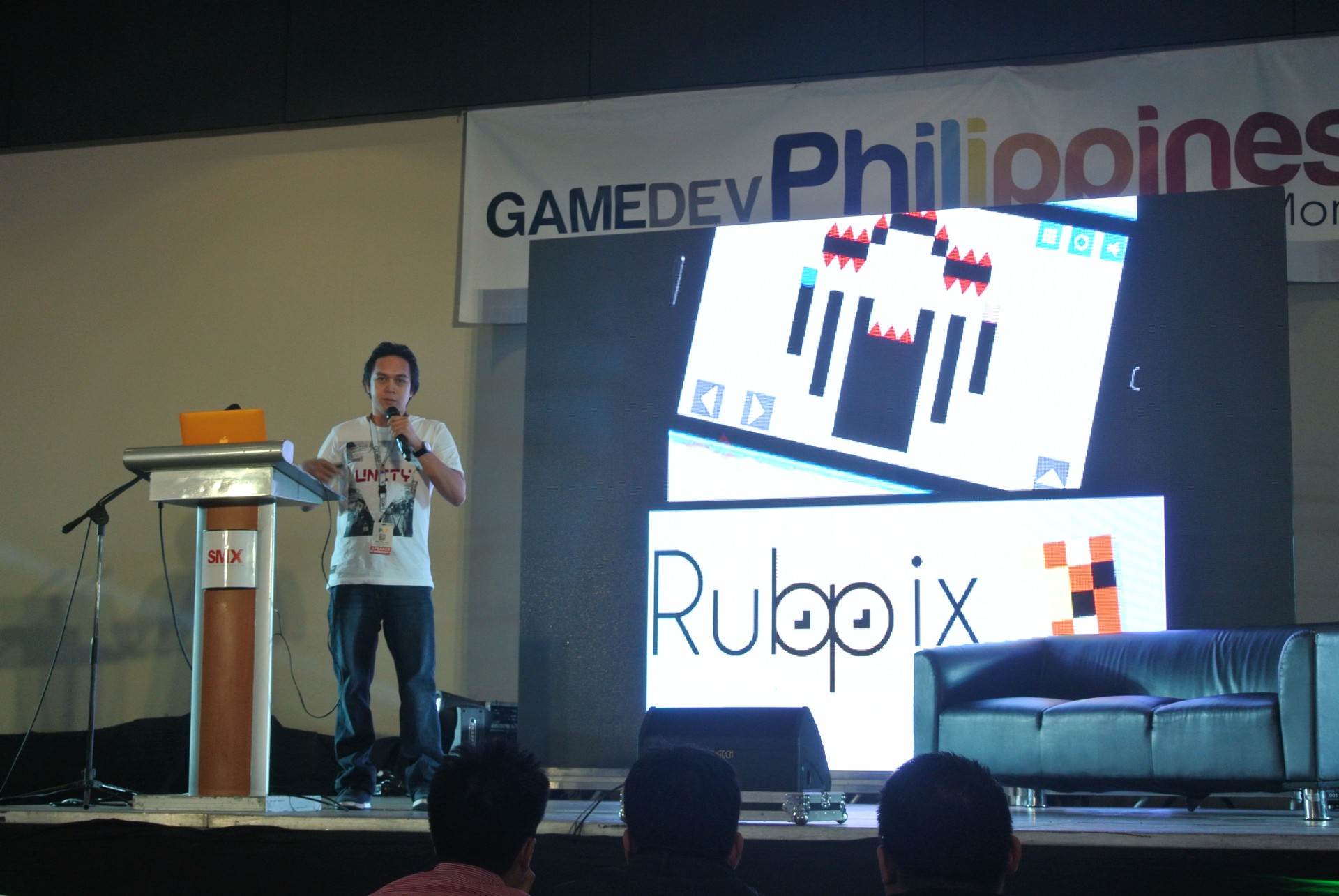
8) Mr. Marnielle Estrada of IGDA Manila – “The Complexities of Game Development”

DSC_6562

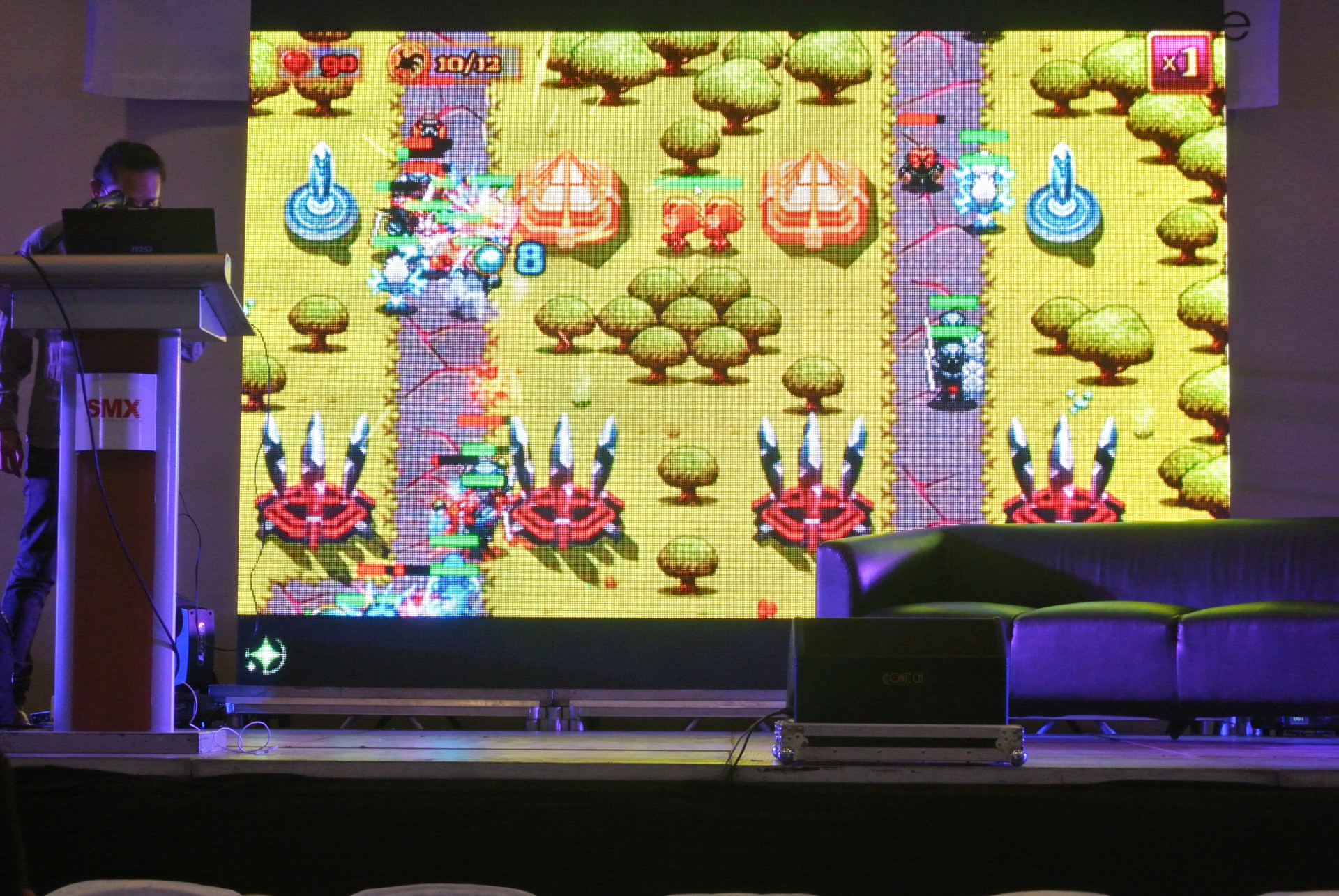
     Marinielle showed how he solved some of the problems he encountered in developing his game. He began by saying art style is memory. 2D requires lots of images, which has double resolution which means 4 times the memory requirement. The solution is to use sprite tile based pixel art where each cell is 16 x 16, this saves a lot of memory usage.
DSC_6558

     Level design is a full time job, wherein one level takes an average of 3 hours to make his game has 30 levels. Level design is divided into 4 parts: 1) tile mapping – 30 minutes; 2) Compose enemy waves – 1 hour; 3) Testing – 5 to 10 minutes; 4) Iteration – go back to previous steps depending on your testing. The next challenge is difficulty – the combination of difficulty, assigning the values of difficulties – where he showed how to place different values on the program and see if it works.
DSC_6555 9) Panel Discussion

DSC_6581

    During the panel discussion, Mr. Alvin Juban mentioned that: “Game playing is for everyone but game development is for a chosen few.” The next day I tried to reconcile this quote with Senator Bam Aquino’s fearless forecast of generating enough manpower for the gaming industry. Game developing requires a very high technical skill set and this means expensive training and equipment. So I’m still at a lost of whether we can really create enough manpower and business in the succeeding years which is aggravated with migrating skilled programmers.

     The panel also answered the question of hiring with low grades. The panel was unanimous that grades are not that important, what is important is one’s portfolio, passion and what one does outside school. They are looking for what one can do, what skills one is developing and what one could develop. For one panelist, without a portfolio, an applicant is relegated to the bottom of the applicants. For another panelist, he just checks if one really graduated from college. Another hired a journalist major who had passion for game design and was an active gamer. For another a college graduate is not even required in his country – Finland.

October 4, 2014 – Summary of Topics Discussed

1) Mr. Mon Ibrahim of DOST-ICTO – Opening Remarks

DSC_6609

    Mon says that the gaming sector is the only sector where more money from the the government is not used by GDAP – there is still a surplus of funds. The CHED already approved a new university program last January 2014 called BSC in Entertainment Computing. The problem is where do we get the teachers to teach the required subjects? TESDA is already accrediting trainers for the multi-media arts. And the DOST with the University of the Philippines Information System has a four month program to enhance the skills for those already in programming in multi-media. In the  Asean, the Philippines is the third country to offer a formal college program for game development aside from Singapore and Malaysia. The government is trying to move from voice services to higher value services and enable to create Filipino content.

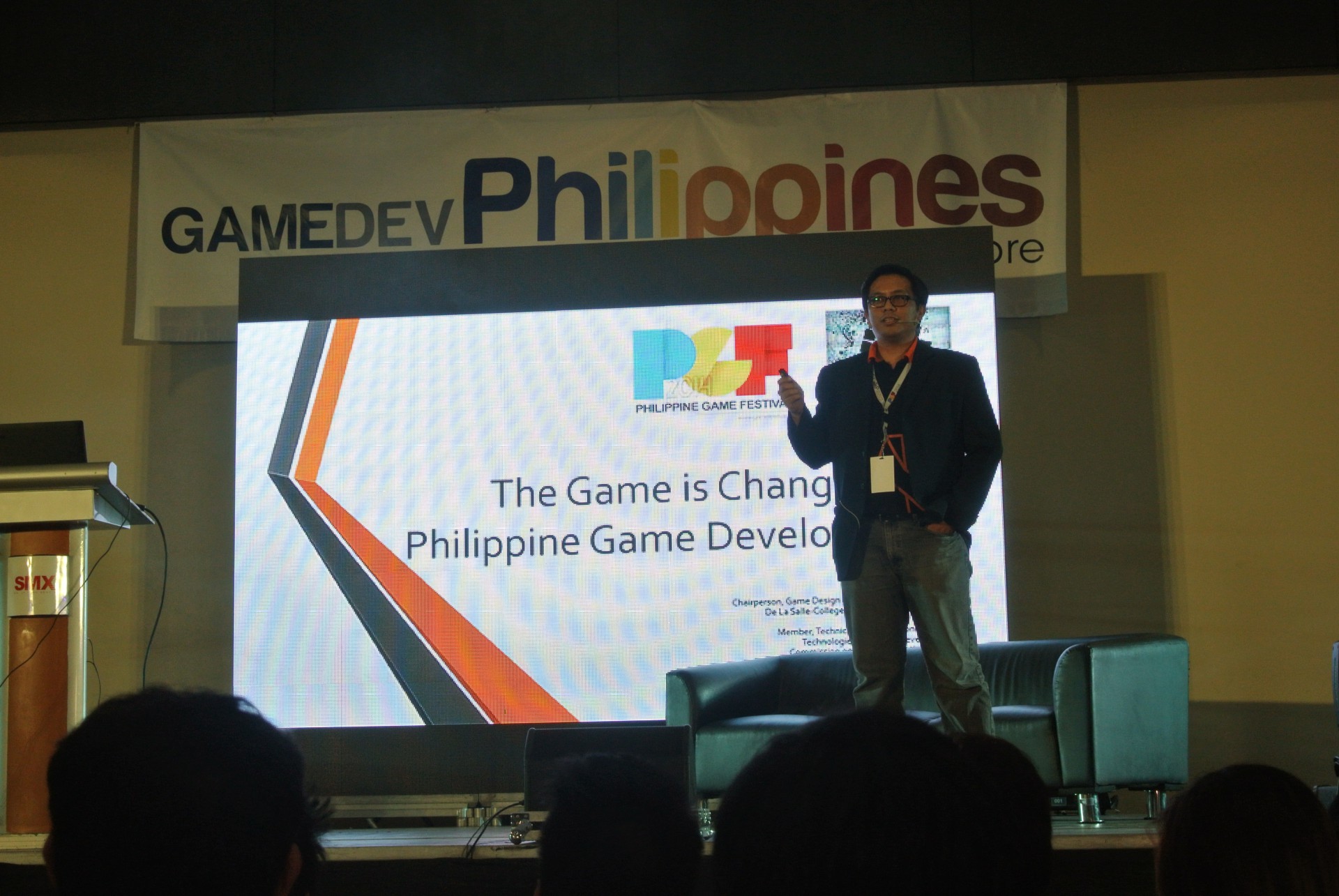
2) Mr. Norman Lee of De Lasalle College of St. Benilde – “The Game is Changing for Philippine Game Development”
DSC_6616

     Norman says in 2007 GDAP had 7 founding members and in 2014 there are now 28 core members. He estimates there are around 60 game developers in the country. The growth is due to a generation who grew up with games wanting to create games and the global market for games is growing. But there is a supply problem of technical skills, and this is where the CHED (BSC Entertainment Computing) and TESDA (Training and accrediting certified trainors in game development) are needed growth of the manpower to be accomplished. The key to change is education if there are more technical manpower, hopefully there will be more business in gaming, more foreign investors and finally big businesses in gaming coming in the country. However, he stressed that education should aim for quality education and not for profit.

     There are now trends in game development that shows growth in improvement. In the early days of game development it was mostly self-taught, now there is formal education. There are now game development contests in and outside college and the result is students are now placing high versus the industry professionals. The level of skill and knowledge of students is now at par and sometimes even better than the professionals in some cases. There is also a gamification of some traditional businesses.

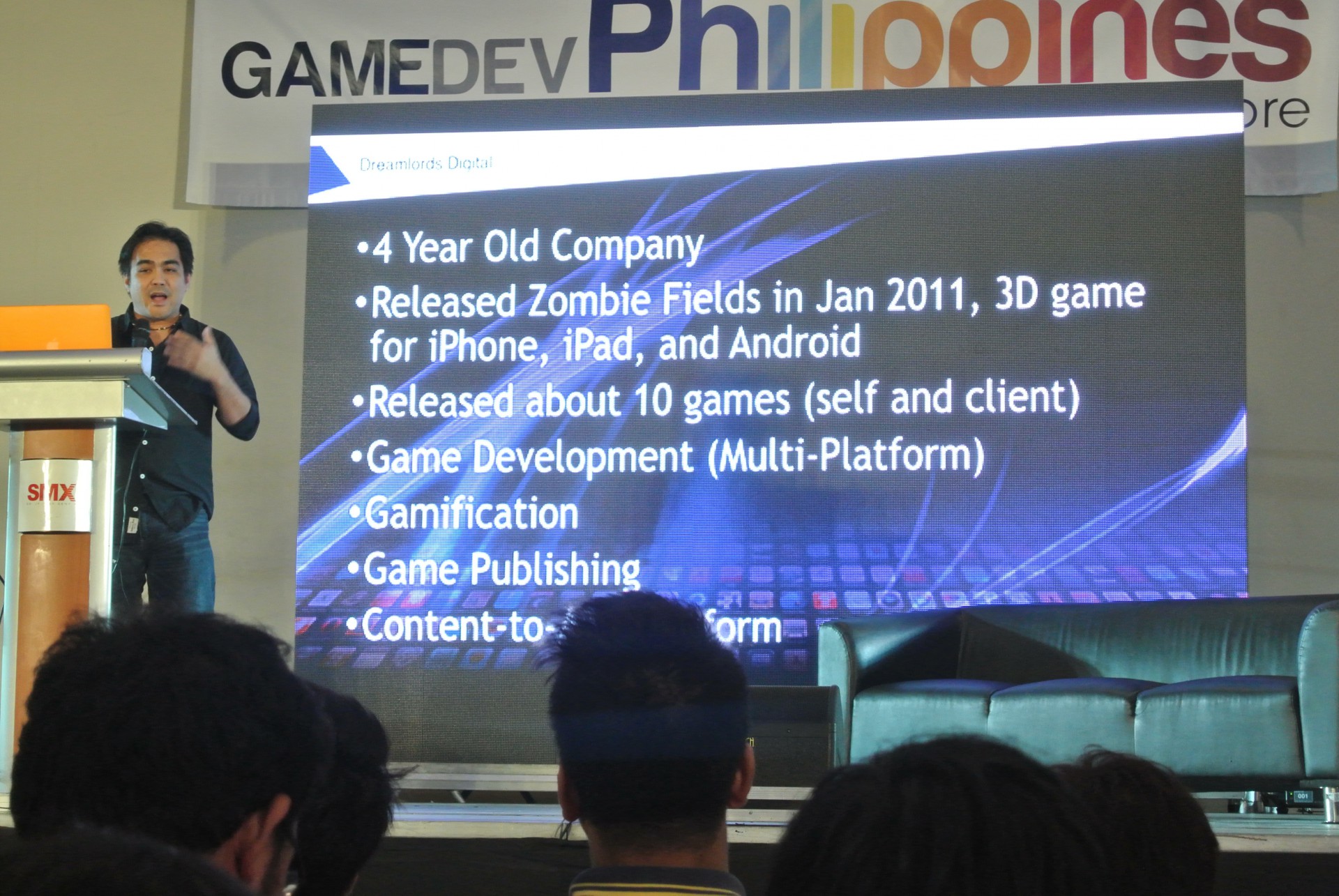
3) Mr. Russell Tomas – Dreamlords Digital
DSC_6624

     As an indie developer, Russell aims developing games with the highest quality  since he started his company. He talked about the explosion of indie game developers as technology becomes more affordable, so there is an ease of entry in mobile and console game development. There will be new technologies in wearables, body motion, mind control etc. that will influence how we will play games in the future.

DSC_6632

     Russel says lack of money is not a limitation to be creative. He cited his case, where they were able to get $50K from Kickstarter funding. However, there are bad examples in the said funding, where some just steal the money, don’t finish the project either through mismanagement of the fund, underestimated the complexity of their game or lack of skill to push with the development. He said there are 3 people who worked on their current project which is a high quality game; he added that can you imagine if there were more people who will work on it.

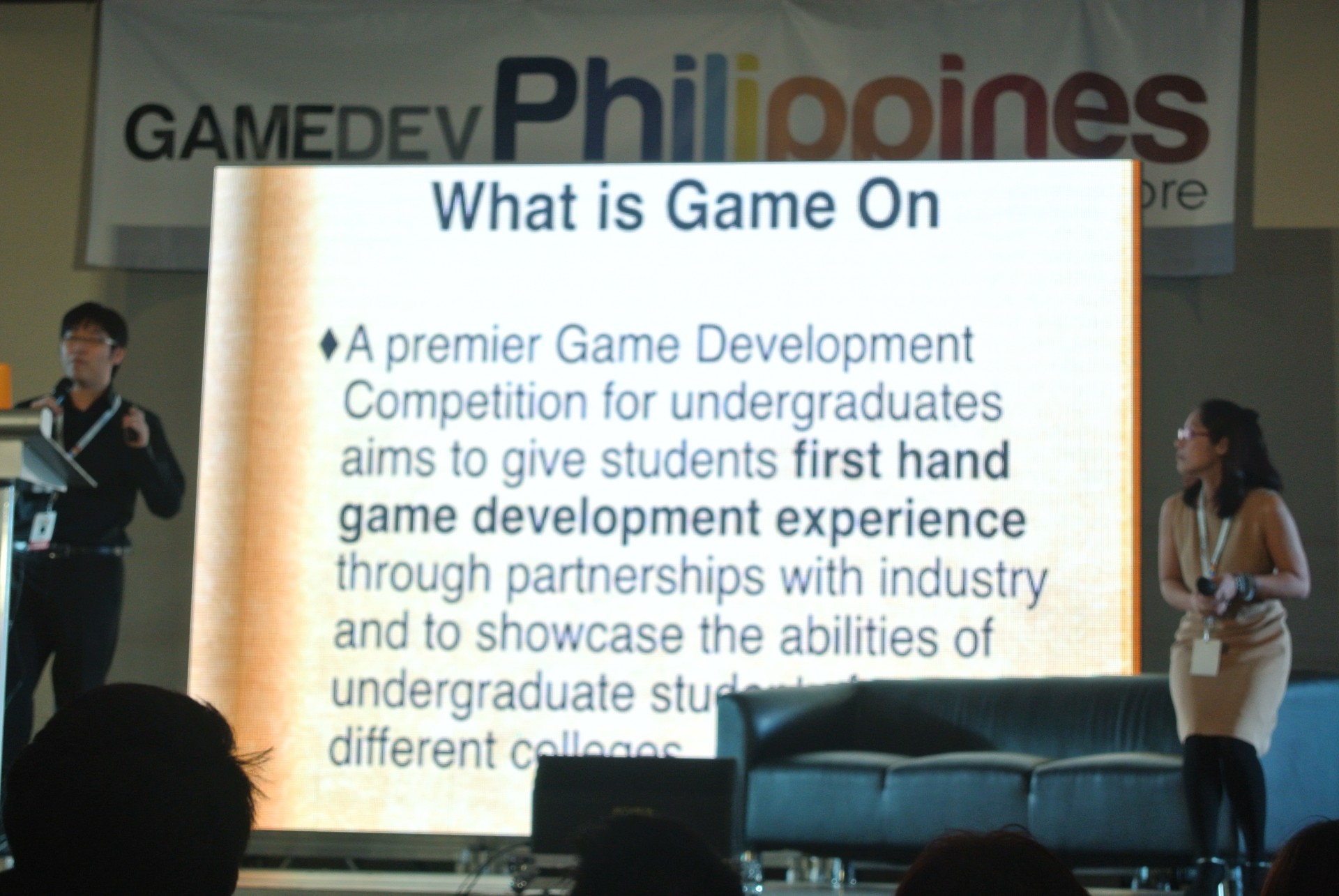
4) Mr. Solon Chen – “Game On and We Got Games”
DSC_6640

     The Game On competition for college students started in 2011 and every year the rules are changed a bit to make the competition better, while the number and quality of entries are also improving. For the first time, in 2014 – 8 high schools with some selected student  were included to have a game development competition and their mentors are the college students. The students were required to produce a game for two days which includes a workshop, so the total time for actually developing a game is around 8 hours. The results were good, so Solon and Dr. Niña Sales of Informatics will continue  to improve the current competition.

DSC_6642

5) Mr. Erick Garaybas of Kuyi Mobile – “Game Development Stories: Epic Paint Adventure”

DSC_6652

     Erick has one goal and that is to make fun games. Since he has a game with millions of downloads, he could afford to experiment by creating new games. His goal in making Epic Paint Picture is not only for profit but to have a new learning experience. a) To understand the market, experiment with a lot of things and gather data. b) To find out if these kinds of games really make money. c) To prove that not all free games are out to get your money. d) To experiment with Application Search Optimization (ASO), monetization and other technical stuff. e) Conclusion: 5K+ daily users, conversion rate is great, tapped new market, experimental game, not my kind of game – many data, iterative game. If you have a new game – experiment.

DSC_6657

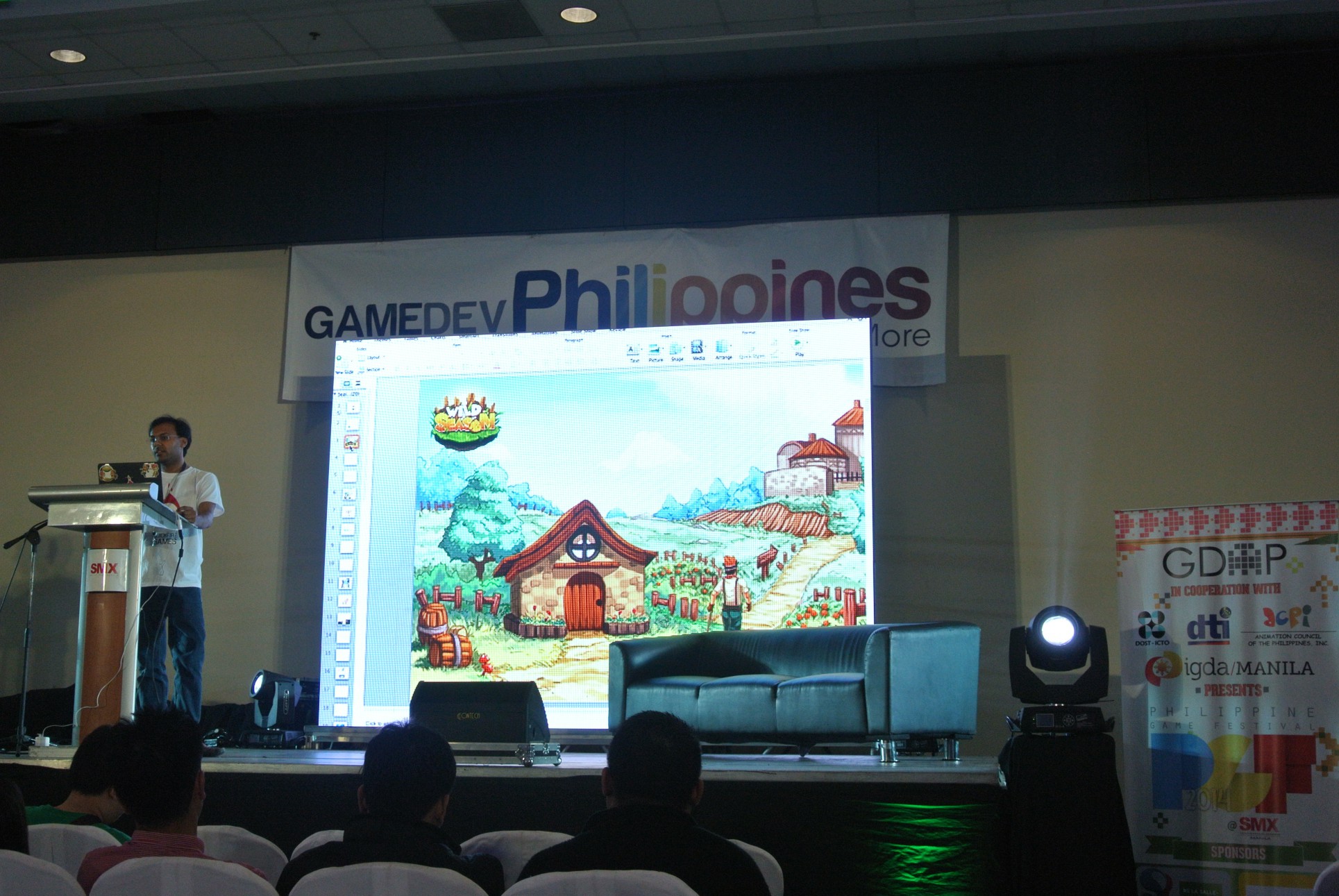
6) Mr. Sharan Balani of Quickfire Games – “Game Development Stories: Wild Season”
DSC_6660

     Quickfire is the first studio in the country to be funded by Kickstarter with seed money of around $60K. To get the fund, Sharan thought about nothing in the next 30 days. He promised a lot of features in the game, but there were no specifics. The money went to the development, marketing and business development and operations. Sharan says most developers just concentrate the funds on the development of the game and forgetting both the marketing/business development and operating aspects of the business.

DSC_6666

     In terms of development – how are you going to implement the engines, story art, and number of characters. In his case, it took 2 months to test the art work and features. In the business development side, he was lucky to have some contacts with Soedesco the developer of Resident Evil. In marketing, he used Facebook, Twitter, Instagram, Youtube and other social media outlets constantly. Operations consists of the taxes, payroll, maintenance etc. to get the growing business moving. One should anticipate the operating costs, as it will increase as the business increases.

7) Mr. Allen Tan, Managing Director of White Widget – “Game Development Stories: Face Mountain”

DSC_6683

    Allen started the company with a partner in 2013 and is self-funded. He balances services and independent content creation. In 2014, there were around 13 people in the company. The idea came about for Face Mountain when there was a brownout in the office and they have to go to a restaurant for lunch with their laptops. They talked about the need to develop their own game and Candy Crush was a popular game at that time. So they decided to do a matching game that they could do within a month but a polished game will take more than that time.

     The first idea was face matching “Match Your Face”. There were problems with the prototype like the photos were too small and the game too gimmicky. Initial changes include adding a mountain, use only one photo, static backdrop and tiles, movement of pictures. There was nothing special about the game, so they put faces on everything, the rocks, strawberries etc. except for the grass. They also changed the background as they were not happy with it. Designing the avatar was a long process with 36 different kinds of eyes. They narrowed the choice to 12 eyes and chose the weird looking one as it is distinct and became a staple in the game.

DSC_6688

     In mobile games, one cannot have all the good things, since each character to load was 20 seconds which was unacceptable. so they have to reduce the special features and find an acceptable limit. To improve the game experience, they have to reduce the mechanics as it was too confusing and the User Interface was too big.

     They plan to load the game on iOS late October 2014 but the initial plan to launch it was October 2013. This sounds familiar, and this is just a mobile game, compare that with a full season for animation which is a lot more difficult to develop and produce.

8) Mr. Bari Silvestre of Keybol Games – “Game Development Stories: Belial: Ars Demon”
DSC_6698

     Bari was a former factory worker and accountant, but his interest in game development enabled him to produce games that were highlighted by game magazines abroad. Even if his new game is not out yet, it is being touted as a game to watch out for by some industry writers. Bari uses Facebook to get some feedback for his upcoming game. With his new game he experience some ups like some friends helping him out for free and downs like a Japanese competitor  is also launching a game with a similar theme , or the word Ars is misspelled many times by writers and friends.

DSC_6715

 9) Panel Discussion

DSC_6725

    The story narrative is going to be important as there are more games around. One developer is relieved that he could always answer yes to the question do you have a story in your game? 

10) Dr. Beatrice Lapa of Senshi Labs – “From Mainstream to Indie Game Development”

DSC_6730

    Bea wants to create free educational games since she found the games she plays are boring. After some years with established studios, she shifted to indie game development. The difference between the two are: 1) Funding – sometimes one has to do a quick starting game to fund a game that one really like to develop. In her case she did Prologue in 3 months to do Book 1: Song of Pisces 2) Team size: Team vs one person – 1 person does everything. 3) Process. 4) Documentation – the documentation in mainstream is thick, while in indie is more spontaneous, and inspiration can can change the document, so she always carries a notebook. 5) Cost-benefit analysis – the budget has to fit so one experiences pressure in mainstream as the money is not yours. Her final words if you are thinking of going indie: What makes you itch? What do you desire? What sort of situation do you love to work in?

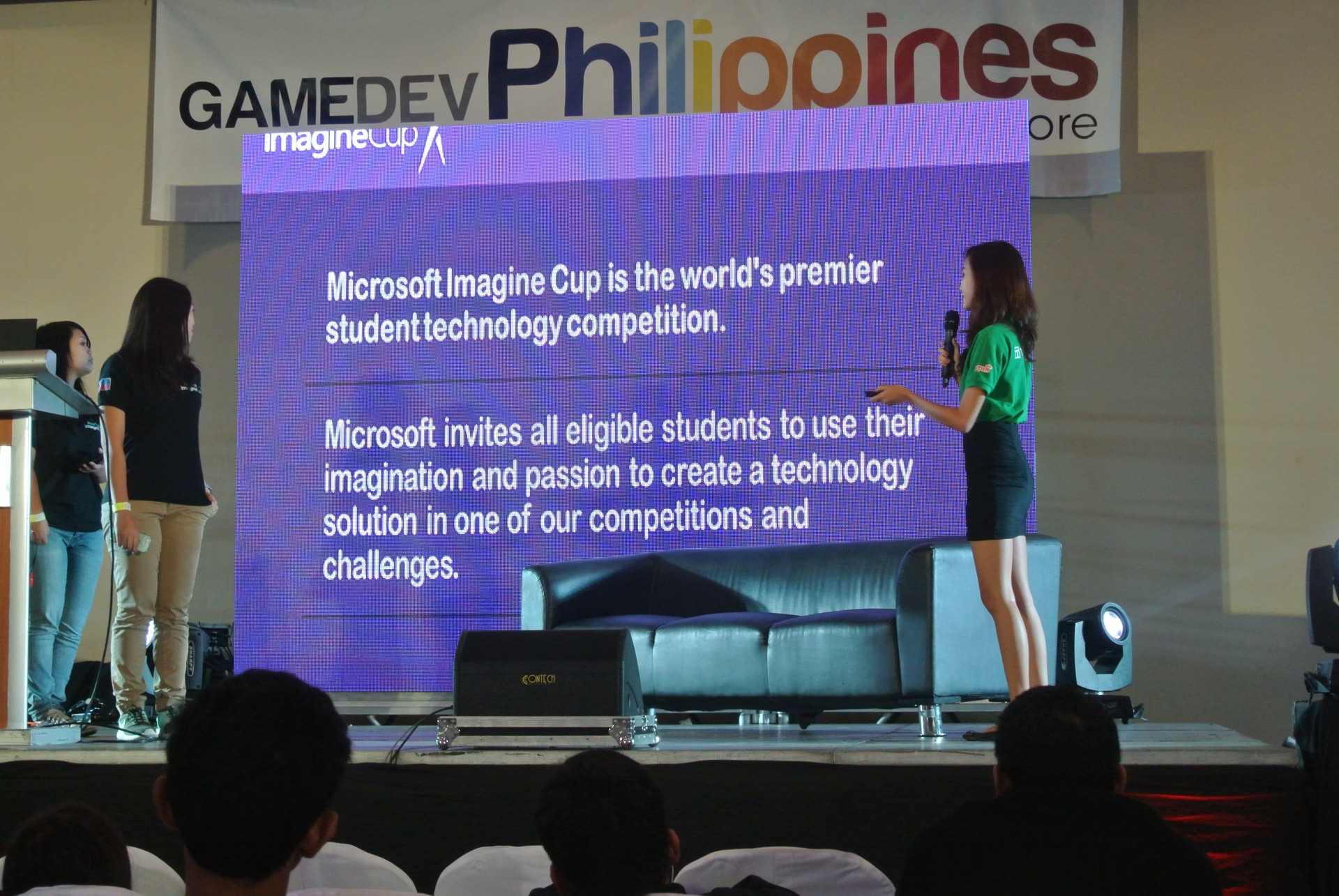
11) Team Animus – “Game Development Stories – Imagine Cup”
DSC_6735

     A team of 4 information system students from the De La Salle University with no game development experience made it the top ten finalist from around the world in the Microsoft Imagine Cup 2014 in Seattle, Washington. Their game is about using computers to make kids more fit. Their game design was for 4 to 7 years old, they gathered information about market preference, thought unique ideas based on the research conducted and executed ideas through applications. Their advice for aspiring Imagine Cup participants is think out of the box, never doubt your capabilities and be inspired and passionate about your project.

DSC_6739


Tokyo Game Show 2014

25 09 2014

10330441_702119796531649_2980327618914005249_n

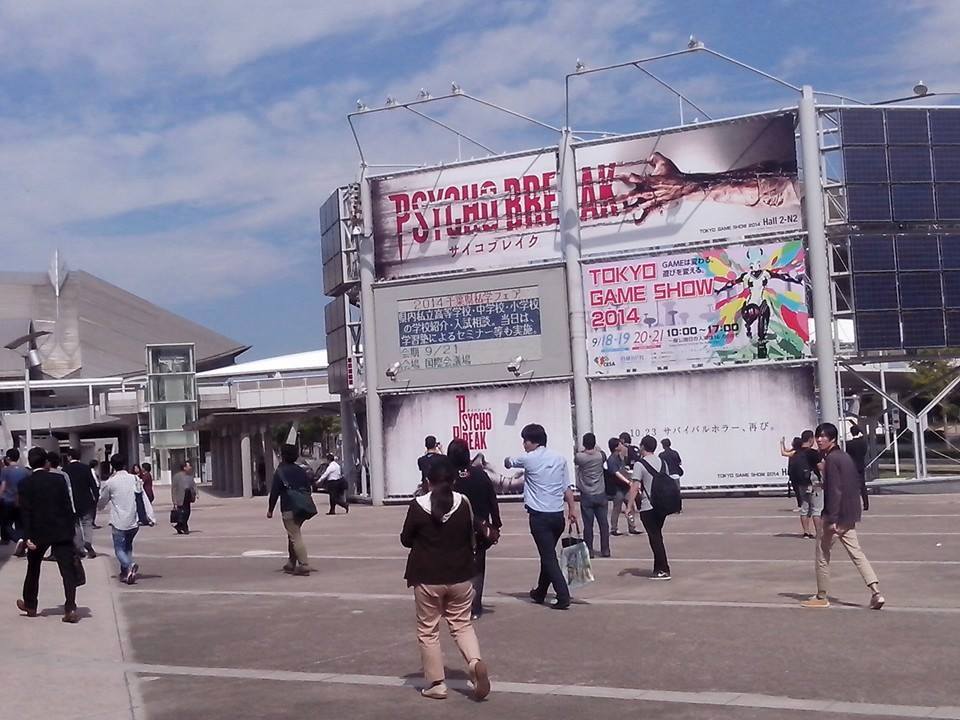
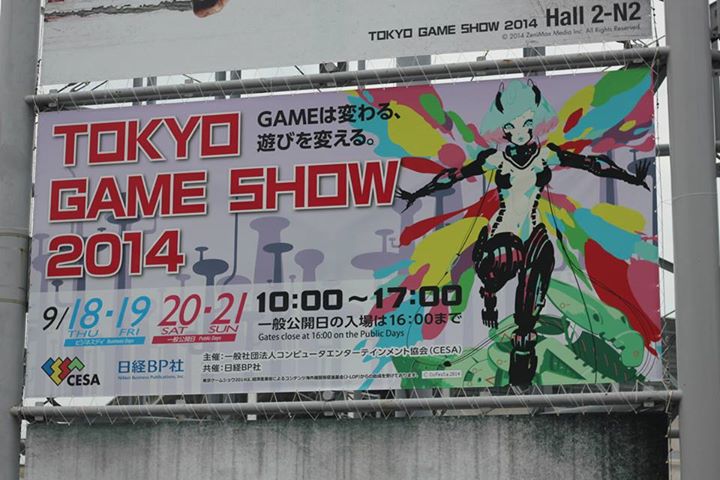
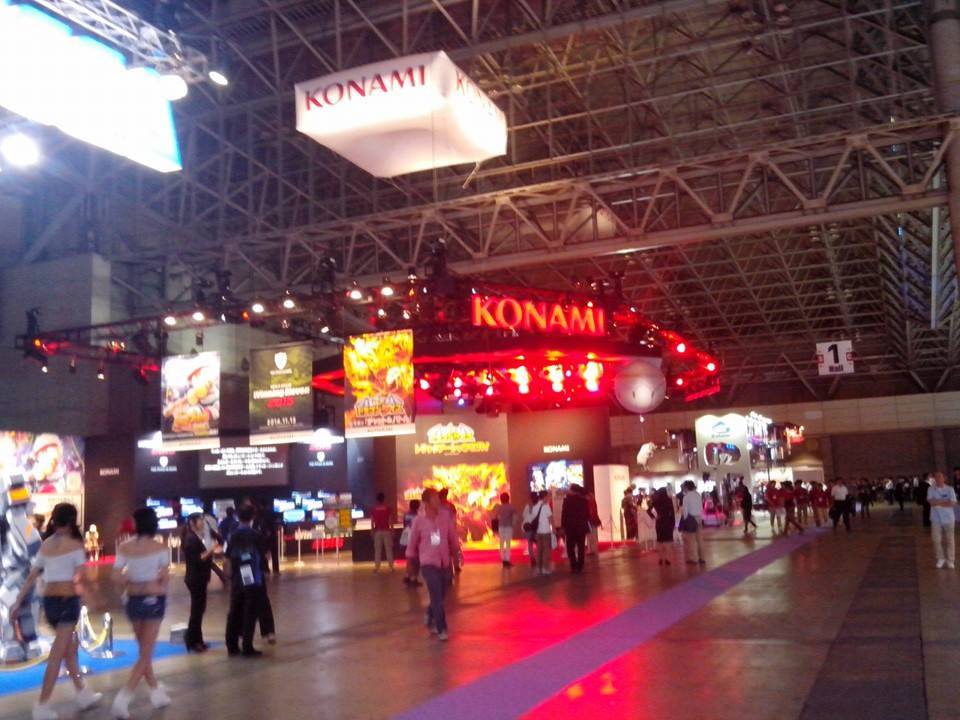
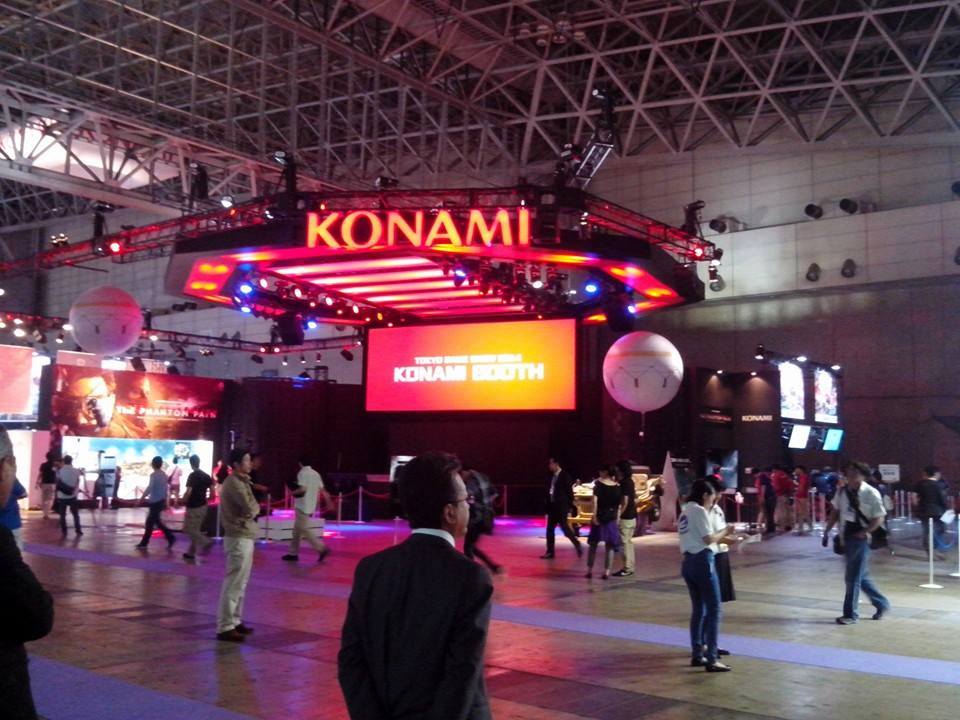
     The Tokyo Game Show 2014 was the biggest foreign event of the year that a representative (in this case Alstaire Sarthou) from Top Peg Animation attended this year. Since it was the first time for Alstaire, there were a lot of lessons learned in this event. According to Alstaire, this was the most organized event that he attended, especially when it came to business matching.

businessmatching_zps14512815

alsbusinessmatching_zps4e9e8e7c

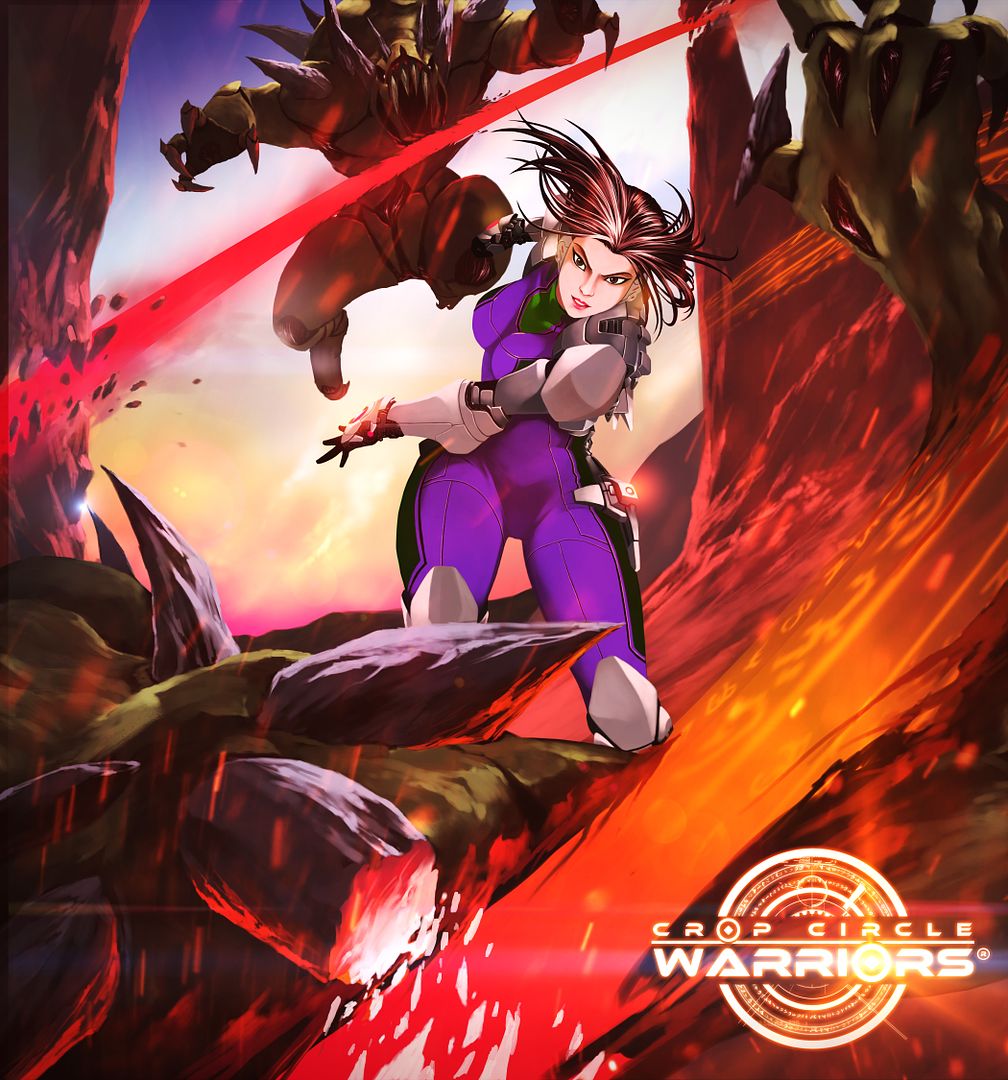
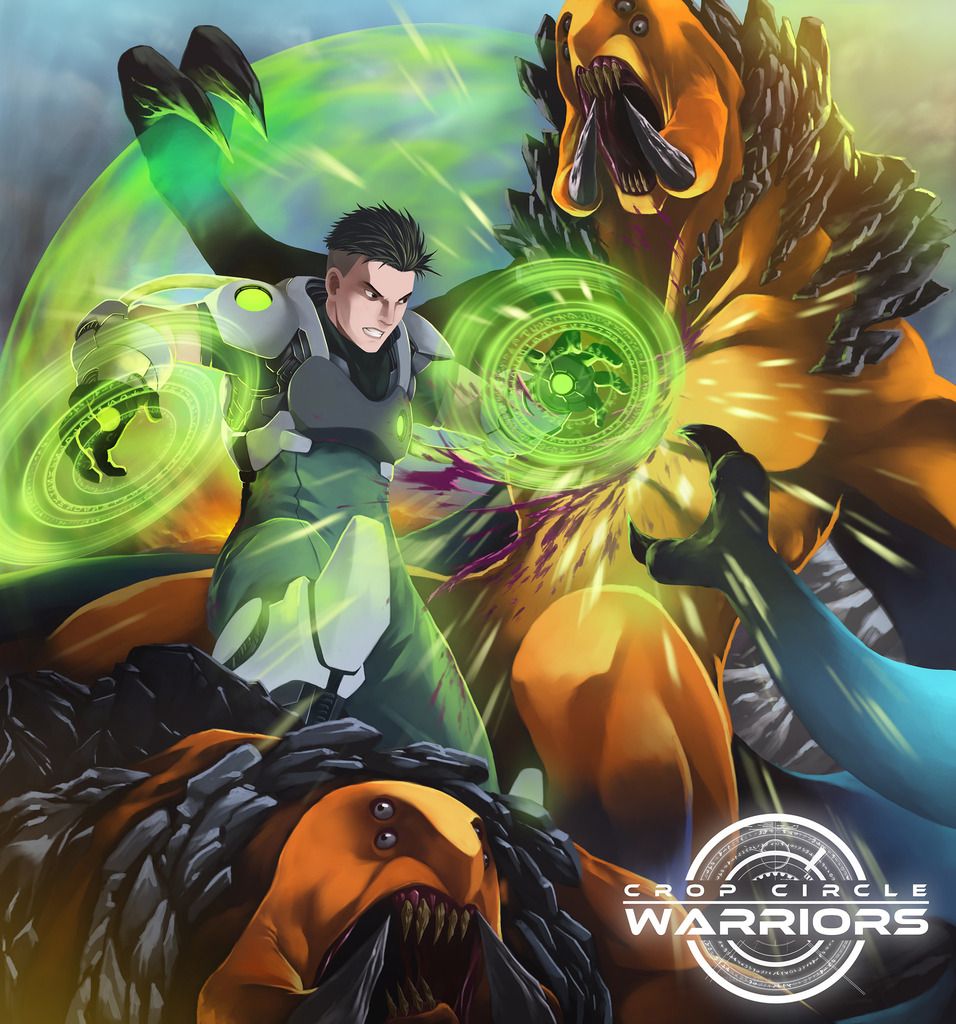
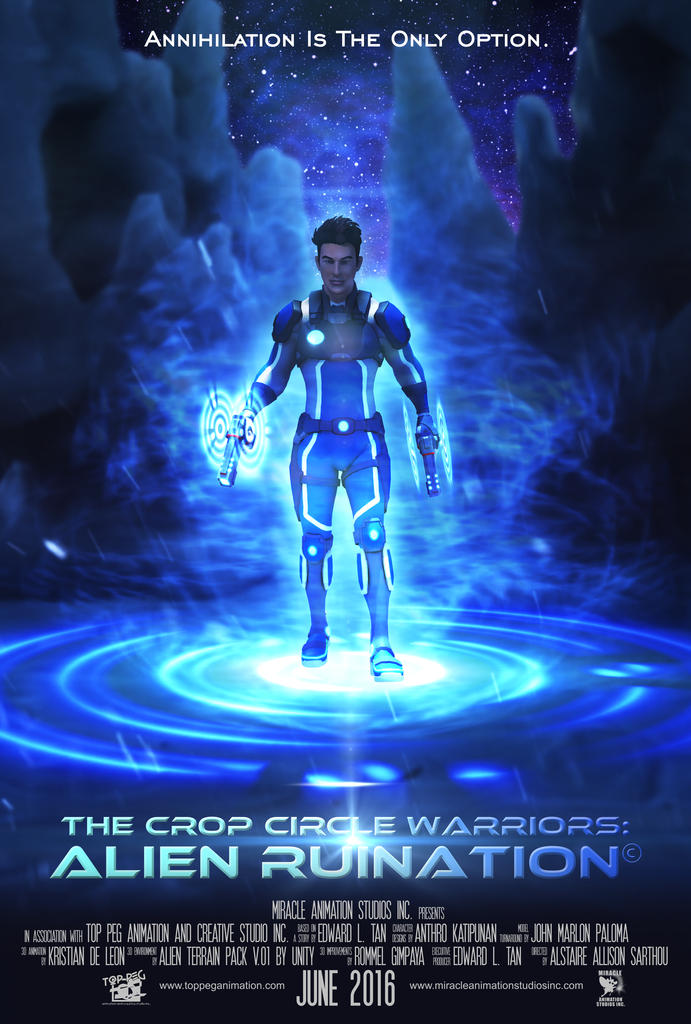
     In a nutshell, if you have a service or a game to sell, there will be many serious inquiries. If you have a finished product – a finished game to market, there will be no shortage of distributors from Japan, China and other countries who are willing to market it in Asia, Japan or other countries – if they are interested in your game.  Aside from language difficulties, there are different cultural business practices in Japan that we are not familiar with. It will take some time to understand these differences, hopefully we could do business with our new contacts in the future. One Japanese distributor was interested in our mobile game “Crop Circle Warriors®”. He was interested to market it in the whole of Japan which he said was the second largest market after the US, but he wanted a finished product. So from this experience, aside from android, we also have to have an iOS program for our game, since Japan is a very huge market for Apple iphones. Other companies are looking for e-books, applications, 1 minute animation shorts all for mobile applications, since they want to put out something new every week or every month. With regard to content, aside from the animation and the mobile game to finish, I commissioned a writer to start writing an e-comic for the “Ultimate Crop Circle Warriors®”, I plan this will be online sometime second half next year. I think the e-comic will be very good, as I have a good concept for it and the writer is a good one.  The following are Alstaire’s experiences before and during the event.

Preparation and Briefing

     Sometime on the last week of July 2014, Grace told me that I was to represent Top Peg Animation & Creative Studio Inc. to the Tokyo Game Show 2014 on September 16 to 21 at the Makuhari Messe, Tokyo, Japan. It will be my first time in Japan and this was the second biggest game exhibition in the world after Canada, so I was pretty excited.

MakuhariMesse_zps8fb917a7

   Makuhari Messe

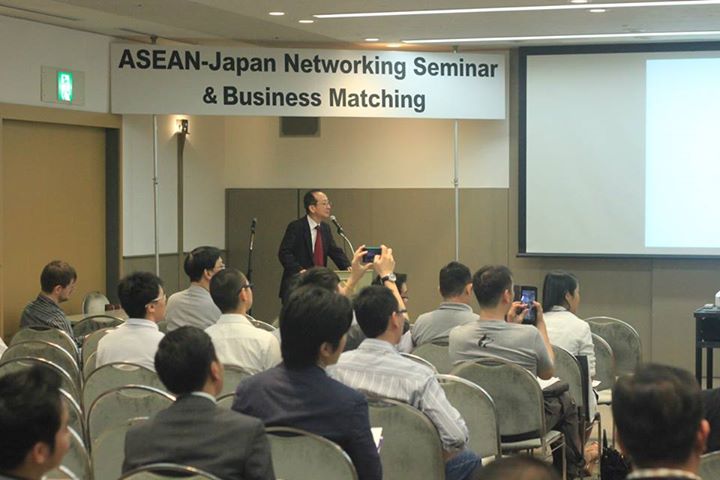
     Based on the email exchanges with the Department of Trade and Industry (DTI) representative – Ms. Jojo Flancia; I learned that we were one of the seven local companies invited by the Asean-Japan Centre, DTI’s counterpart in Japan. These companies belonged to the Information and Communication Technology (ICT) sectors. We had two companies from the animation industry under ACPI – Top Peg Animation & Creative Studio Inc. and Toon City Animation Inc. Four companies came from the game industry (GDAP) – Funguy, White Widget, The Studio of Secret 6 and Team App (a.k.a Holy Cow Animation Studio game division), and one company from the software industry (PSIA) – Pointwest. 

     Each company will be having their own booth to exhibit their services and to conduct business meetings. Each booth will have a space for posters, a 23 inch TV monitor, and a table with two chairs. We will be situated at Hall 1 of the Makuhari Messe, together with other Asean counterparts named the Asia New Stars area. I was also sent the requirements, rules and regulations for the event. I learned that our airfare, hotel accommodations and transportation allowance would be subsidized by the organizers but I needed to book my hotel before August 15 via a booking website that was set up by the organizers. I also needed to set up business meetings on the first week of September via the Internet with the companies wanting to meet up with me using the Tokyo Game Show website.

10649554_702118056531823_8111481312324121529_n

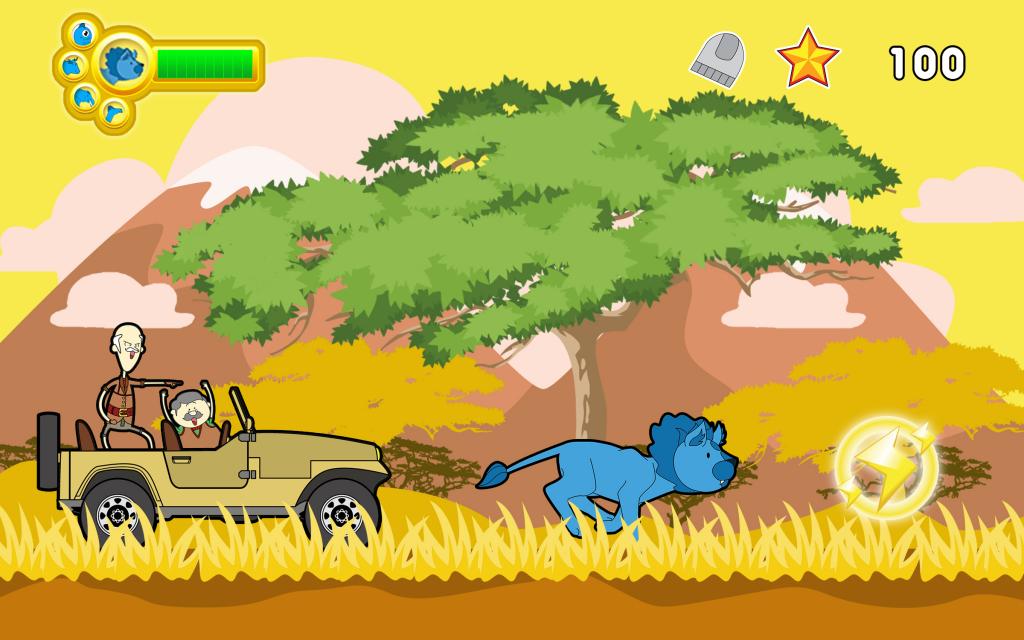
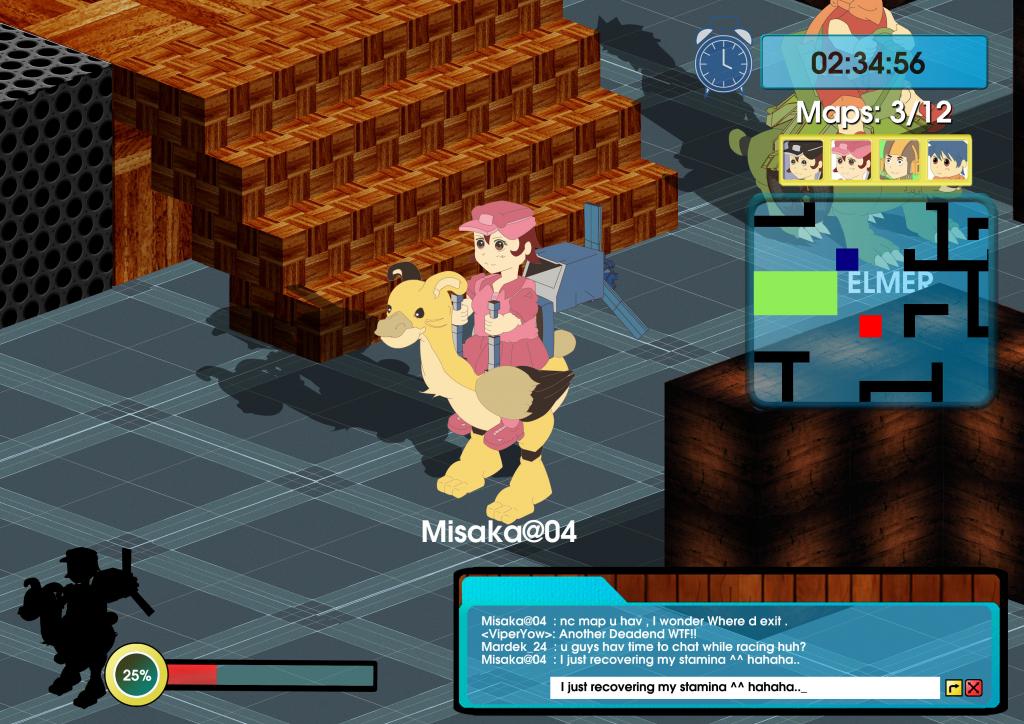
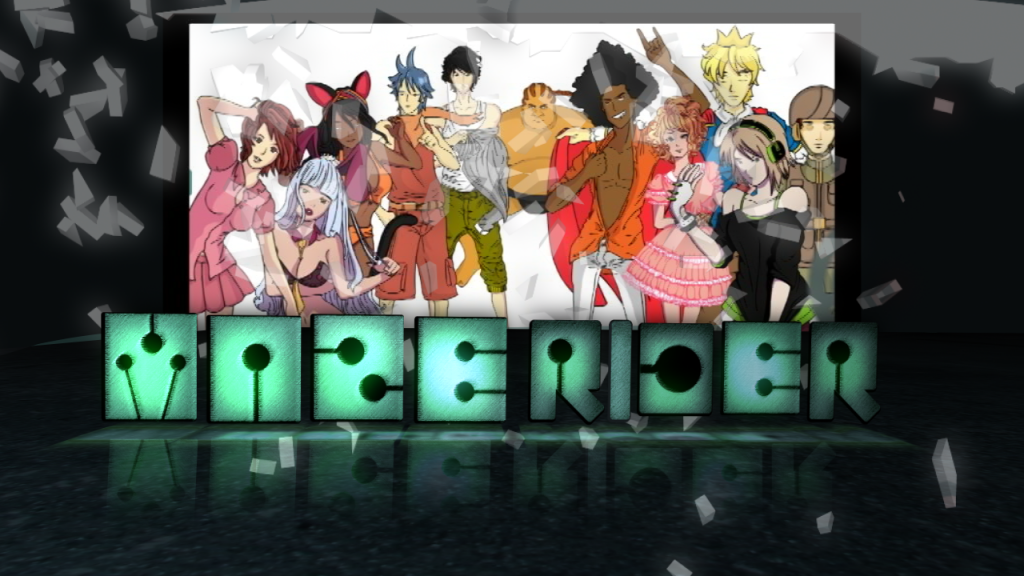
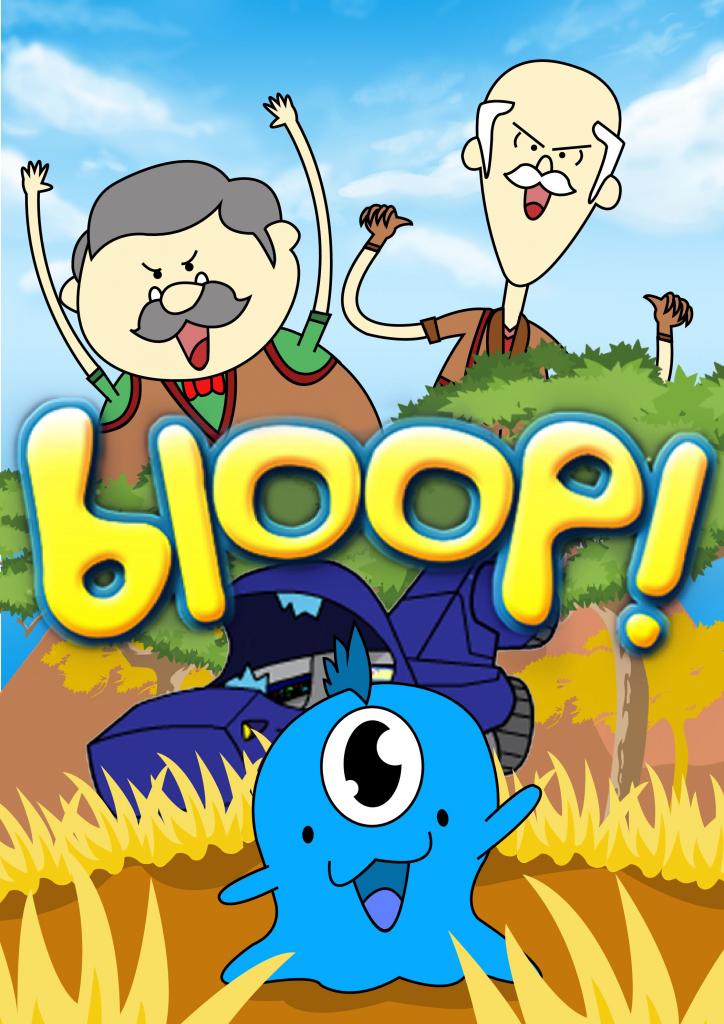
   10678821_586331298137434_6523635900132072716_n      Since this was the Tokyo Game Show (TGS), I didn’t want to only showcase our services in animation, but I also wanted to show that we have worked for game companies and we are currently producing our own games. I planned to make a new presentation reel showcasing our works in animation, game art and sample of the game play of the games in production. We have two games that already have a trailer and sample game play, via the Creative Collab Space. This was Grace’s idea where we could work with some artists who had game ideas and were willing to work with our animators and some intern programmers to make their ideas come to life. I also had the idea of making a game trailer for the “Crop Circle Warriors®” which is related to the “Jobert and the Crop Circle Warriors®” animation we are finishing. My idea was animate some game sprites for the characters then composite it together with a background, add some graphic interface elements and make it look like a finished game. This would give the potential clients the overall idea for the game as well as market the TV series. So when Edward called one time at the office, I told him about it and he agreed with the idea. Below are the sample of the two games we have shown at the TGS.

7InGameUI_zpse44ad595

Bloop Game

MazeRidergameplay_zpsff33a483

Maze Rider Game
MazeRiderPoster_zps30d6c264 (1)Maze Rider Poster

BloopPoster_zps29573718

Bloop Poster

      My problem was I had only a month to prepare for the trailer aside from the other responsibilities like teaching classes MWF, 9-11 am, finishing the animated series, supervising other projects ongoing at Top Peg. I also needed to design a poster for the booth, as well as prepare brochures and calling cards, have flash drives for marketing samples for serious potential clients. Although Grace had Edith and Tharine took care of the printing work, I still needed to design the poster.

     Last September 11, 2014, we had a participants’ briefing at the Center for International Trade Expositions and Missions (CITEM) where I got to meet the other delegates. Everyone was there except for Mr. Rene de Guzman of  Toon City (who was in Canada at that time) and Andrea and Juan Joseph of White Widget (who had a deadline at work). Ms. Jojo Flancia gave us some information about the event. 

     Last year we had 3 companies from the Philippines that shared a single booth, this year we have 7 companies with their own respective booths for free. Last year there were 300+ exhibitors, this year there are 700+. Last year there were 220,000+ visitors, and this year the expected visitors are 270,000+. We also learned that our airfare, hotel accommodation and transportation allowance would be given on the 17th in Japan.We were also given maps of our hotel, our itinerary and other details of the event. We voted Mr. Rene de Guzman as our team leader, even though he wasn’t present. Since he was the most senior and he had knowledge of the industry as a whole.

     Using the TGS 2014 website, I was able to book at Hotel New Tsukamoto, about 9 minutes by metro train (not bullet train) from the Makuhari Messe Exhibition Hall. I wanted to book at a hotel near the venue but unfortunately, all the hotels in the area of Makuhari were already fully booked. I was glad to know though that among the delegates, I was booked the closest to the venue. Jojo (CITEM), Danny (Team App) and Dinio (Secret 6) were booked at Hotel Soga about 15 minutes away and the rest from White Widget, Pointwest and Funguy were booked at APA Hotel, 45 minutes away by train.

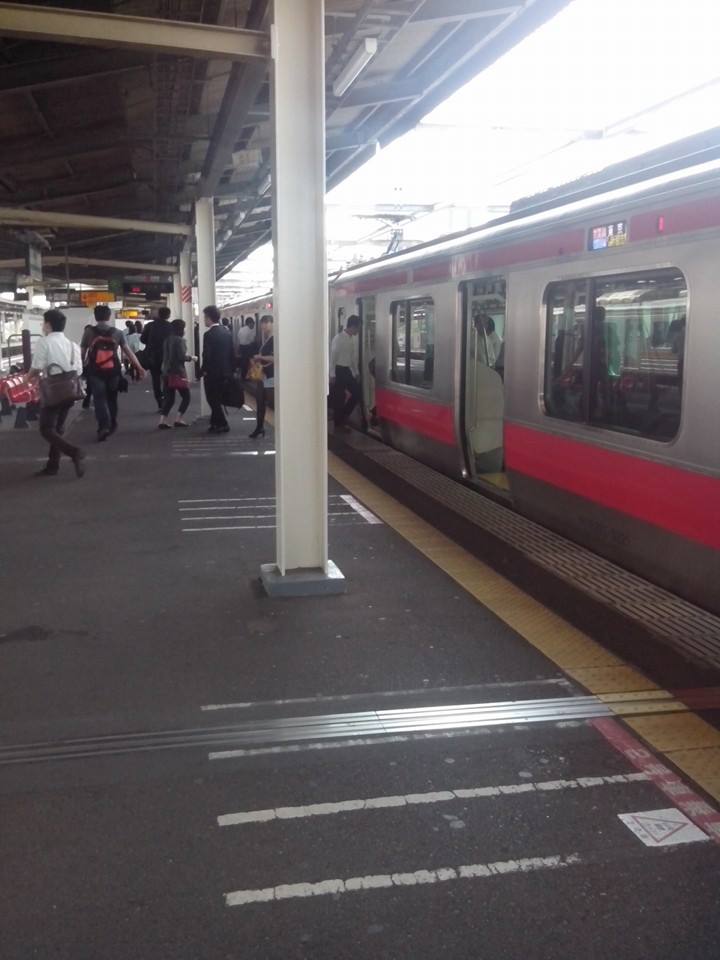
trainatchibaminatostn_zpsc2c3c38d

Metro Train

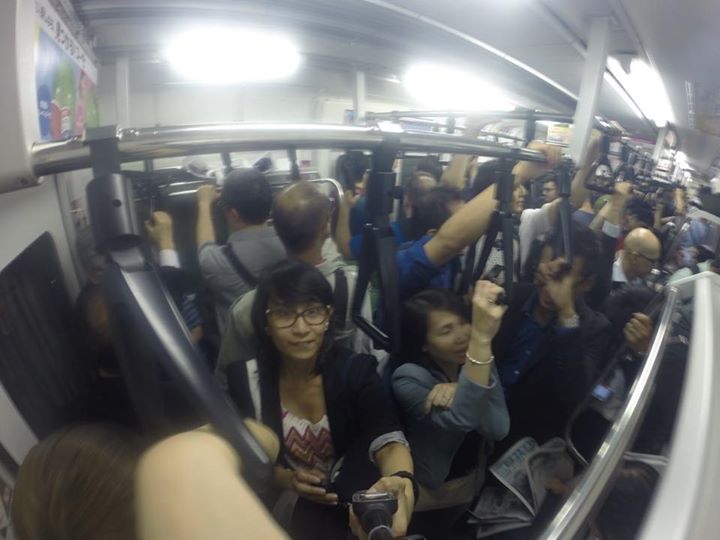
metrotraininside_zps3257f06e

Inside Metro Train

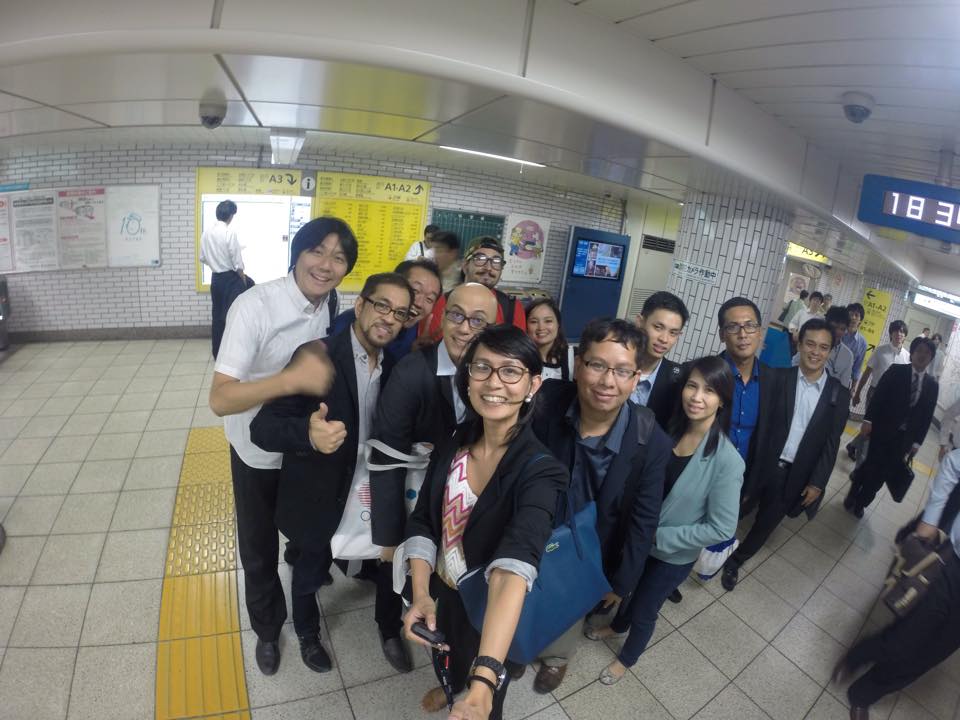
metrotrainrushhour_zpsef307792

TrainKaihimMakuhariStation_zps86003f3f

Train Station

trainstn_zps381ff441

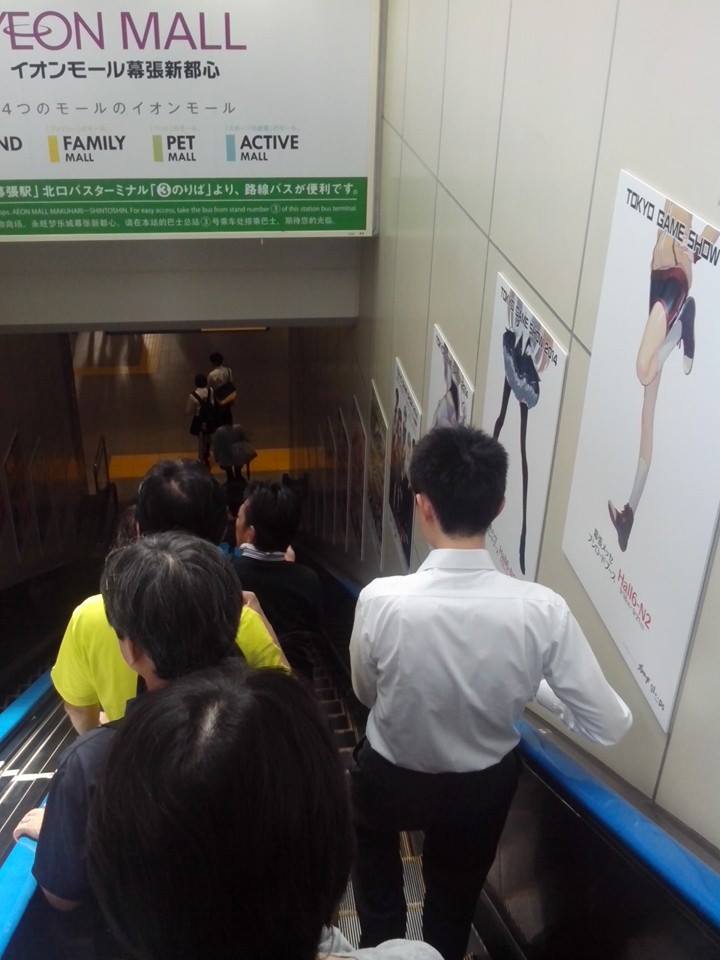
trainescalatortoentrance_zps49d93c83

Train Escalator

10653416_702117836531845_6670280093495910895_n

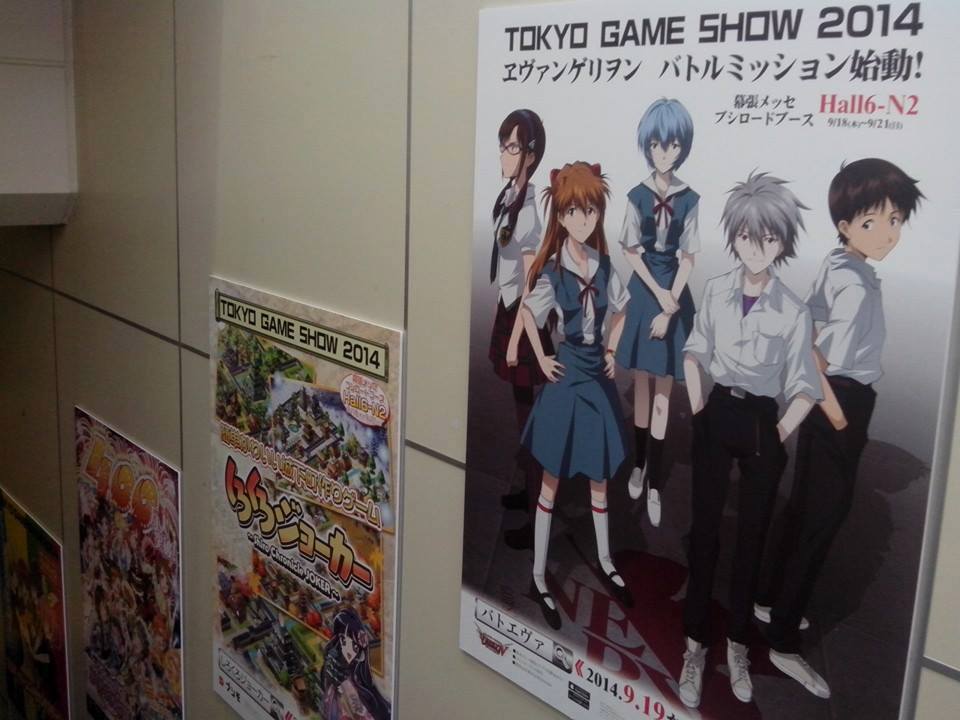
Posters Beside the Escalator

        I also already booked my air plane ticket even though I didn’t have my Visa yet, because we were still waiting for some documents from the organizers, when I did receive them, I was able to get my Visa after 2 days from an agency in SM Southmall. It was fast, maybe because the organizers were from the Department of Tourism in Japan.

     As if on cue, my calling cards, the posters and the demo reel I was going to bring were all finished by Monday afternoon, and everything was ready and I was set to go the next day (September 16). Later that afternoon though, a client from Guam walked in and he needed a video for September 17, so I had to help finish the video which I did, but finished about 1 am. I needed to leave for the airport by 4 am because my flight was at 6:46 am. So I only had a 2 hour sleep before I left for the airport, so it was a bit hectic.

ExhibitStuff2_zpsbf08bf8d

Top Peg Brochures and Calling Cards

September 16, 2014

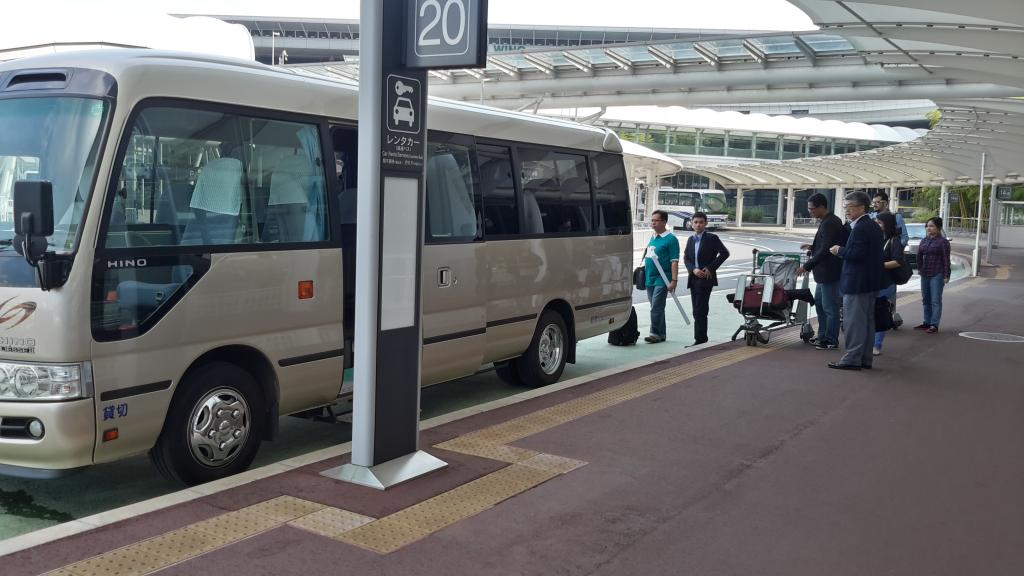
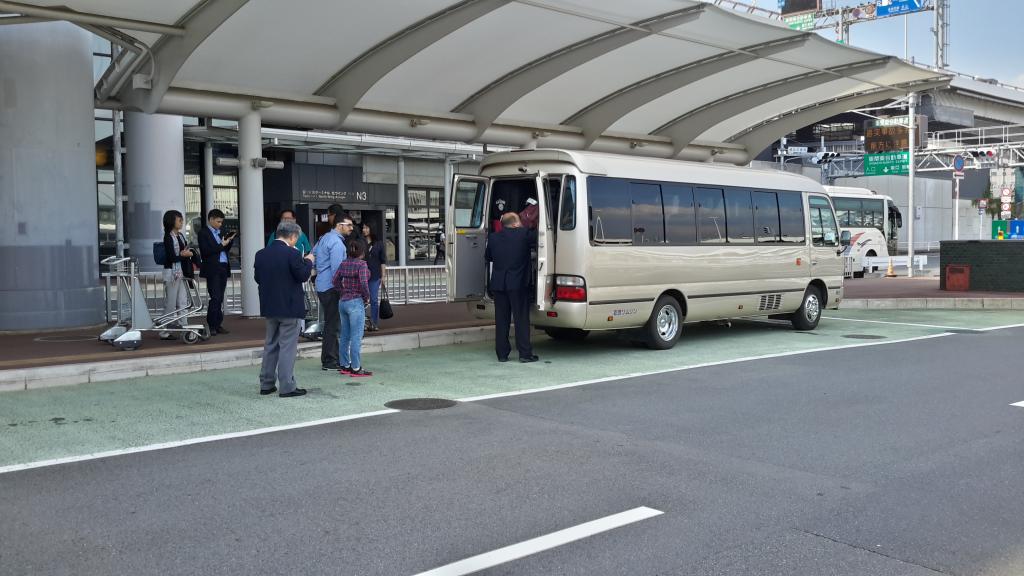
    At the PAL airport, I met Mr. Alfonse Anglioto, of Funguy, I learned that Ms. Jojo had to change her flight from PAL to Delta, so it was just us to board the PAL flight to Narita airport. The plan was to meet up at Narita at 2pm, then we would be picked up by a van, courtesy of the Philippine Embassy in Japan; then meet the other delegates at the first Japanese company we would visit. We arrived at 1 pm at Narita airport, where we first met Ms. Jojo and Mr. Hidehiko-san, who would be our guide. A few minutes later, Danny, Andrea and Joseph arrived. It was my first time to meet the guys from White Widget, and it was exciting to find out that Joseph would be wearing a costume for the 18th and 19th business meeting. We were shocked to learn that we didn’t have time to eat lunch because the distance to the first company was 2 hours away, our guide didn’t want us to be late because in Japan, some companies close at 5 or 6pm.

1NaritaAirport1_zps6410f34b

Narita Airport

1VanfromAJC_zpsd7837815

1Vanloading2_zps10b3862f

10614190_702119536531675_6668521156307536263_n

Juan Joseph Wearing a Yeti Costume

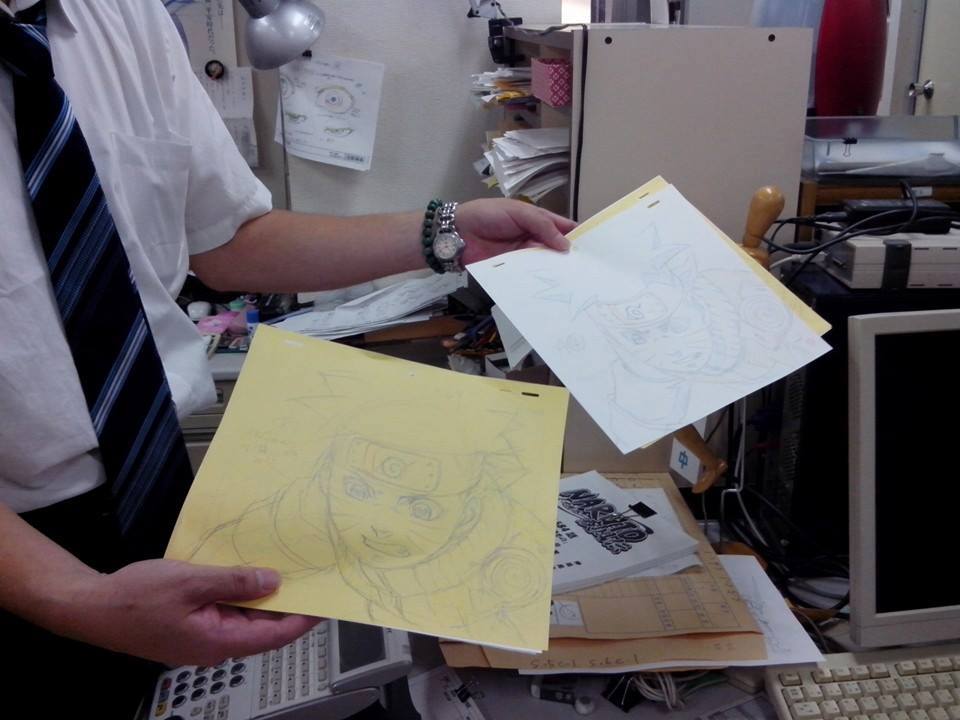
     Our first stop was Pierrot, Inc., the company that produces Naruto, Tokyo Ghoul and Bleach. We were surprised to see that this big animation company still animated the traditional way, using paper and pencil. They only used computers for coloring. I was expecting that they would be using all digital tablets already. They said they are looking to transition to digital but they would be sacrificing the time for their production. We also noticed that there was no noise, no music, no talking. We asked the director if the artists were allowed to talk with each other, he said, not during office hours. We passed by a conference meeting, and the people were all whispering in the meeting. It was surreal, we jokingly said that a Filipino might not be able to survive in that kind of environment. We also learned that they knew of only 3 studios in the Philippines, TOEI, Fil-Cartoons and Philippine Animation Studio Inc. (PASI).

68_big_zpsdc614a01

Pierrot Studio

studiopierrot01_zpsb6bd651b

3PierrotAnimStudio12Nino_zpsb9320594

3PierrotAnimStudio36KeiruHenmi_zpsc8ede27e

KeiruHenmiManagingDirectorPierrot_zps892739e0Keiru Henmi – Managing Director of Pierrot   

pierrot_zps01dea01d

     10653442_702118189865143_8480376901923340861_n

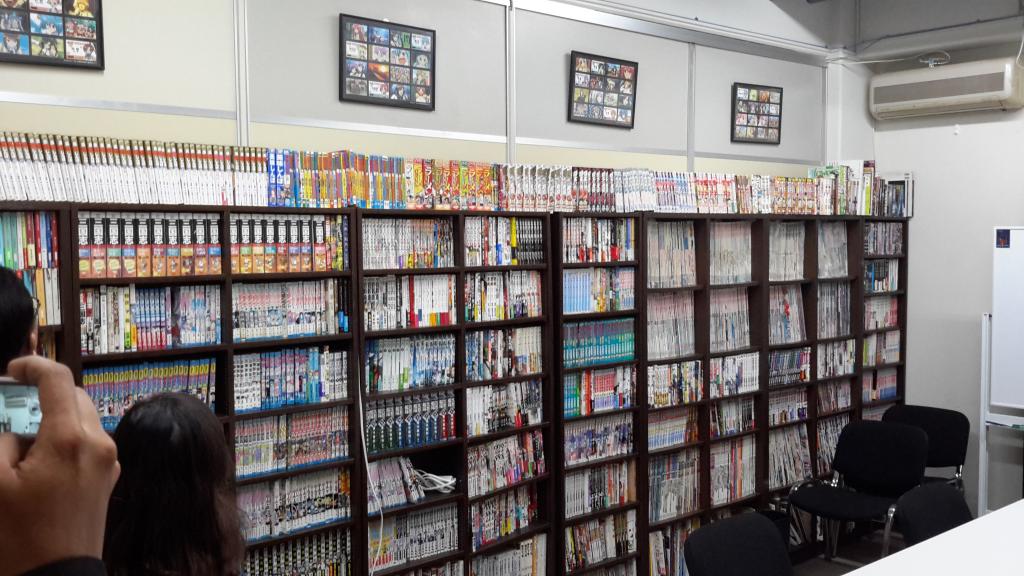
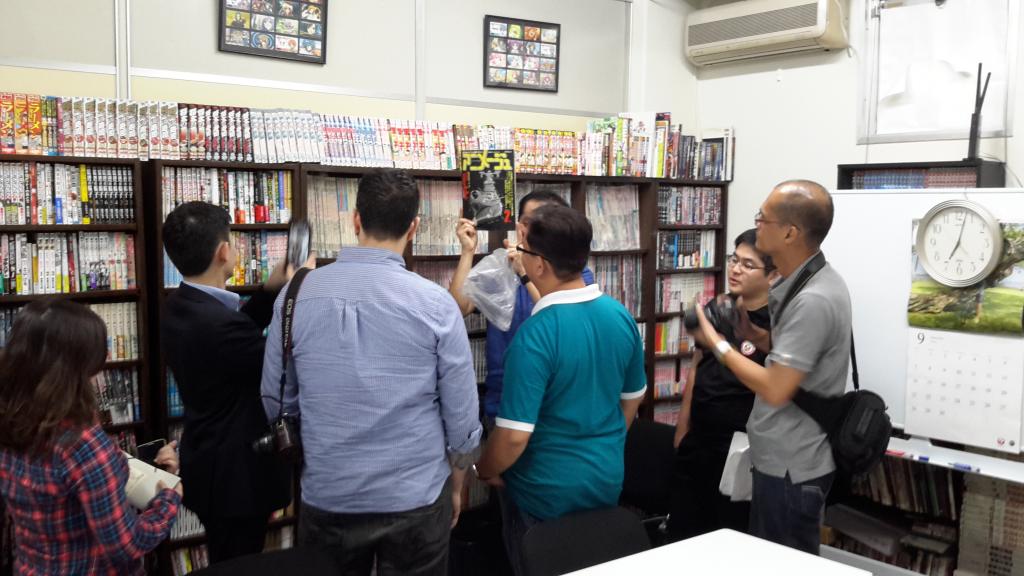
     The next company we went to was Doga Kobo, an animation company that worked as a sub-contracting studio for TOEI animation since the 1970s. Here we met the young president Mr. Ryo Ishiguro and wacky Project Developer/Animator Hiramatu-san. Same as with Pierrot, they were also doing animation the traditional way. What impressed us was their library, they had Manga and magazines about Japanese animation from the 1970s. We were able to checkout a magazine that had Yamato (Starblazers) being introduced as well as robots Grandizer, Danguard Ace and Great Mazinger. Their oldest issue was 1978, but Voltes V and Masinger Z were older than that year, so we were a bit sad not able to see copies of  our favorite robots. As we were looking at the magazines, we were transported back in time as we were reminiscing our childhood. They also had an area for acting, they had props to simulate scenes so they could visualize it when they draw. We also learned that they have been outsourcing to Indonesia and Vietnam. We asked them why they didn’t outsource to the Philippines. They said that they didn’t know that there was an industry in the Philippines, but now they know. We are hoping that we could change their perceptions in the next few days.

5DogaKobo1_zps24c7306b

5DogaKobo9_zpsa4d21696

5DogaKobo12MangaCollection_zps183ae8d7

5DogaKobo15Yamato1978Issue_zps5d982a62

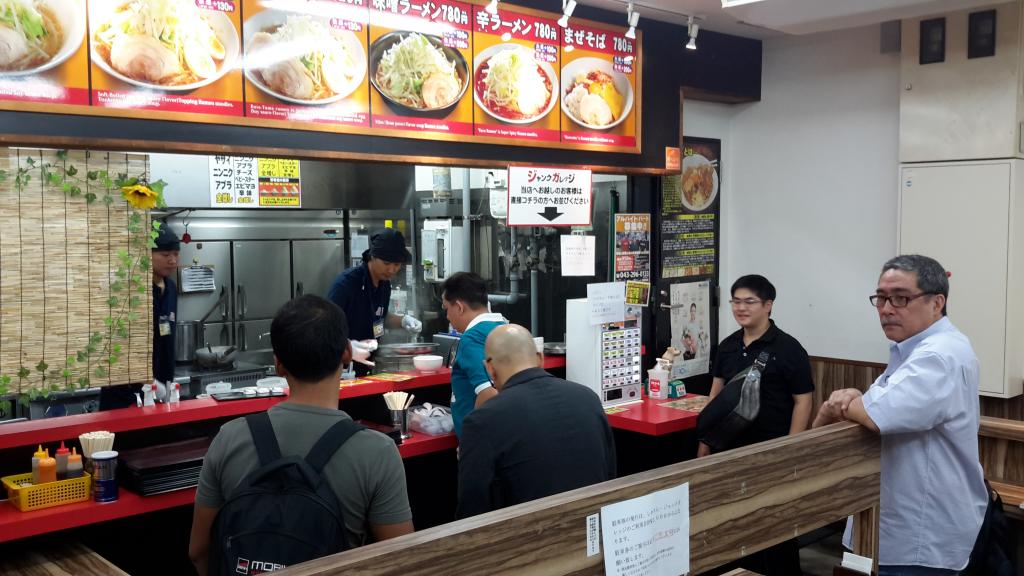
     After the tour, we went to Makuhari Messe to do reconnaissance. We needed to know how far from the station was the venue, as well as how many minutes we needed to travel from our respective hotels. But before doing anything, we wanted to know the closest place where we could eat, after the tour we were all very hungry. We went to a ramen place, and we were excited for our first authentic ramen. The first thing we noticed was the price. The cheapest order for ramen was about 600 yen or P264, the picture showed it had pork, veggies and noodles. The price was for a small size, as it says in the picture, there was a medium and large version also. We had to order via a vendo machine where there were pictures corresponding to the prices. We ordered by placing money in the machine and pressed the button of our order. Then we had to answer some questions from the waiter, it was a good thing that our guide was there to translate. The waiter asked what flavour of the soup we wanted, garlic soy or Misu. I chose Misu,then he asked what topping we wanted. He showed 12 kinds of toppings, as I was choosing, he said we can choose all the toppings for the same price. And so we chose all the toppings. After a few minutes, we were surprised that we were served a big bowl of ramen. It was 4 times the size of a bowl of noodles in Chowking. We learned that a small, medium and large size was not referring to a bowl size, but to the amount of veggies (Mung bean sprouts) that would be placed with it. The soup was good, but with all the toppings (mine had cheese, soft boiled egg, chili sauce, bonito flakes, nori and some mayonnaise) it was really rich, that I wanted some bread with it. None of us was able to finish our bowl. Some of us didn’t want to have ramen ever again.

MakuhariMesse_zps9e169e0b

Makuhari Messe

TGSMakuhariMesse_zps1120d309

1509860_702118353198460_2121520112713192656_n

10612930_702118386531790_5142567036376187586_n

RamenHouse_zps5567cbb0

Ramen House

6RamenHouse2_zps132b05ac

6RamenHouse1_zps27443286

Ramen_zps430e9cc0

All-In Ramen

     After dinner we decided to go back  to our hotels. We learned that we needed to meet up the next day at 6:30 am at Makuhari Messe, because we had a courtesy call at the Philippine Embassy at 8:30 am. The travel time from the venue to the embassy will be two hours by van. I reached my hotel at 10 pm. The room was small but had a fridge, 23 inch TV, a toilet and a tub. The toilet bowl had a digital handle to the right that had buttons that heated the seat, turns on 2 types of sprays with a control for the pressure for the spray. Wow! I also had a Kimono in the bed instead of a robe. The view was just another hotel across the street. After quickly checking all the Japanese channels, I immediately went to sleep.

HotelNewTsukamotoEntrance_zps21dc2eb6

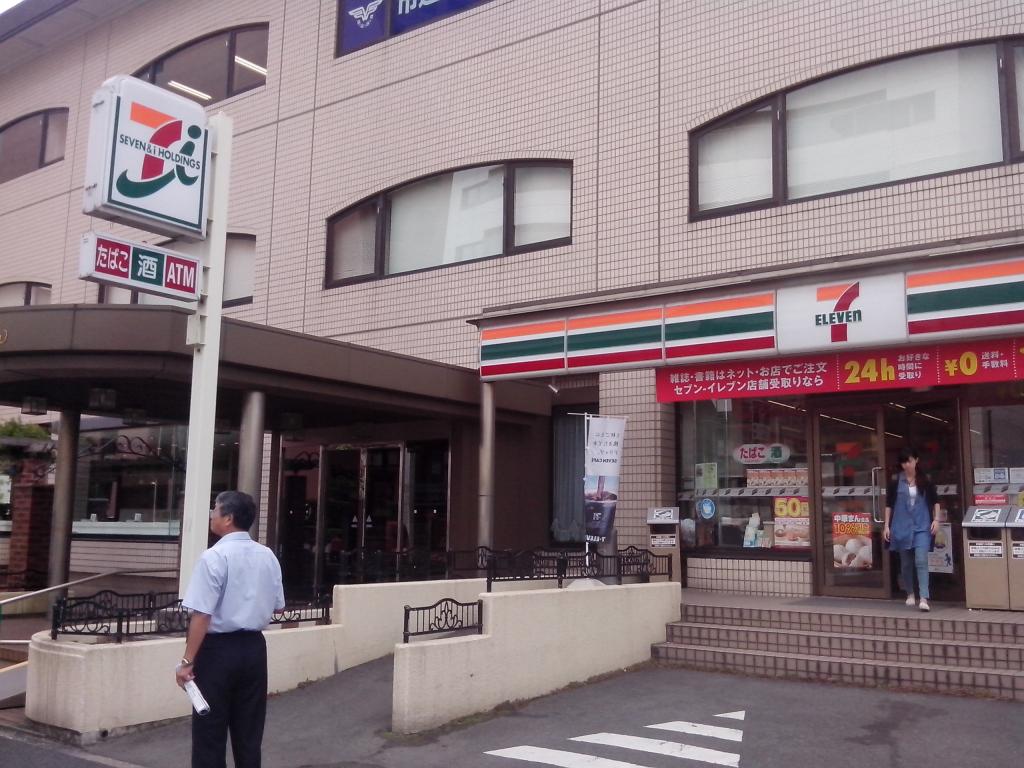
HotelNewTsukamoto7-11_zps0fc06be7

HotelNewTsukamotoFacade_zps747b0e5b

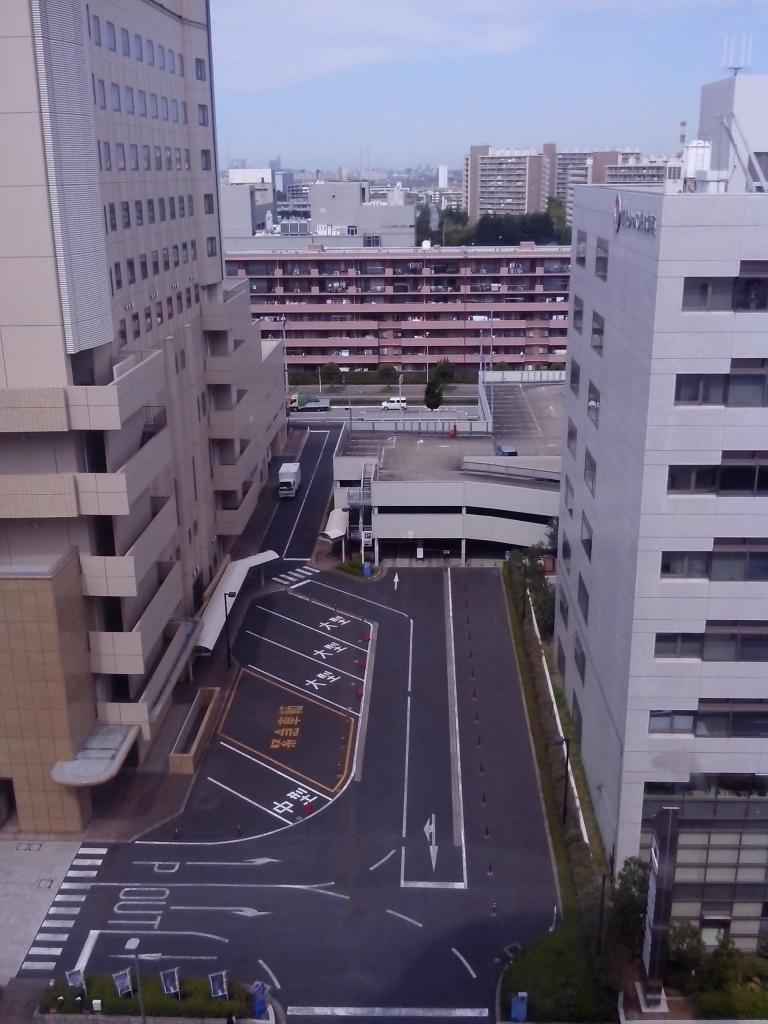
HotelNewTsukamotoviewfromwindow_zpsd552f0e8

View from the Hotel

September 17, 2014

     The alarm didn’t sound off…it was 5 am and I had to hurry. Thanks to Niño, a young Japanese interpreter who accompanied us yesterday told me about the train schedule. Niño is married to a Filipina who works at the Philippine Embassy. I needed to take the 6:09 am train to make it at the appointed time at 6:30am at Kaihim Makuhari. After a hot bath and no breakfast, I was at the train station at 6:00 am. The train was right on the dot and everyone was there already at the station. We all went to the nearest convenience store for some bread and coffee, and at exactly 6:30 am the bus arrived.

       Our first stop was a courtesy call at the Philippine Embassy, which was based in Ropponggi, a place where most Filipinos hangout.  The drive was 2 hours away from Kaihim Makuhari. When we got to the embassy, we noticed that the Embassy building here was really big and very nice. Rene de Guzman said that it was bigger than the embassies in Singapore and Canada. Here we met Ms. Dita Angara-Mathay, Commercial Counsellor at the Philippine Embassy. We also met Niño’s wife, but I can’t remember her name, nor was I able to get her calling card. Ms. Dita told us how important this event was for them and for the Asean-Japan Center as well. We were shown a clip of how big game development is in Japan. There were lots of opportunities that was open for us and she told us to make the most of it. After a few minutes, Ambassador Manuel Lopez arrived and gave some encouraging speech for the group. After a few pictures, everyone was lively and pumped up for our tour.

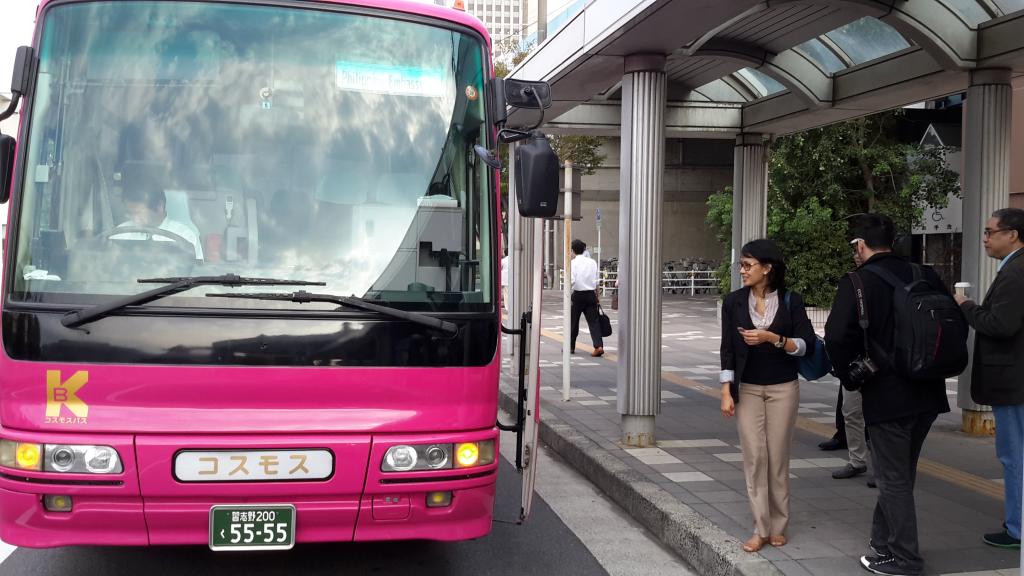
8KaihimMakuhariStn6am2_zps1fadfdcf

Bus to the Philippine Embassy at Makuhari

PhilippineEmbassy_zpse0abb96cPhilippine |Embassy at Tokyo 

10CourtesyCallwAmbsdrLopez2_zps70cd417a

At the Center Ms. Dita Mathay and Ambassador Manuel Lopez 

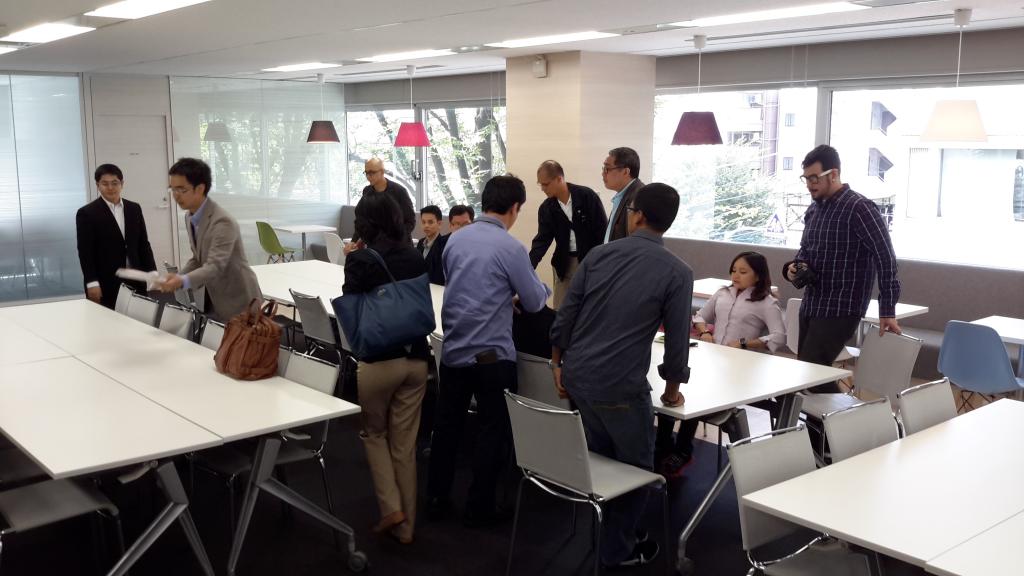
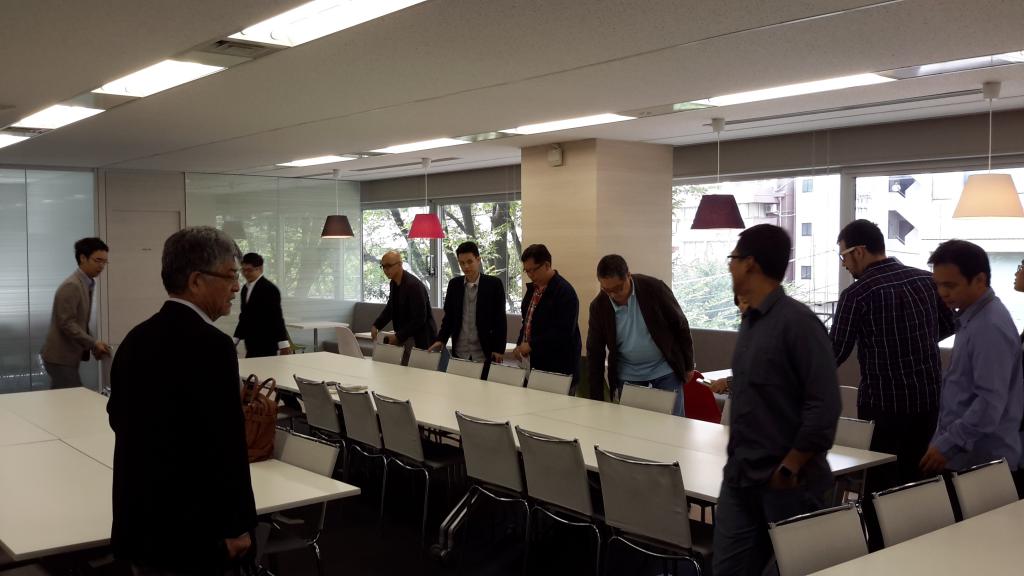
     The first company we went to was the Creek & River Co., Ltd. When we reached the lobby of their office, it was corporate looking, the same as some agencies here in the Philippines. We met Mr. Yamada, who then led us to the back door of the building then out into the street. We walked about 5 minutes to another building and then to a large area with a lot of conference tables, this is where we had our meeting. What we learned about the company was that they were called a Creator Agency. Mr. Yamada said that they have 60,000 clients in their library and about 1,000 projects in production. Basically what they do is offer the creator support to help finish some of the projects. In their library of creators and services, they handle TV, movies, advertising, web, e-books, publications, games, on-line videos and exhibitions. We learned that this was one big company.

13CreekampRiverLobby1_zpsb979dbd2

CreekandRiver_zpsb55168cb

walkingtocreekandriversmeetingoffice_zpscf683f66

14CreekampRiverConference2_zps2abfefeb

14CreekampRiverConference1_zpsd8958741

     Our next stop was the Digital Works Entertainment, where we met Mr. Yoshio Higuchi, the CEO. I remember that we met Mr. Higuchi in Manila last May 19, his company was one of the exhibitors then. Basically, they handle animation and game development. It was a laid back office, not as big as Creek & River, but Mr. Higuchi had some nice things to say. He said, from what he saw, the Philippines had the talent and he wanted to tap that talent. He explained to us that his company is willing to be the middle man for the Philippine companies to Japan. He also explained that the system in Japan is very different from the US. The Japanese don’t believe in contracts when doing business he says, they rely on TRUST. So if we will be doing business in Japan, we should follow this system. This made most of us reluctant, because we know if we do get into a partnership with a Japanese company, we would be dealing with large amounts of money. We were all enthusiastic though that his company was willing to help us negotiate with other companies. This might be the door to finally break into working with Japanese companies.

DigitalWorksEntertainment_zpsca062469

     After the tour, we went back to Kaihim Makuhari for the orientation proper of the Tokyo Game Show. We were 15 minutes early when we got there, so we ran to the nearest restaurant for lunch. Others went for Pork Katsu Curry, again a large plate, while I searched for something familiar. I saw some rice topped with braise pork, a also a large bowl but I knew it would be good. After quickly devouring our food, we went straight to the orientation at the Green Hotel. We met the other mission members from Asia. We learned that each country had 5 invited companies, except for Malaysia which had 10. Brunei was only able to get 2 companies to join, so the Philippines was able to add two more companies to join the invitation from the original 5. 

19TGSOrientation1_zpse52065c0

19TGSOrientation2_zps13211bd3

19TGSOrientation3_zps4d39533a

     Orientation at the Green Hotel

      We were given our exhibition tools like the schedule, badges and brochures for the event. We were also told that we had to be at our booth at all times, and we should attend all the scheduled events that was prepared for us. If we missed any of these, they will ask us to return the subsidy that would be given to us. After the orientation, each company was called so we could receive the subsidy given in an envelope. After this, we went to the Makuhari Messe to fix our booths. It will be our first time to go in the venue, and the first thing we noticed was how big it was. As comparison, it was like 3 times the size of the SMX Exhibition Hall in the Mall of Asia. 

TGS2014Sept182_zpsf1af1146

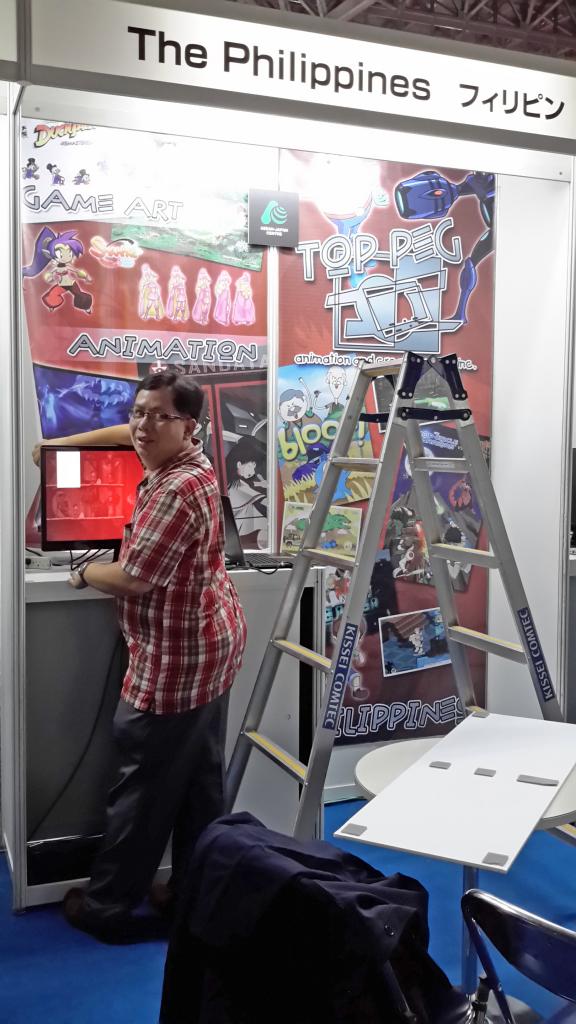
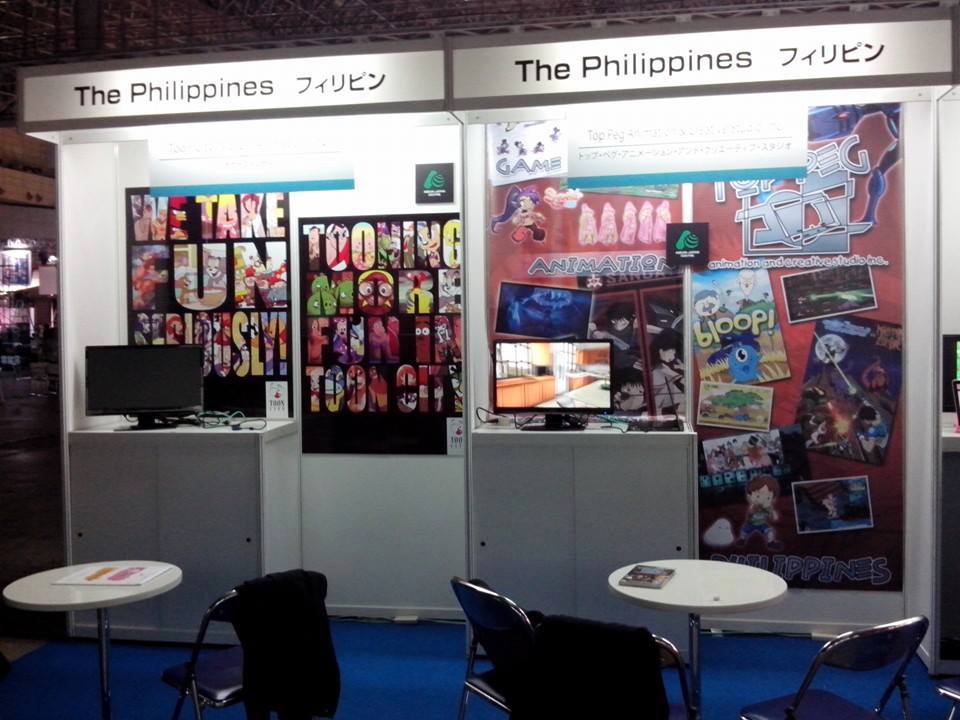
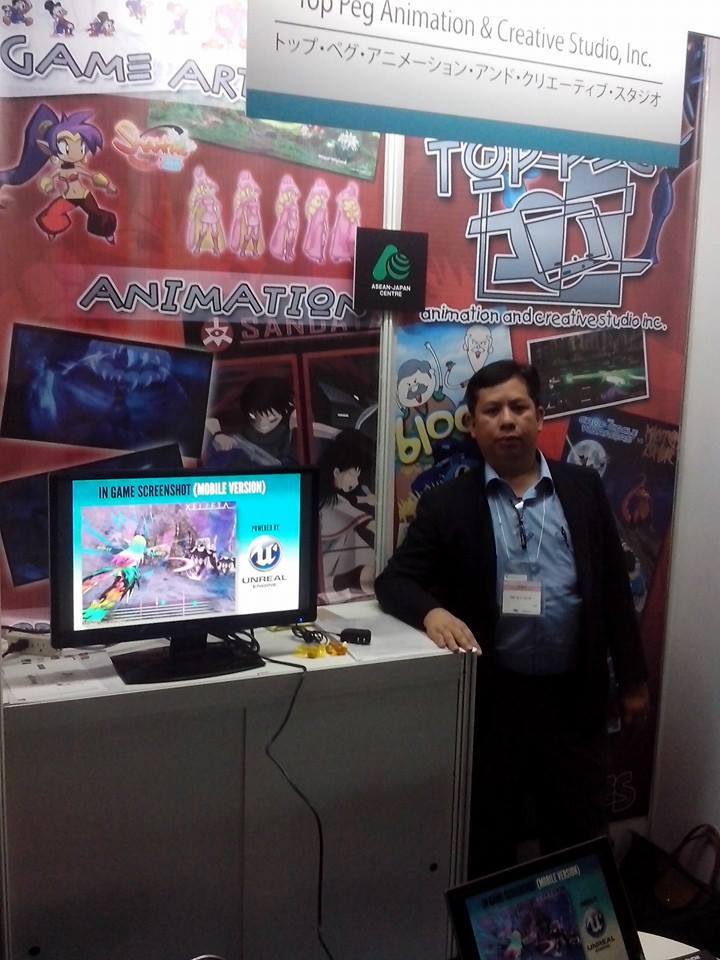
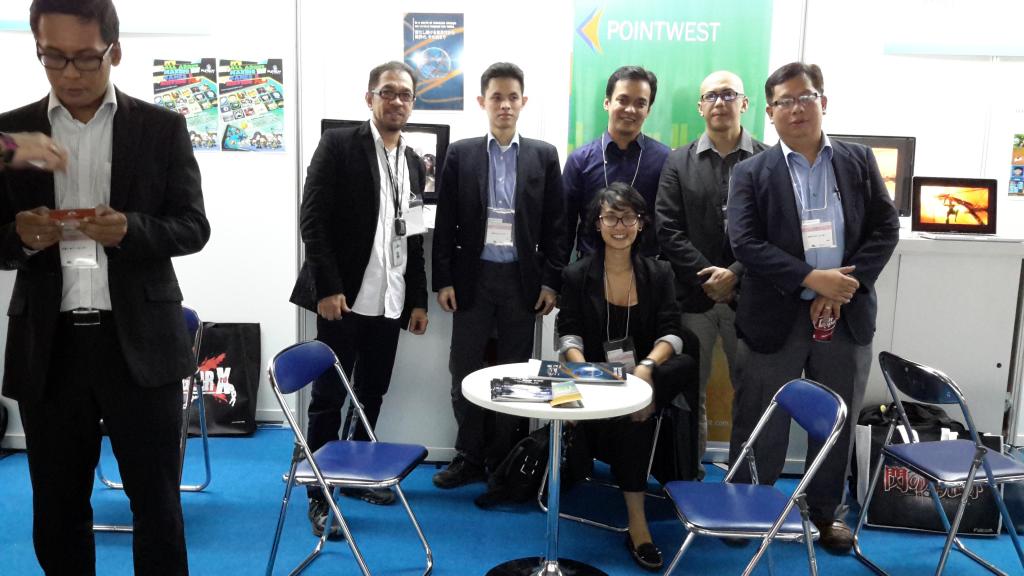
     Our booths was the same with all the mission members. I was prepared for decorating, I had 2 posters made to the size of the panels and I had double sided tapes prepared. When I finished decorating, I am happy to to say I had the best looking booth from the Philippine delegation, and maybe for all the Asian New Stars area. One thing the other booths had though was playable games loaded into iPads that were place on stands for the visitors to test.

20TGSIngress44Als_zpse222b1c4

10610747_702119079865054_7334751072649900245_n

           Top Peg Booth (right)

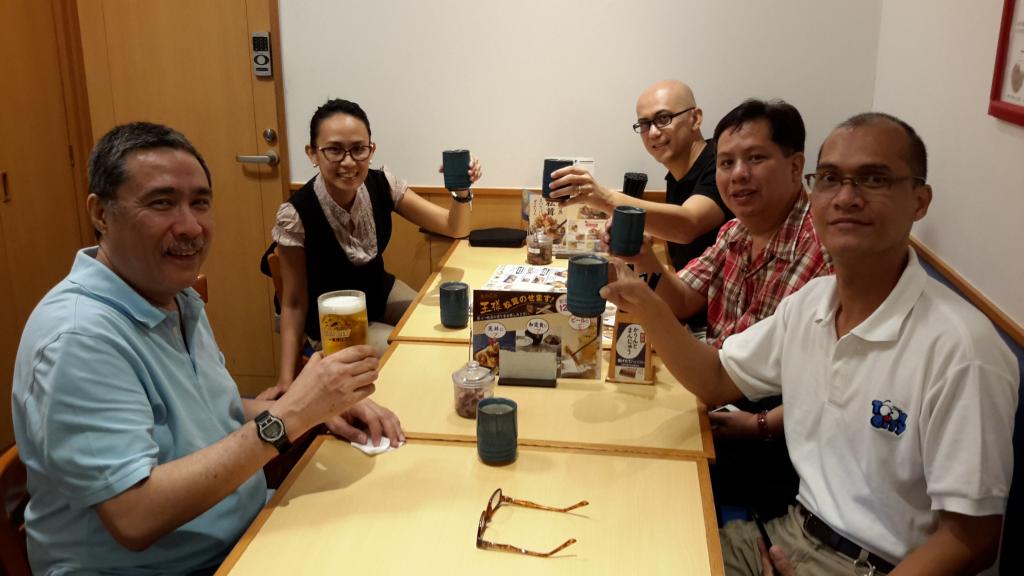
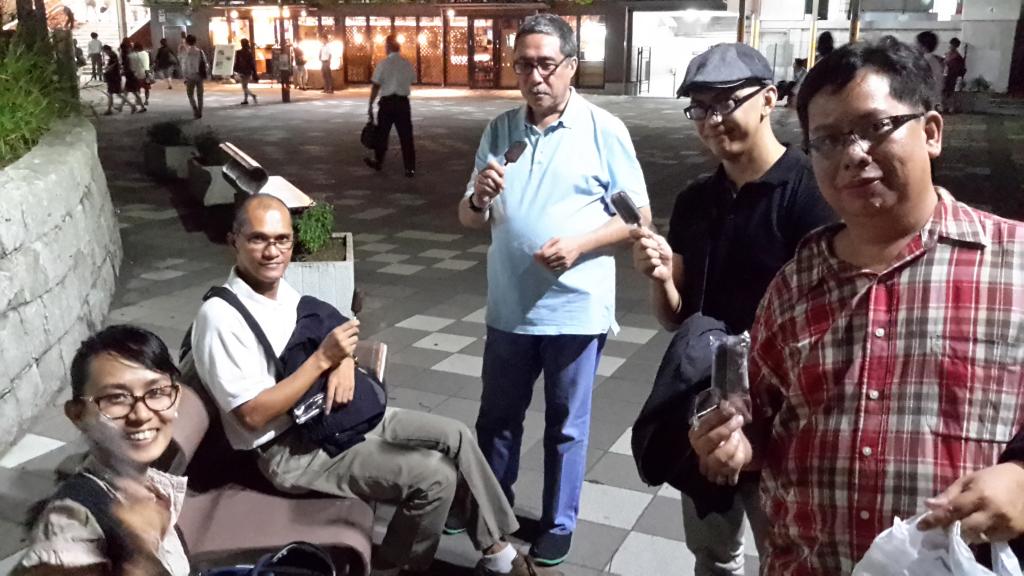
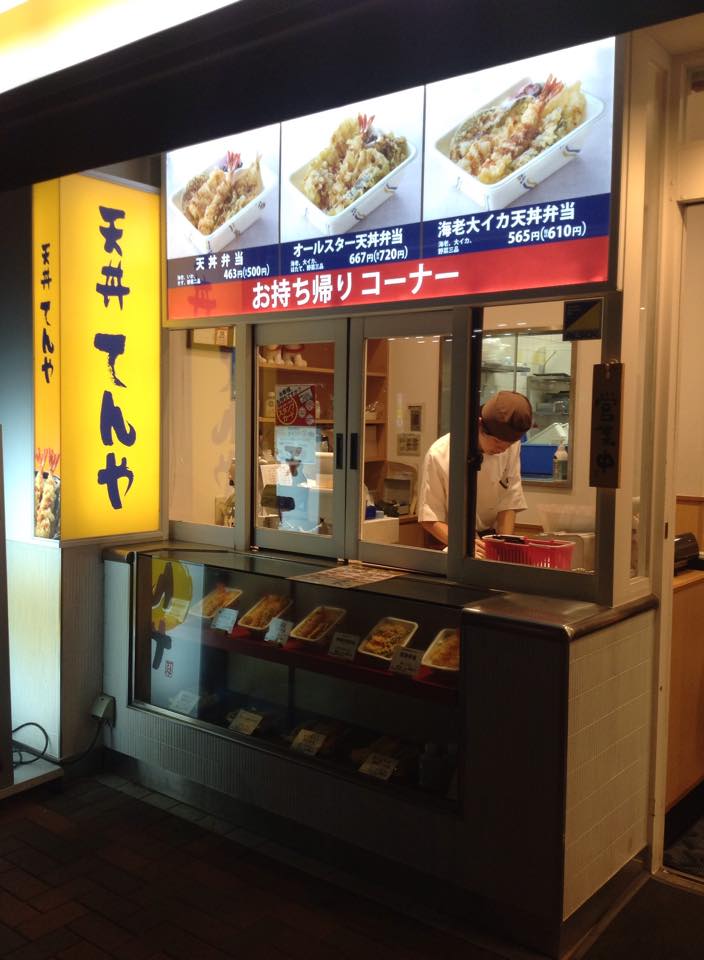
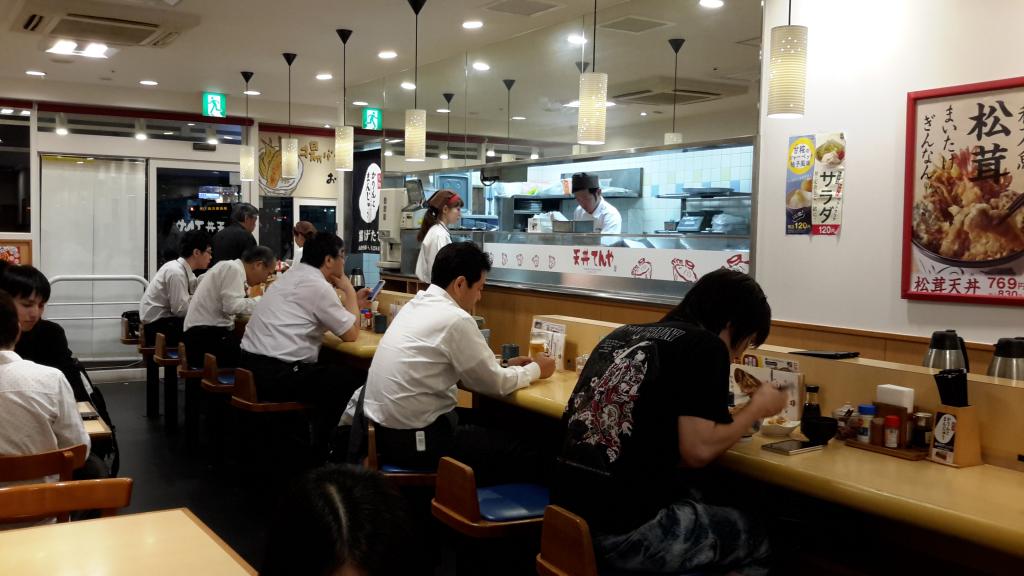
     At exactly 5 pm, they announced that the exhibition hall will now be closed. All of us Filipinos then went to a nearby outlet store to window shop and check out what we could buy. We also had our first Tempura meal, which was probably our best meal since we arrived in Japan. After a few walks around Makuhari, we had some popsicles from a convenience store. We then went our separate hotels via the Metro train and some via taxi.

21Tempurarightside_zpsea5392e1

21TempuraInside_zpsa9b433a1

Tempurafordinner_zps5e3521b8

Tempura Meal

22IceCream_zps567cb03e

Popsicles

September 18, 2014

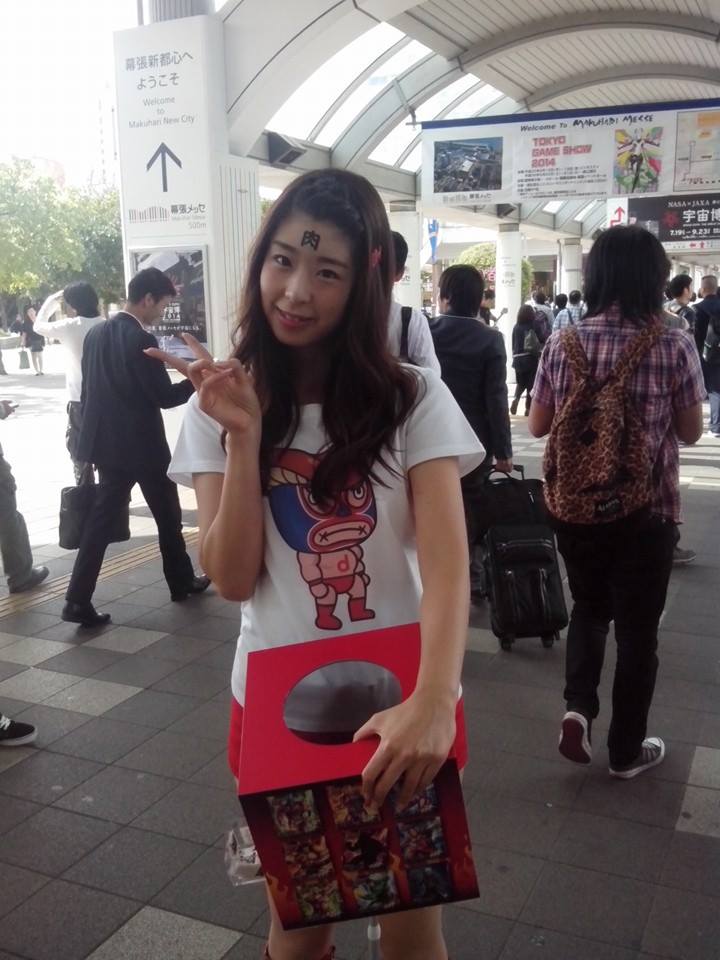
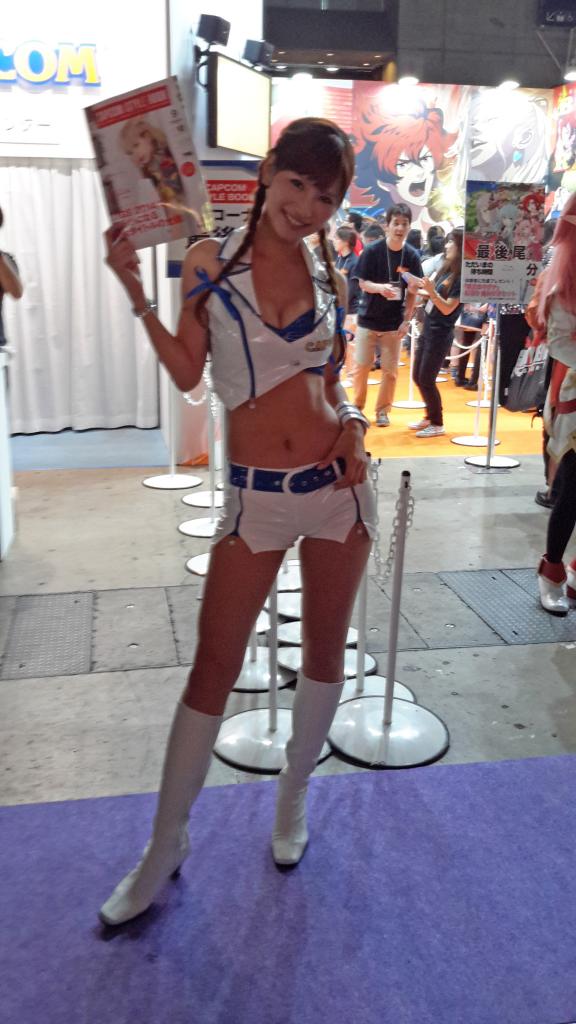
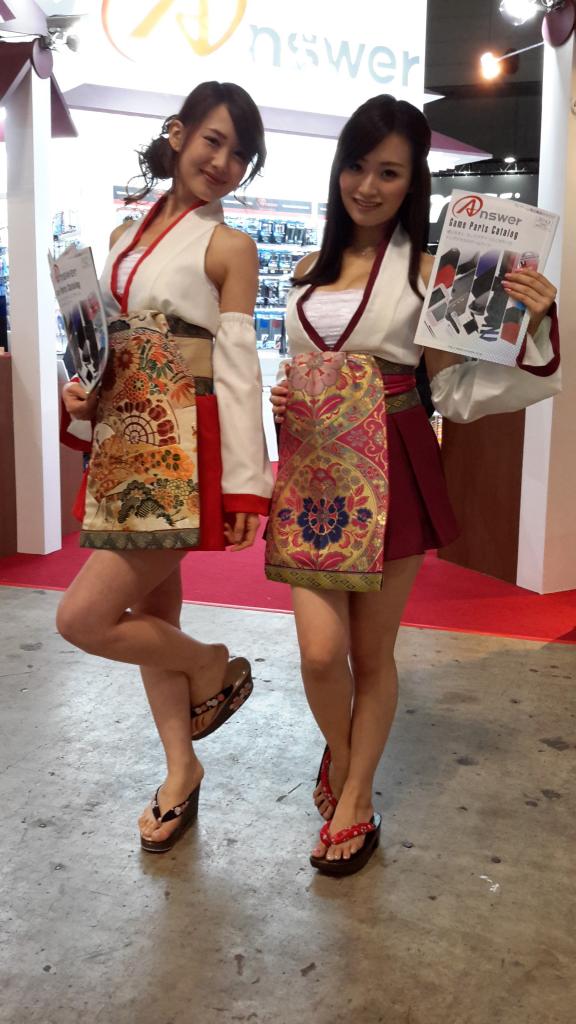
     I had my first breakfast at the hotel. It was a small buffet which offered Misu soup, Japanese rice, noodles with bacon, sausages, scrambled eggs and smoked fish. There was a salad bar, that had mostly vegetables and a drink bar where one can have different hot and cold drinks. After breakfast, I went straight to the venue. When I got out of the train station, there were some girls in costume giving away plastic bags with anime characters and some leaflets of the different companies participating in the Tokyo Game Show.

TraincrowdduringthefirstdayofTGS_zps86493eaf

Train Crowd During First Day of  the TGS

trainstationentryattheKaihinMakuharistn_zps75f8726a

10609642_702118016531827_2911762122283183851_n

   10671397_584951044942126_5577218662524509205_n_zps96075d28

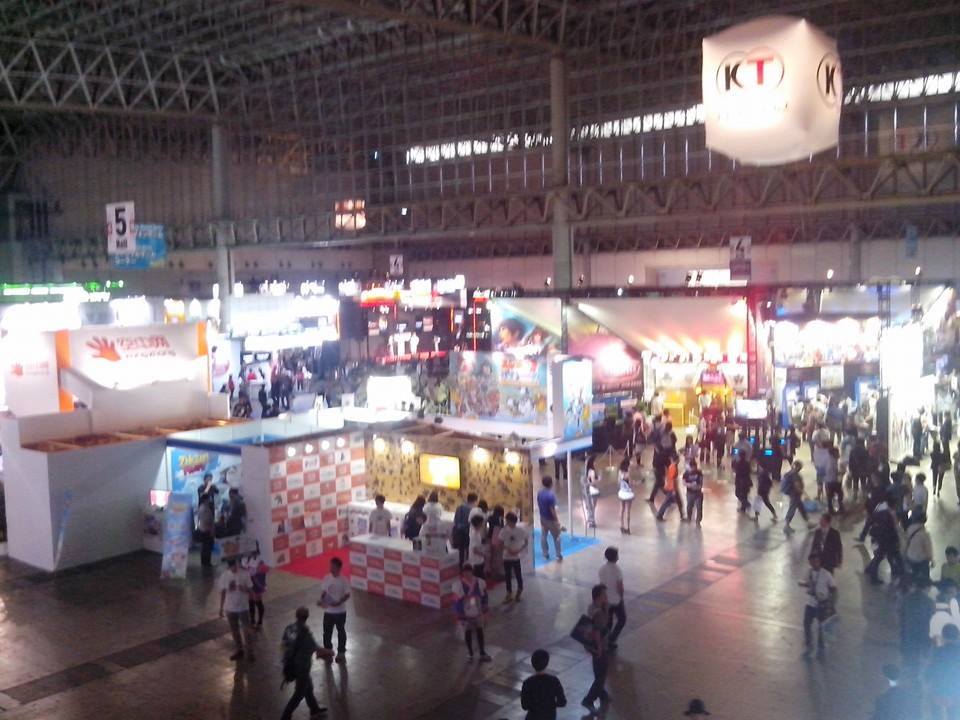
     After a 10 minute walk, I was able to see the big awesome booths of different game companies. I was able to to get some brochures, fans, eco-bags and a few souvenirs for me to bring home.

10710942_702118086531820_3731826731174299180_n

 10153307_702118459865116_4291857626340057913_n

10641166_702117953198500_4236190627584455447_n

10268441_702118409865121_4255809507642477539_n

1977021_702118546531774_5533419026968400178_n

16356_702117996531829_5025571268414987920_n

10712955_702118036531825_6422712057974519065_n

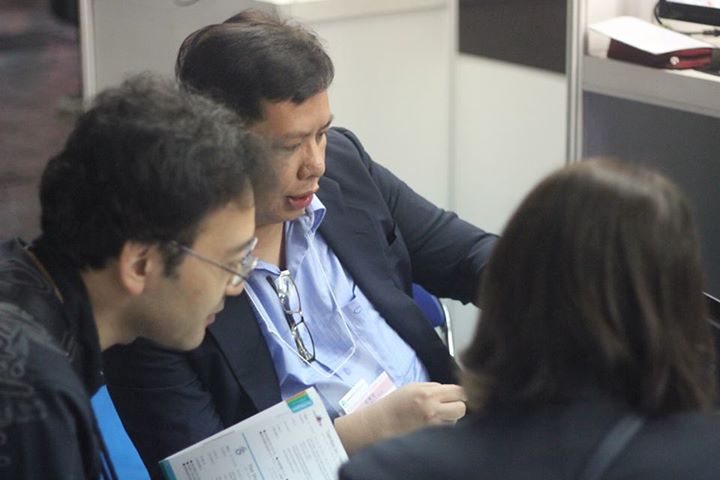
20TGSIngress6_zps09b990ba          Being the first day for business matching, we were all able to meet some big companies, from Pachinko companies looking for content for their machines to big animation companies seeking to outsource to the Philippines. Doga Kobo, the company we visited when we arrived, visited our booths and this is where we really talked about what they needed and it was nice to hear that they were really interested and plan to visit the Philippines as soon as next month.

10625068_702125316531097_5971146315523087454_n

At the Booth

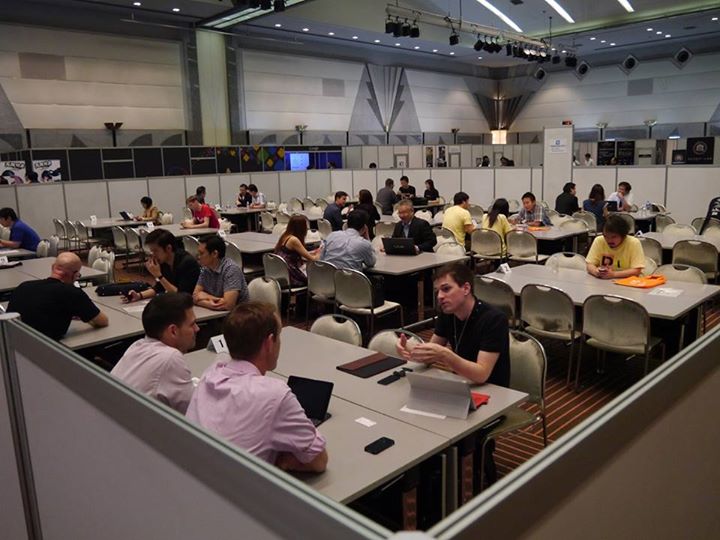
     I was able to talk to 16 potential companies, and most of them were interested but only had one concern – communication. I assured them that we have some Japanese partners here in the Philippines that could help mediate between our companies. They were happy to know that and they were excited for us to follow up on what we have talked about.

10710869_702118206531808_4111762727548031045_n

Philippine Delegates

26TGSSept1999_zpsb55e5be9

Philippine Delegates

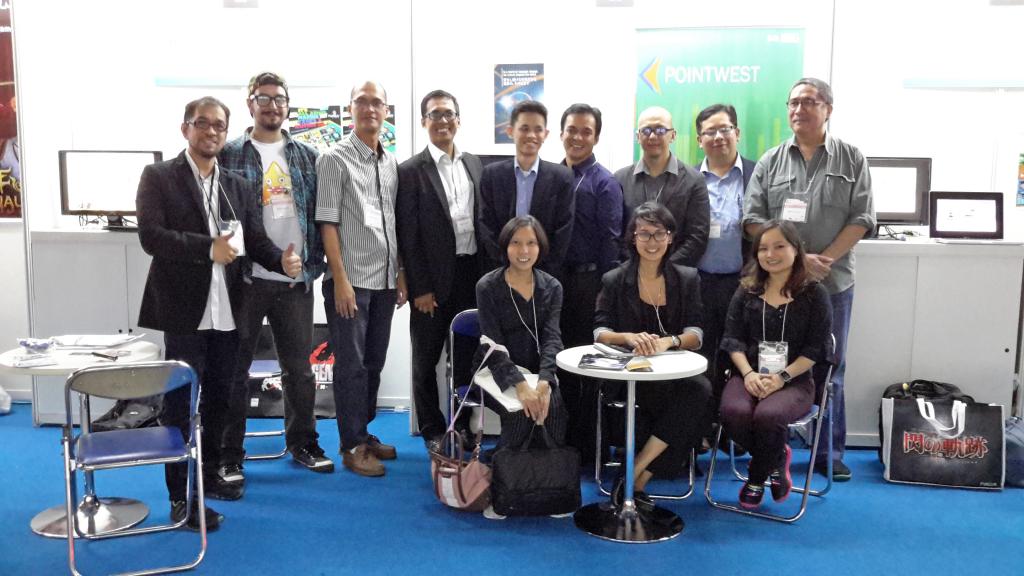
     Seated from left to right: Ms. Kicks (Filipina visitor based in Japan), Jojo Flancia (CITEM-DTI), Andrea Levigne (White Widget)

Standing from left to right: Dani Montano (Team App/Holy Cow), Juan Jose Joseph (White Widget), Joey Balderas (Toon City/Morph Animation), Raymond Posadas (Pointwest), Alfonse Angliongto (Funguy), Dave Aguila (Pointwest), Dino de Guzman (Studio of Secret 6), Alstaire Sarthou (Top Peg Animation Studios Inc.), Rene de Guzman (Toon City/Morph Animation) 

26TGSSept1997_zpse04ab187

26TGSSept1989_zps36595d6c

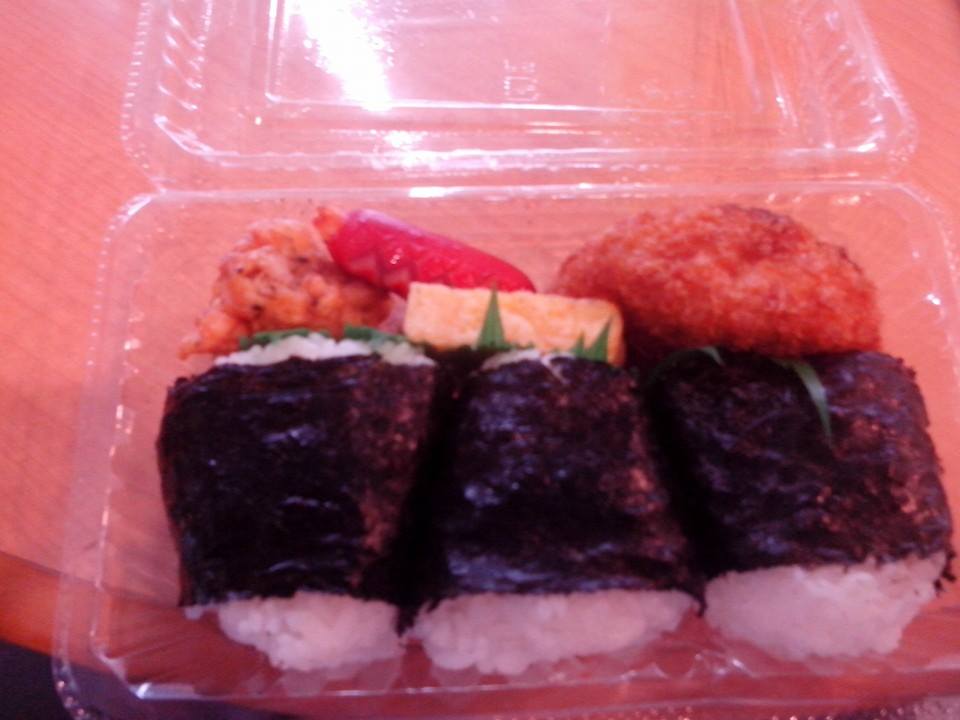
     During lunch, I would go to the farthest convenience store, so that I could see and photograph the different booths at the show. I ordered a small take out box, with 3 triangular shaped rice, with some meat toppings, together with a small sausage, small chicken, scrambled egg and potato katsu. It was cheap and filling, even for a small meal. After lunch, I would pass the different booths again. This was the only way I could go around, since we weren’t really allowed to leave our booths.

10665904_702117896531839_5220016080029072151_n

10686850_702117936531835_4166895848427577078_n

LunchattheMakuhariMesse_zps44c22e5d

Lunch

     After 5 pm we were then invited for dinner at Ms. Dita Mathay’s house. We were all excited and we were expecting that we would be able to sleep in the van, since were all standing at the booth for the whole day. We were surprised that our guide – Mr. Hidehiko-san led us to the train. We would be commuting to the Philippine Embassy. The people from Doga Kobo were invited as well and it seems that all the companies we visited during the first 2 days will also be there. It was an hour and 30 minute train ride to Roppongi and then a 30 minute walk to the embassy, where we picked up Mr. Yamada of Creek & River. Then it was another 10 minute walk to the house of Ms. Dita. Although we were really tired, our walk was fun as we got to know Mr. Hiramatu-san from Doga Kobo. He was really a funny guy, and he tried his best to communicate with us using his phone and google translate. His boss, Mr. Ryo-san, we learned knew how to speak a little English and understood what we were saying, but he was shy to admit it. We learned that the Japanese, even if they know how to speak some English, were not confident enough to admit it. 

      At Ms. Dita’s lovely house, we were able to meet other Japanese who were invited to this occasion. Her house was set up with 2 dinner tables where we were served like in a fine dining restaurant. We were first served an appetizer, Sinigang with bite size cuts for vegetables, some wine and beer. Next was the Entrée, a bowl of rice, chicken pork adobo and fried cream Dory in tausi. some of us ordered extra rice, which Mr. Hiramatu-san copied. He says the food was very good and Filipinos love Oishi! We were then given our dessert, leche flan and sorbet. Overall the mood was light and fun, and we got to know more of our new friends. Everyone exchanged Facebook pages, and we gave invitations to our new friends to visit us in the Philippines.

25DinneratMsDitaMathayshome2_zps5f63e071

Miss Dita’s Place

25DinneratMsDitaMathayshome3_zpsb58fc6ca

25DinneratMsDitaMathayshome5_zps95a4f034

25DinneratMsDitaMathayshome1_zpsc0f4f11f

25DinneratMsDitaMathayshome10_zpsb9d35779

25DinneratMsDitaMathayshome9_zps6bbacbd8

     After some picture taking, we then went back the same route. A long walk and a long train ride. Before riding the train though, I needed to charge my Suica card (cash card for transportation and other store establishments) . I apparently placed it in the wrong machine, including a 1,000 yen bill. It was a good thing Mr. Hidehiko-san was still there. He knocked at the machine and we were all surprised that a small hole in the wall opened. There was a person at the back of the machine, his arm went out of the window and gave me my card and money back. He then pointed to where I needed to charge my card. Everyone was laughing because who would have guessed that there was a person behind those machines.

     Back at the hotel, it was 11pm already. Exhausted, I was still able to Skype my love ones at home before finally going to sleep.

September 19, 2014

     At the Makuhari Messe at 9:30 am, the second day had more people but most were small independent studios. I was able to talk to only 9 prospective clients and most were from Asia, one from the US and another from France. Only a few Japanese companies talked to us this time. I had some meetings that I scheduled via the appointment system arranged by the organizers. Since the meeting place was at the other end of the very large hall, it would be a bit of a hassle just to meet each one at different times. I was able to inform them the night before just to meet me at our company’s booth.

TGSBusinessMatching_zpsd8472a18

Business Meeting Place at the End of the Hall

     I had the same lunch as yesterday, but I’m not as fond of it as yesterday. At the closing time, we had to take our booth decorations down, since our schedule was only for two days. We also took down our company’s sign that was provided by the organizers. We were then invited for an after show party called the Sense of Wonder party. All the exhibitors were invited, so we had a few finger foods and after a few minutes we were all back again at the outlet stores. The other delegates were able to buy some stuff, I on the other hand just waited for them, since I had plans going around other places in Japan. We then had dinner again at the Tempura joint and after that a few strolls and we went back to our respective hotels.

tempuraplace_zps593a2049

27BackattheTempuraplace_zps95a4ab07

September 20, 2014

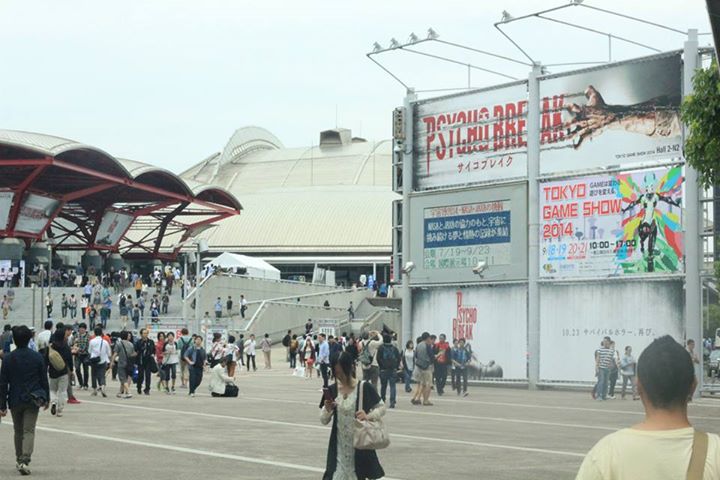
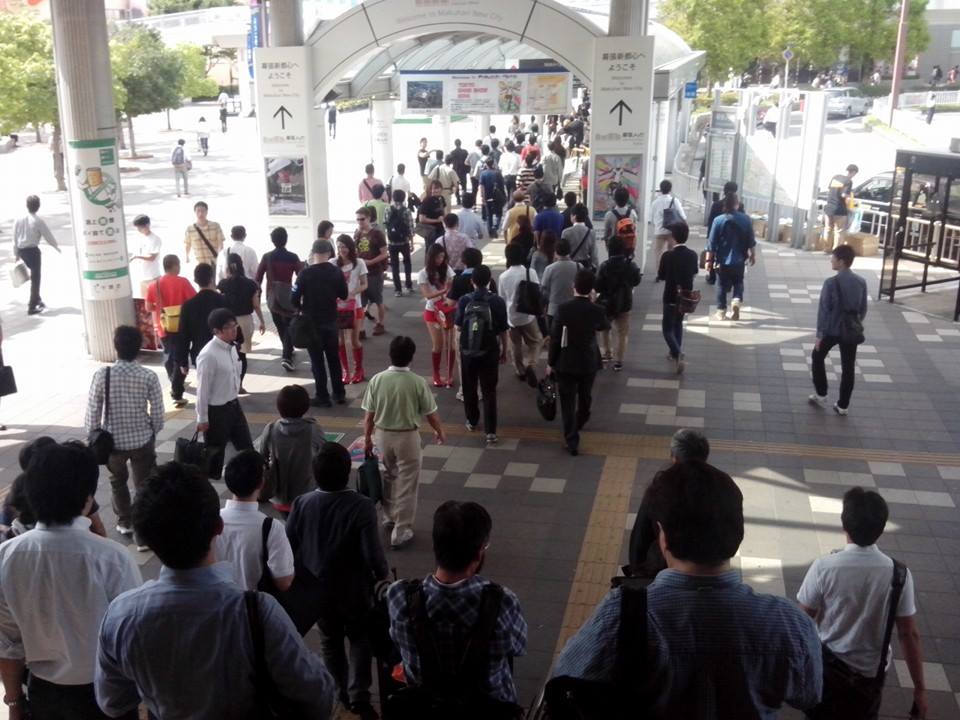
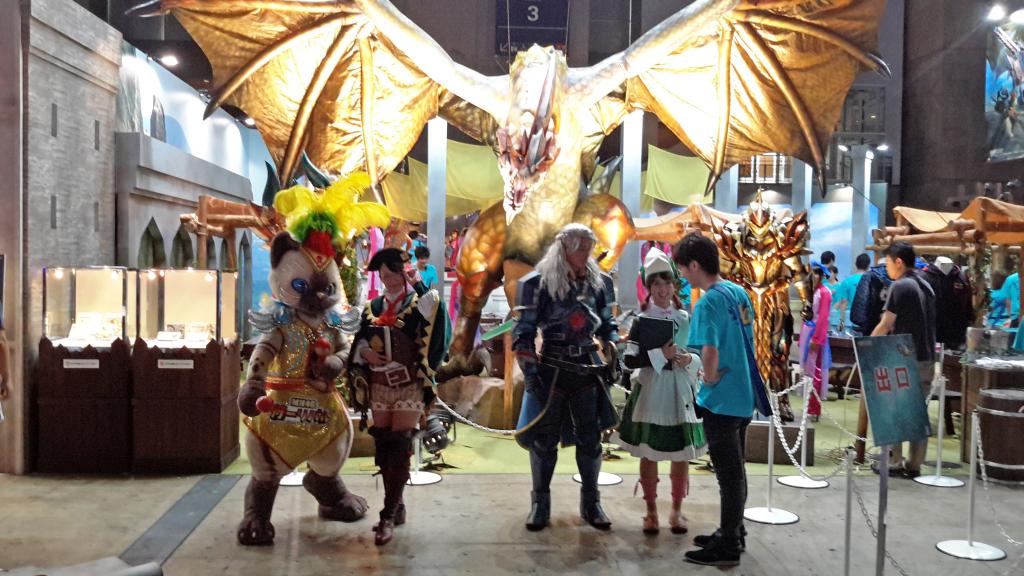
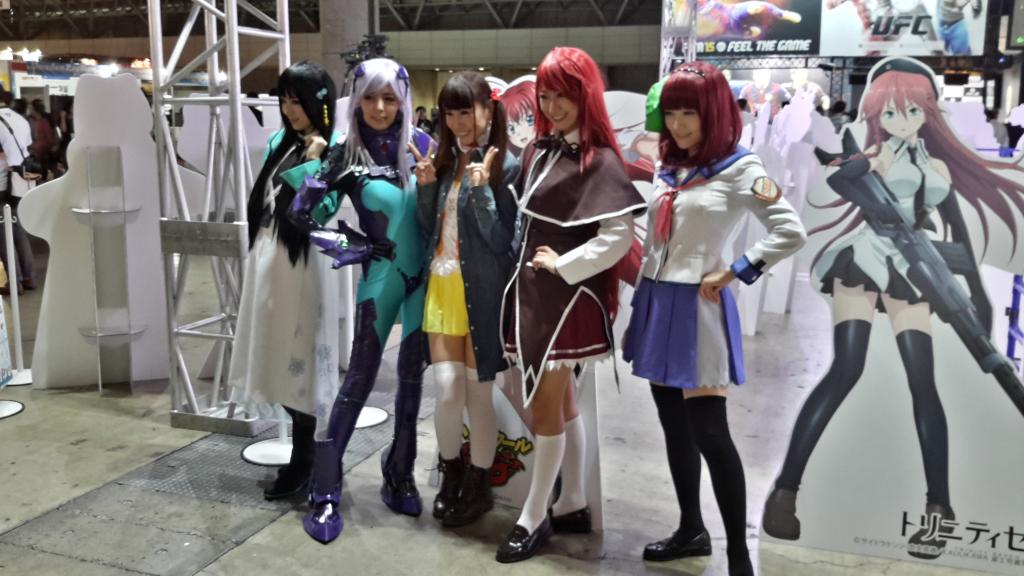
     This was the first day that the TGS was open to the public. Plenty of cosplayers and also new booths that took our place in the hall. Sadly, this was also the Networking Luncheon day. When I arrived at the train station at the Makuhari station, there was 10 times the crowd from yesterday, the people coming out of the train was really a lot. And the flow of people didn’t change for many minutes.

TraintoMakuhariMessewalk3_zps0f574ff6

CrowdfromTraintoTGS_zps9ac2508d

CrowdfromTraintoTGSafter30mins_zps7d6b5e30

Crowd at the Train Station

TGScrowd_zpscbc46934Tokyo Game Show 2014 – First Day Opening to the Public

10645049_702118429865119_4578890334351164848_n

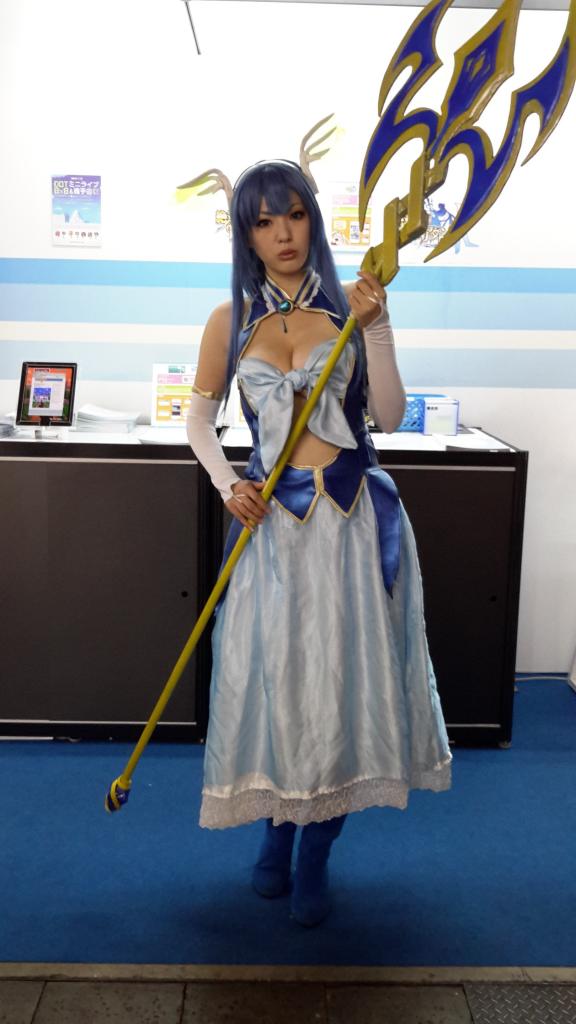
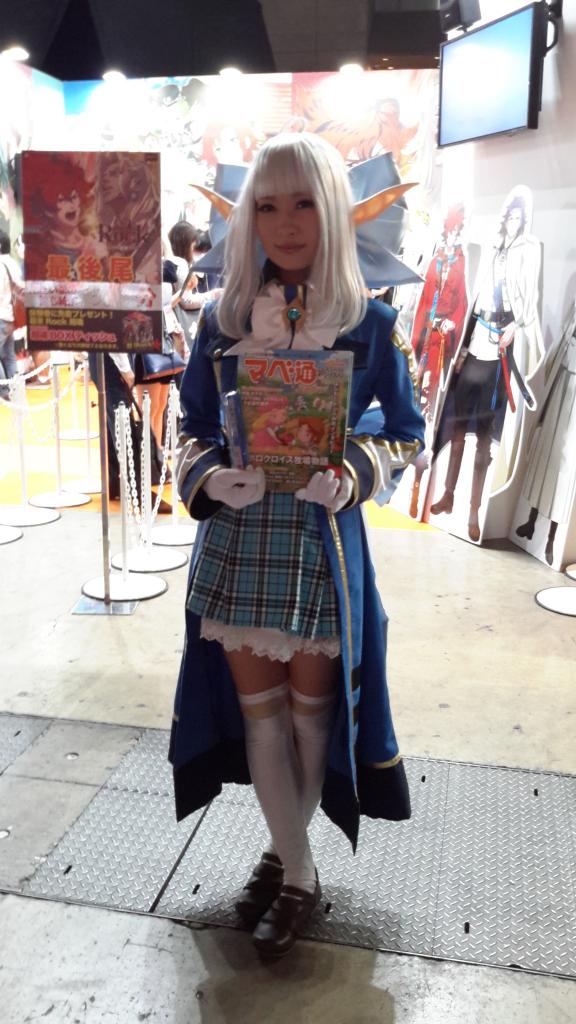
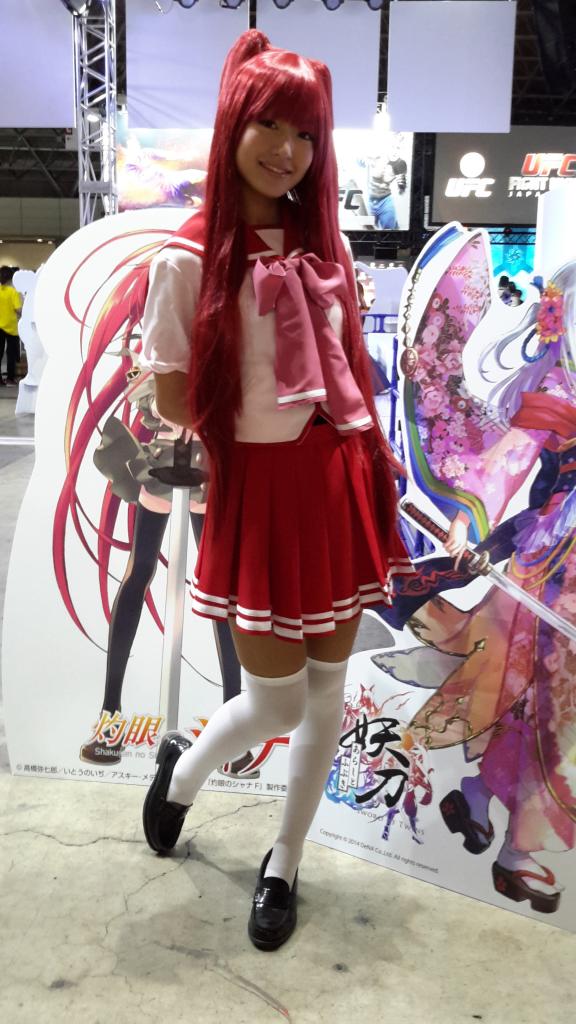
Cosplayers

24TGSSept1816_zps26618d80

24TGSSept18122_zpseaf5d333

24TGSSept18125_zps88cb3299

24TGSSept1820_zpsd09feddf

26TGSSept194_zpsca27cba9

24TGSSept1862_zpsed32efbb

24TGSSept18114_zpsecf77b2a

26TGSSept1974_zps9f112cca

26TGSSept191_zps9b9c4e6d

26TGSSept1935_zps13b53cdd

24TGSSept1815_zps1c822be4

24TGSSept1897_zps30e7dfe3

24TGSSept1892_zps67bae100

26TGSSept1923_zps23147258

24TGSSept18110_zps48737495

26TGSSept1975_zpsa6e27d42

26TGSSept1917_zpsb334ac7d

24TGSSept1897_zps30e7dfe3

24TGSSept1849_zps48234b29

24TGSSept1871_zps8d1dffd5

24TGSSept1864_zpsf0e1b168

24TGSSept1850_zps68455a8b

24TGSSept1821_zpsa0f5171c

26TGSSept1961_zps8c7070c3

24TGSSept1896_zps435b54a7

24TGSSept1894_zps2406d91b

26TGSSept1959_zps04411d6f

24TGSSept1859_zpsc9dafe65

24TGSSept1834_zps9c6d9990

24TGSSept1835_zpsf3133dbb

26TGSSept1967_zps002f562b

     24TGSSept1861_zpse954f596

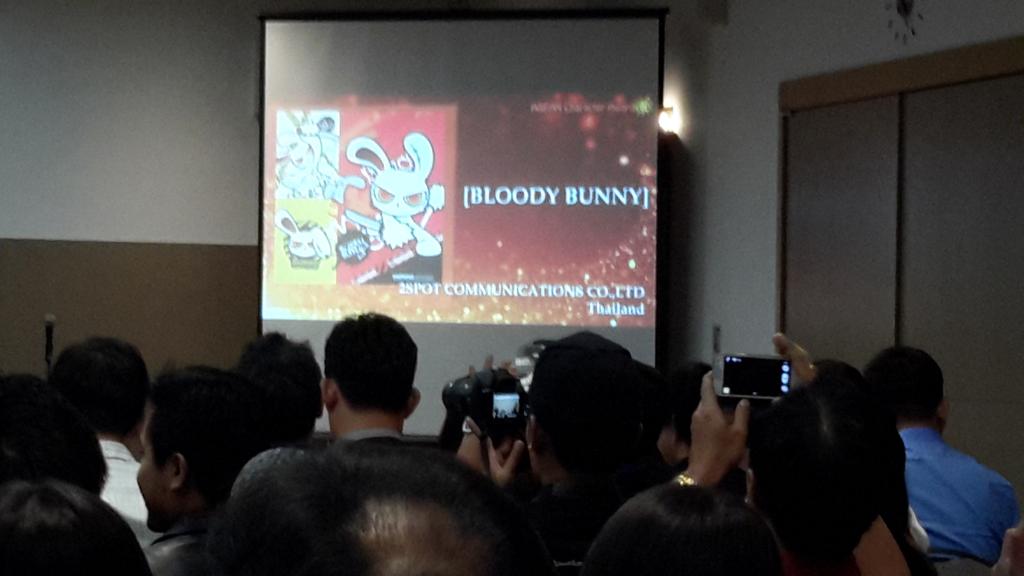
     I arrived at the International Conference Hall at 9:40 am…I wasn’t allowed in since the presentation would start at 10 am. They were really sticking to the time. First the Asean Character Award was presented. The best character was awarded to Bloody Bunny, a 10 year old character in a flash web series from Thailand. Later on 6 out of 19 companies invited would present their companies to us. The rest of the companies then would meet us at the Networking Luncheon. We were able to get a few contacts here, hopefully some of them would be seriously interested. Ms. Dita and her husband also visited us at the Networking Luncheon. 

28ASEANCharAwards27Winners_zps73c00ade

28ASEANCharAwards19GrandPrize_zps1514f3b6

30SplCompanyPresentations46_zps8e995d3e

Company Presentation

30SplCompanyPresentations19_zpscab207f1

30SplCompanyPresentations23_zps1f5a6347

30SplCompanyPresentations5_zps48d31df0

30SplCompanyPresentations48_zps07ffce6d

30SplCompanyPresentations9_zpsc21533ff

29NetworkLuncheon6_zps2247fc17

Networking Luncheon with Ms. Dita and her husband

     Ms. Dita asked for a meeting to check feedback from us. During the meeting we told Ms. Dita that other companies in countries such as Malaysia and Thailand is that their government subsidizes money for the buildings and equipments that the Japanese companies needs. The budget of the Philippine government is not that big, so we can’t compete with the others in those areas. At the meeting from the presentations, we learned that the Japanese want to get into the Western market. We mentioned that the Philippines has outsourced to the the US and other Western countries since the 70s. This info piqued some interest from a few people there, at least we had a tagline. The networking ended at 3:30 pm and we were told its a free time. 

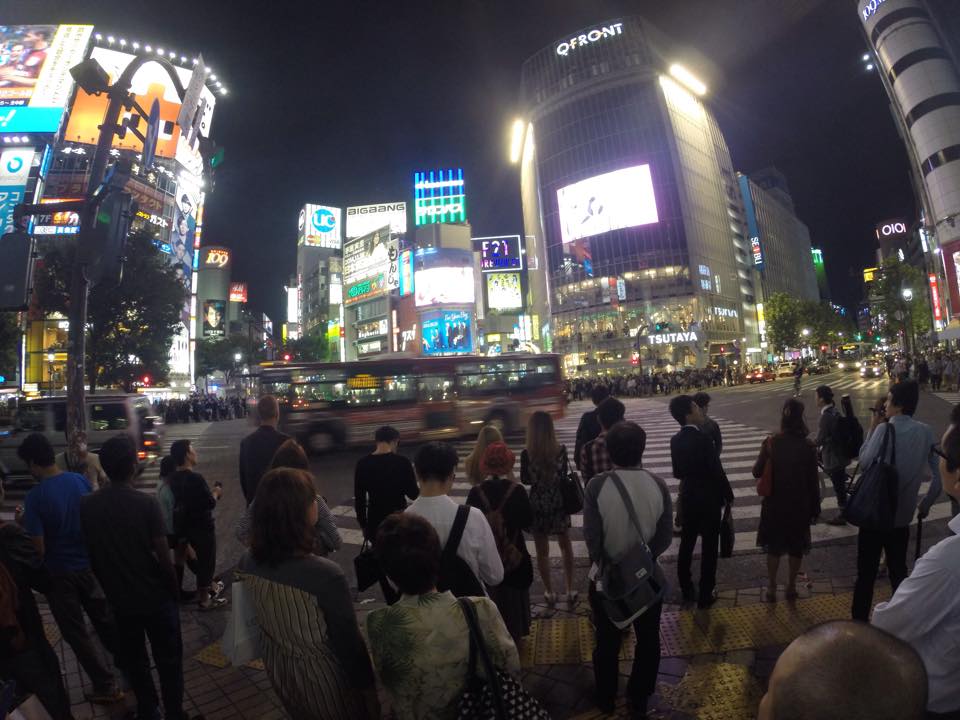
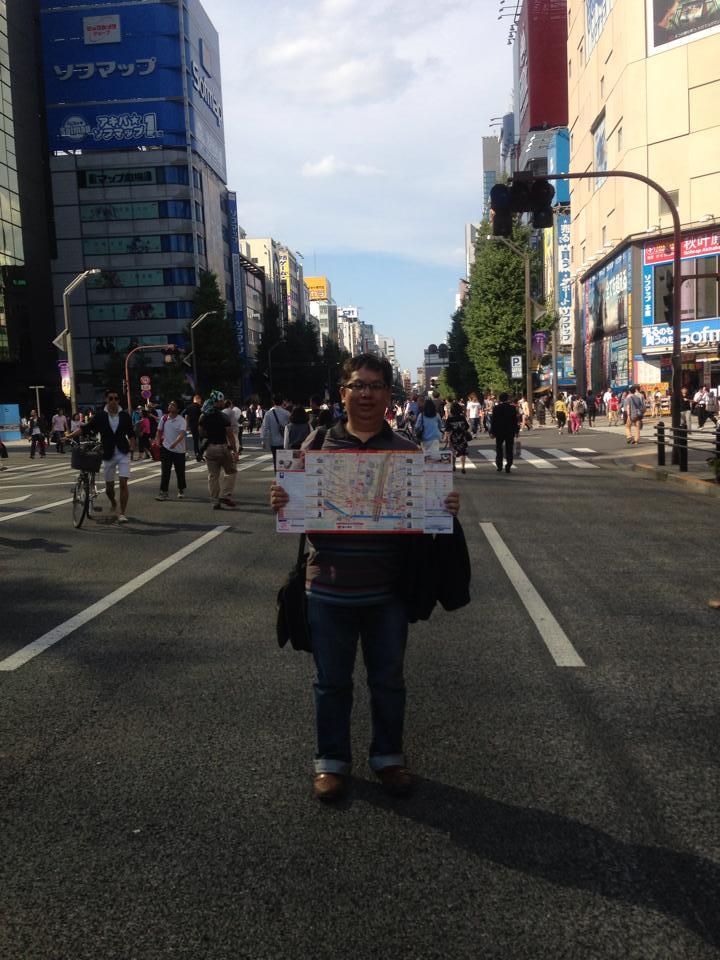
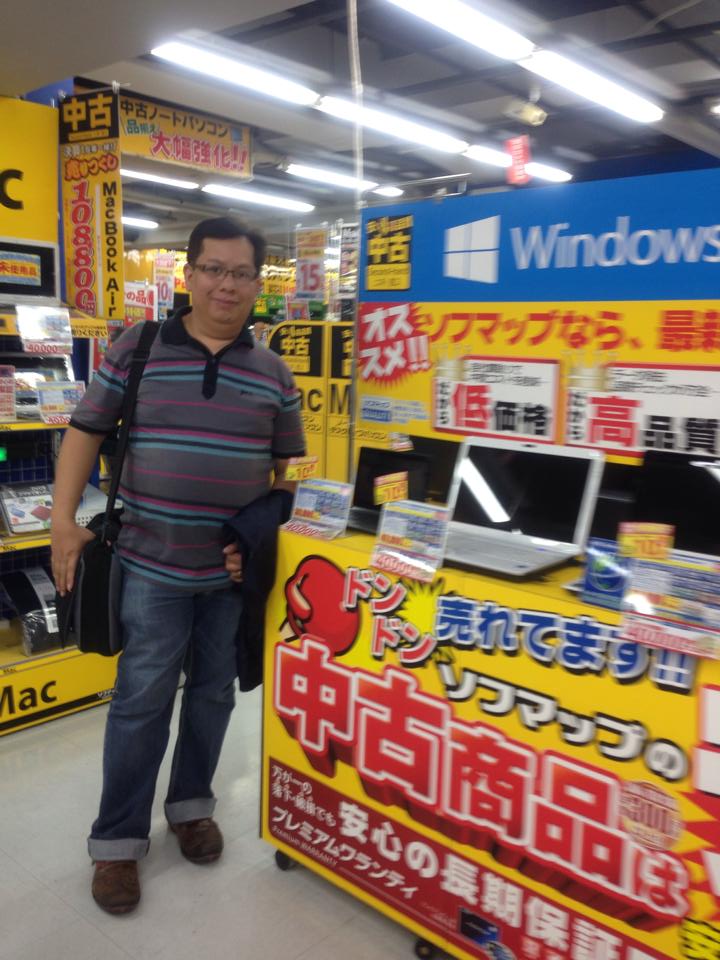
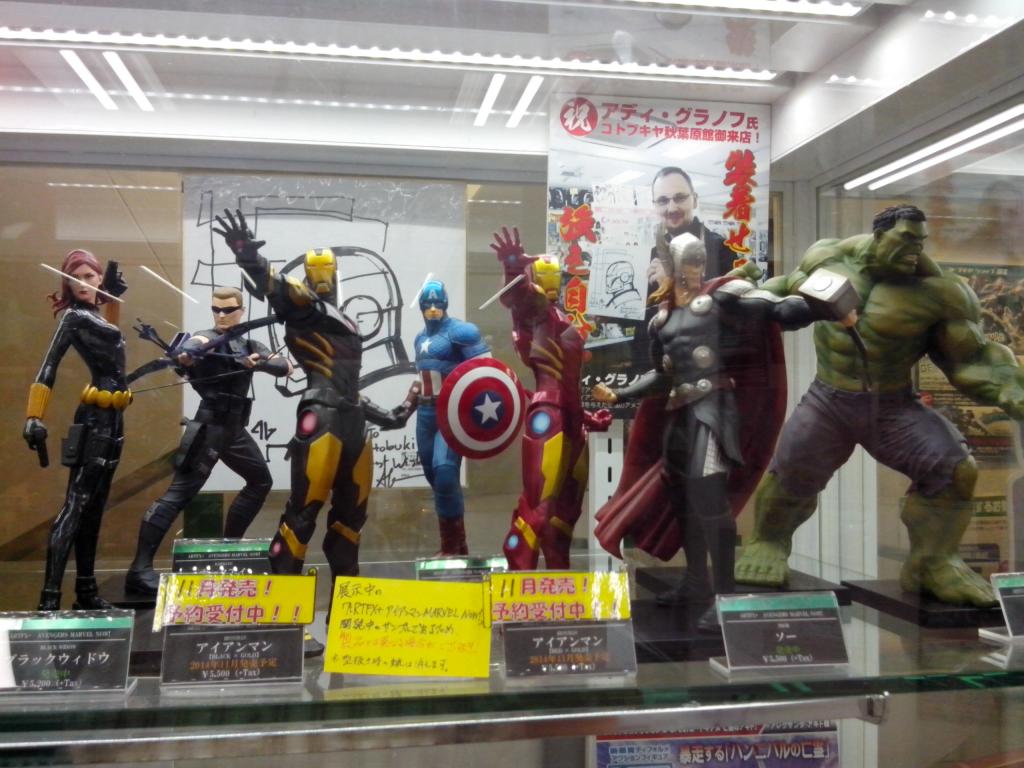
     The free time was an opportunity to go around Tokyo, so we all agreed to stay together to tour the city. Our first stop was at the Akihabara or Electric City. From Makuhari we needed to get off Tokyo, then transfer to another train to Akihabara. We got to see computer shops, toy shops and arcades. These shops were housed in 5 to 7 story buildings. We then decided to go to another area – Shibuya, the place where the famous intersection we  often see in the movies was located. We took some pictures here then we decided to have dinner. Some went to a Tonkatsu restaurant, and the othesr went to a Ramen house. I on the other hand, had already a McDonald’s hamburger with Wasabi Mayo, a few minutes earlier while walking. We were then able to catch the last train ride back to our hotels.

traintoshibuya_zps281b1ee1

Shibuya_zps8c8d5733

Shibuya

September 21, 2014

     I had the same breakfast meal, then I checked out from the hotel since I will be staying with my aunt that night. She would take me around as she promised. I was supposed to meet the other delegates at 9 am at the train station, since most of the delegates planned to fly home this day. Some of us planned to meet here and take a a last look at the TGS before going home. When I got to the meeting place, the crowd was really huge, even larger from yesterday. I couldn’t find the others and the line to the TGS was really massive and was not moving.

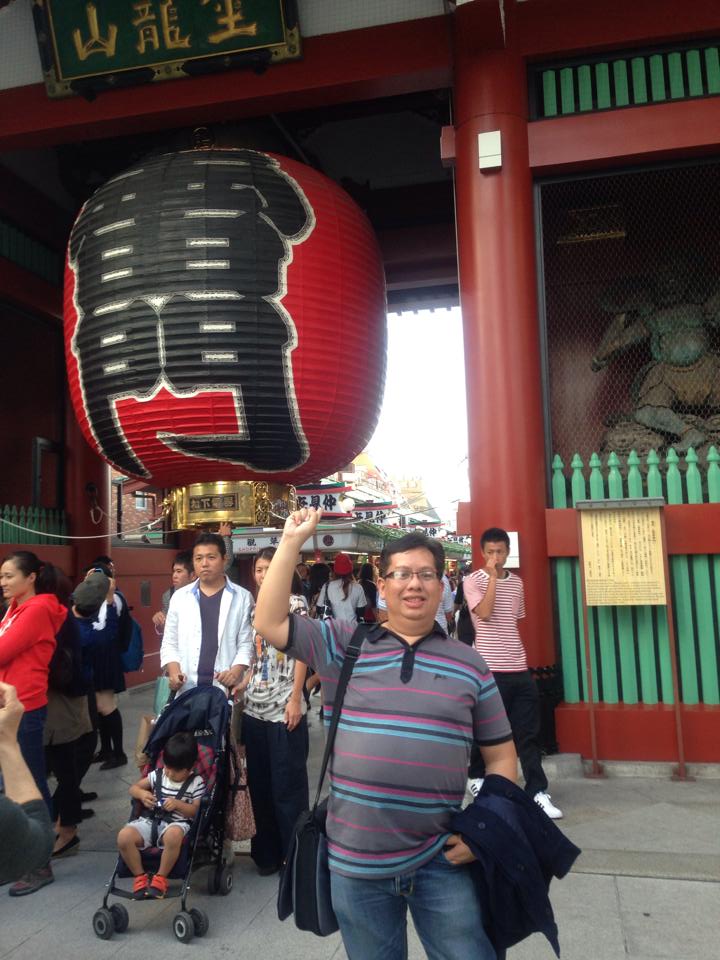
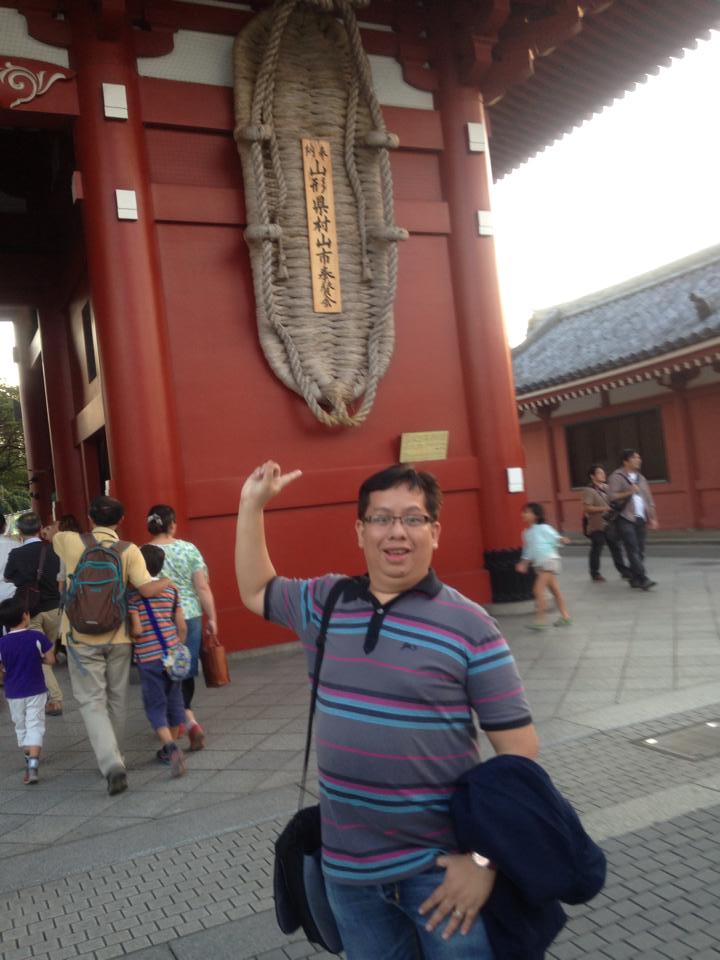
     I decided to leave the place and just meet with my Aunt instead in Ueno. Here is where I learned to use the rental lockers around the city. I was able to leave my stuff at 700 yen, while I met my relative in Japan. We went around Akihabara, this time I was able to get around more and since it was Sunday, the roads were closed for shopping. We then went to Asakusa, where the temple with the giant lantern was located. All the stuff at Asakusa was expensive, because there were lots of tourist in the area. My Aunt treated me to the Royale Hosts, where the food was good. I was able to ride the Monorail towards my Aunt’s home, where I stayed for the night.

AkihabaraLostin2_zps738b1c75

Akihabara

AkihabaraElectricCity1_zps71534964

AkihabaraElectricCity4_zps66e29f66

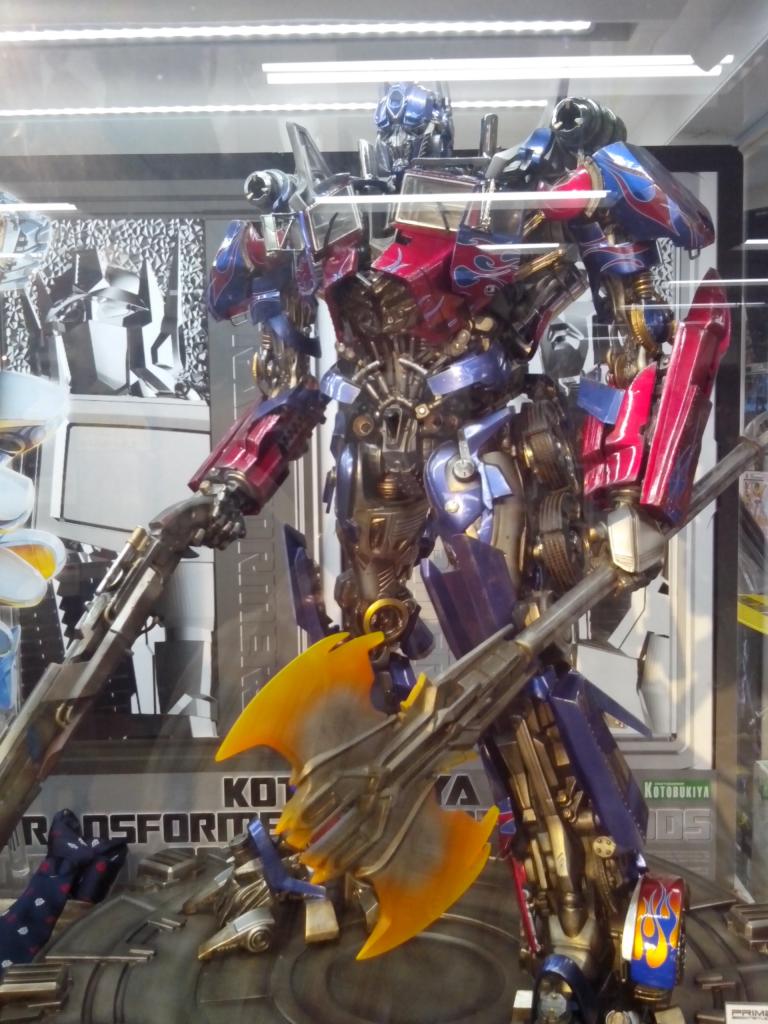
AkihabaraStore4feetOptimusPrime_zpsb423d3f4

AkihabaraStoreAvengersKotobukiya_zps49d569b2

AkihabaraToySHop_zps0cfa97be

AkihabaraStores_zps624d3851

AsakusaTemple_zps7c71c084

Asakusa

Asakusa_zps3f5607d2

Asakusa-GiantSandals_zps7606c46c

Asakusa-JapaneseMask_zps8f023898

MonorailatNipporiStn_zps02359a25

Monorail at Nippon Station

September 22, 2014

     From my Aunt’s house, we shopped at the nearest mall in the area, where we took lunch at the food court. Then we went back to her house. We took the bullet train to the airport, where it only took 30 minutes. When we got to the airport, we were shocked to learn that the plane was delayed for 4 hours. As compensation, PAL gave me a food and dining coupon worth 1,500 yen. My Aunt and I had some nice food at the restaurant in the airport. I boarded my flight home at 7:20 pm and arrived at Manila at 11:40 pm. 

BulletTrainFront_zpsedb15cd5

RidingtheBulletTrain2_zps02e0c63d

Bullet Train

     I am very greatful to all the organizers of this event for making the business matching mission a success. From both the Japanese and Philippine government side, all made great efforts to see to it that the participants are well taken care off and make the trip worthwhile. The Japanese companies were also very accommodating despite some language barriers. The whole experience was really great and fun.  I can’t wait to be invited again to the Tokyo Game Show next year. 

     Statistics for the Tokyo Game Show 2014: Second largest total number of visitors – 258,832. Record high number of exhibitors: 421 companies/organizations from 32 countries/regions. Number of exhibiting game titles: Record high of 731

September 30, 2014

     Last September 30, all the Philippine delegates to the Tokyo Game Show (TGS) were scheduled for a debriefing. Initially, the meeting was supposed to be at the CITEM office, but Mr. Rene del Rosario invited us to have the meeting at Toon City Animation Studio. The people in attendance were Rene del Rosario and Joey Balderas of Toon City, Dino de Guzman of the Studio of Secret 6, Alfonse Angliongto of Funguy, Dani Montano of Team App/Holy Cow Animation, John Joe of White Widget, Ms. Jojo Flancia of CITEM/DTI and myself.

     Dani Montano was kind enough to burn DVDs of all the pictures he took at the TGS and gave everyone a copy. First, Rene gave us a tour of Toon City, and I was surprised at how big the changes were from the last time I was here which was way back in 2007. Toon City is entirely digital now and a third of the size it was before, but it still had the same amount of production. We were even joking that Toon City was far more advanced than the animation studios in Japan. We told Rene that they should conduct a tour when our Japanese friends makes a visit to the country. Our host then invited us for lunch in the conference room, where we were served sumptuous food from Amber.

     Jojo then gave us number like who had the most inquiries. According to her, this was the delegates’ ranking according to the number of inquiries (this ranking is only accurate according to my memory but I am sure about numbers 1,4 and 7). 1) White Widget – they had a finished game, 2) Team App/Holy Cow Animation – they also had a finished game, 3) Toon City – lots of inquiries for animation services, 4) Top Peg Animation Studio Inc. – again animation services, 5) The Studio of Secret 6 – a game development studio but they couldn’t show finished games because of their non-disclosure agreements, 6) Funguy – a game development company with the same dilemma as Secret 6, 7) Pointwest – a software developer …they had inquiries but not as much as the others. So to be really noticed here in the TGS, you really need to have a finished product.

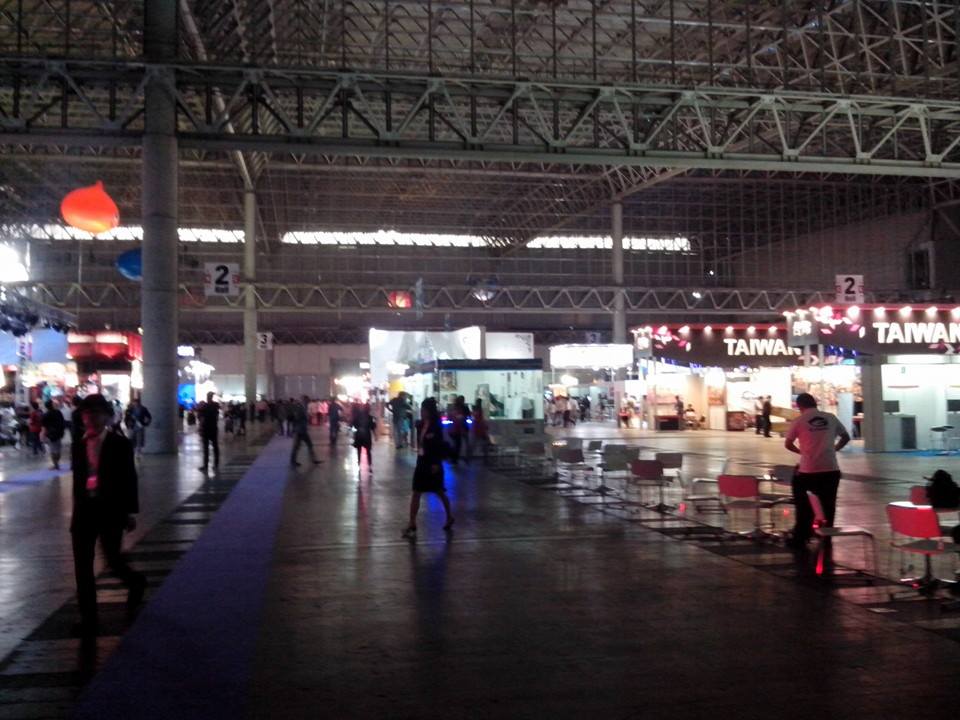
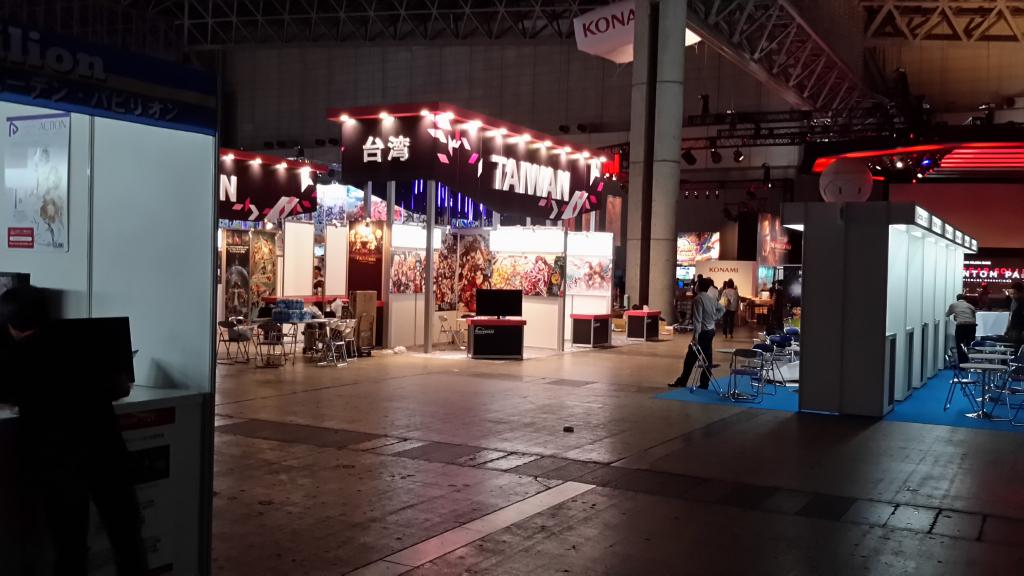
     Our first feedback was the location of our booths, we were expecting that our booths being in front of the entrance of Hall 1 we would be having traffic come to us first. We were surprised to learn that the doors open to the crowd from Halls 4 and 5, so we were like in the farthest corner of the hall. Next our booths were really generic booths, that it was hard for the crowd to even notice us, unlike the booth of Taiwan which had a larger generic booth, but with a large sign that read “TAIWAN” on top of the booths.

20TGSIngress22_zps51a47a89

     The entrance for Hall 1 was opened to the public during Saturday and Sunday, but that time our booths were already taken down. We then asked why we were only allowed to have the booth during the business days, which was Thursday and Friday; as it would have been good for the public to also see what our country has to offer. In fact some companies that we communicated with via email were asking if they could visit our booth during the Public days.

     Next, we learned that Japan has been outsourcing to Indonesia and Vietnam already, where in my opinion we are way ahead in terms of animation than those countries. We in fact asked why weren’t they outsourcing to the Philippines. the reality is, they don’t even know we have an industry of Game Developing and Animation Services here. Another thing we learned is that these countries had middle men – Japanese representatives who knew of those countries culture to mediate between the Japanese Companies with their own companies. “Japanese aren’t very confident in speaking English and will, sometimes deny that they know how to speak the language even though they can speak it.” This was according to a French guy we met at the show, who was conducting research for a French company.

     A good thing that happened during the show was the delegates helped each other when an inquiry wasn’t the forte of one company. They would forward the inquirer to other companies who are able to entertain the inquiry. This was noticed by the Asean Japan Center and the DTI. Good points for us, although some of us really were not prepared. Some companies lacked decorations, demo reels, brochures…because of different deadlines in each company.

     One point was brought up is that we could have one look for all our materials, like calling cards and brochures and maybe we could market our country as a whole. Jojo brought this up as this was done with the XDS (External Development Summit) in Canada, where we also had a delegation last September 2014.  She showed us the brochures from that show, but all of us said that the brochures looked too corporate, had business looking colors and too much information that the fonts were really small. It looked boring to read, a suggestion was to make our booth, calling cards and brochures FUN. Since the Tourism’s office motto was “It was more FUN in the Philippines”. Why don’t we hold a contest for graphic artists, illustrators, interior designers or architects  to design a Philippine boot, the brochures and the calling card. And then we could also put the name of the winning designer in the booth and the materials. It was really nice to see everyone giving suggestions to help make the Philippines’ next visit to the TGS a lot better.

     We all promised, that if we were invited again next year, we would be better prepared and we would have finished games to show. Jojo then told us that the Asean-Japan Center and the DTI were very happy with the outcome of the show, and that there was a big chance that we would be invited next year again. In fact the good news was, more companies would be invited and hopefully instead of sharing booths with other countries, we would have our own “Philippine Booth”. To summarize: 1) Booth location is a big factor to gather more inquiries, 2) A middle man is needed, a Japanese who knows our culture, to mediate between our country and Japan, 3) Market the country as a HUB for animation and game developing by consolidating the designs of our materials as one, 4) Be better prepared with materials (demo reel) and have a finished product to gain more inquiries, 5) Hold a contest for designers to create a look for our booth including materials such as brochures, calling cards and posters.


Mobile Game for Jobert and the Crop Circle Warriors

4 09 2014

     As we were still finishing the animation in July, I started to polish the pitch bible for the first season. When I was done with the pitch bible for season 1, I began reading the script for season 2, but I could not read past the fifth episode; I felt the script was redundant and the whole episode needs to be rewritten. We needed to do new stories for each episode rather than having one story for the entire season to keep the interest of the audience.  Since mid-last year, we already finished the character models for season 2 but we could not write new episode scripts for season 2 this year;  so doing the pitch bible for season 2 was no longer possible. So I focused on fixing minor problems such as correcting the poster for the cartoon and enhancing the blurred logo of the company.

      It was early August this year that I learned from Grace, that Alstaire would be going to the Tokyo Game Show for the first time this September 16 to 22. The organizer of the show – the Asean Japan Center invited willing participants from the Philippines to exhibit their works and services for the exhibit. The organizer will subsidize the hotel accommodation and round trip airfare; offer free animation studio tours and exhibit booth for one individual per company not only from the Philippines but for other Asean countries as well, like Thailand, Malaysia, Indonesia, Vietnam, Singapore with smaller delegates from Cambodia, Laos, Myanmar and Brunei Darusalam under the Asia New Stars Area. Only 5 companies per country is the limit, but the Philippines added 2 more companies as Brunei only sent 2 companies. Without the subsidized and free offer, I doubt it that there would be small Philippine companies would be present in this exhibit as the costs to attend the exhibit are prohibitive.

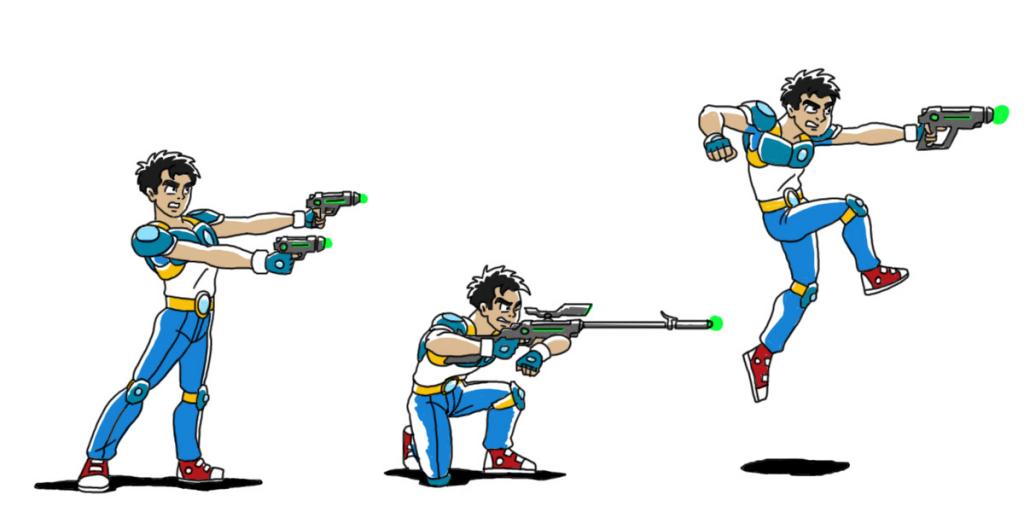
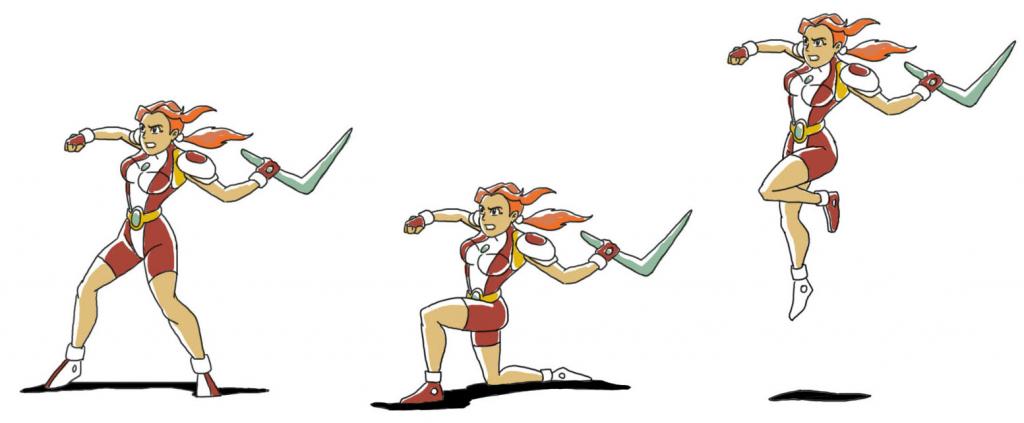
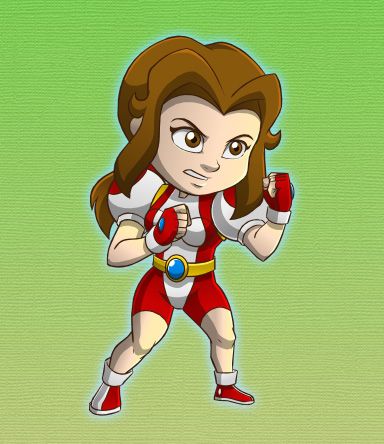
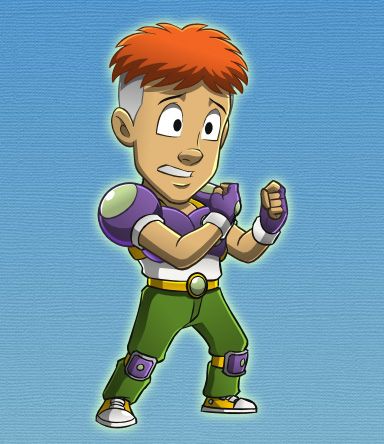
     Since mid-last year, we already finished the main storyline for the mobile game, the poster, the character models for the villains, the look of the game for the mobile phone and the game document; what we still need to do is fine tune the game document and the programming . The story for the game is not related to the first season of the TV series, and the under the game, I shortened the title to “The Crop Circle Warriors®” but Jobert and his friends are still the main characters. I’m not a  gamer, so I’m not in tune with what’s in or out, nor am aware of what’s popular except for some household names like “Angry Birds” and “Flappy Bird“. I conceptualized the main story line with the villains but the details with regard to the movements and action, I left it for Alstaire to do.

Stances_IdlePose_zpsa53eec15

Sample of “Crop Circle Warriors®” for the mobile game

JobertAttacks_zpsa77651d6

Concept Drawings for Jobert

CharacterStancecopy_zpsa88e4799

Concept Drawings for Jessalaine

     Sometime in early August; Anthro – the animator who went back to Dumaguete a few years ago coincidentally called Alstaire and told him that he missed doing the action scenes for Jobert and he was bored with doing just some poster art work. So Alstaire gave him some job for the trailer for the mobile game of the “Crop Circle Warriors®” which would be exhibited at the Tokyo Game Show. Anthro was able to finish the drawings last September 2, 2014 for the trailer. I was not even aware of Alstaire’s plan to do a trailer for the mobile game, which I only learned later on since he said he needs to show something at the exhibit aside from the other two mobile game concepts that Top Peg Animation had a tie-up with.  But that is not a problem with me, as I am prepared to invest in the mobile game and have it available online hopefully by the first or second quarter of next year. This game will extend the property and introduce the animation to the gamers who will download it on their mobile phones. This is a breath of fresh air for me, as we got stuck  producing the animation for the longest time. I’m looking forward to finish this in the right manner and as fast as we can so that we can move on to do other things.

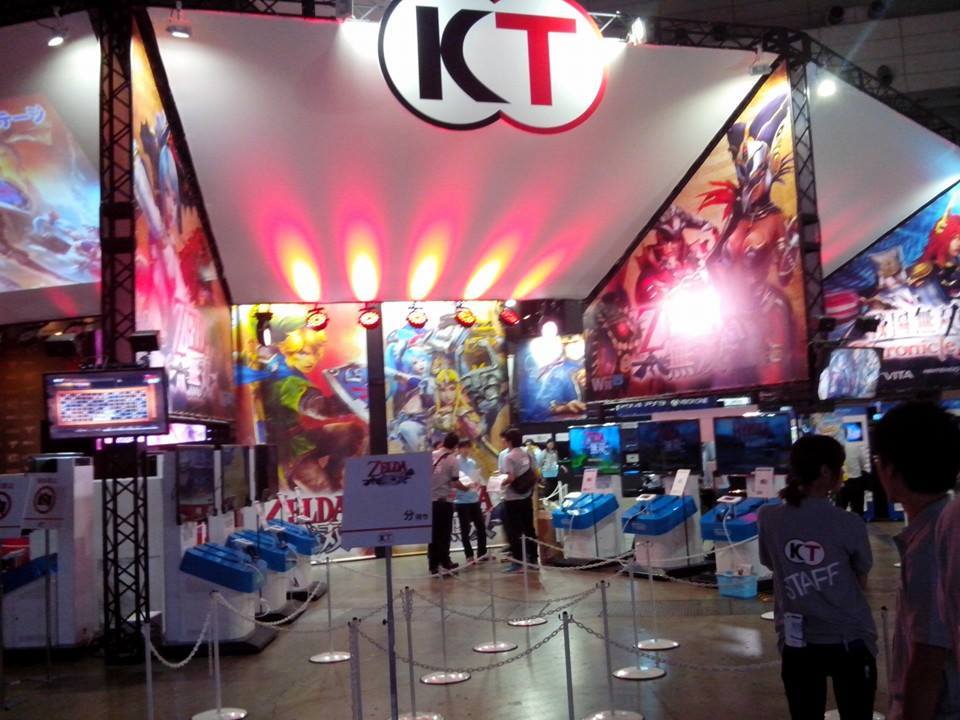
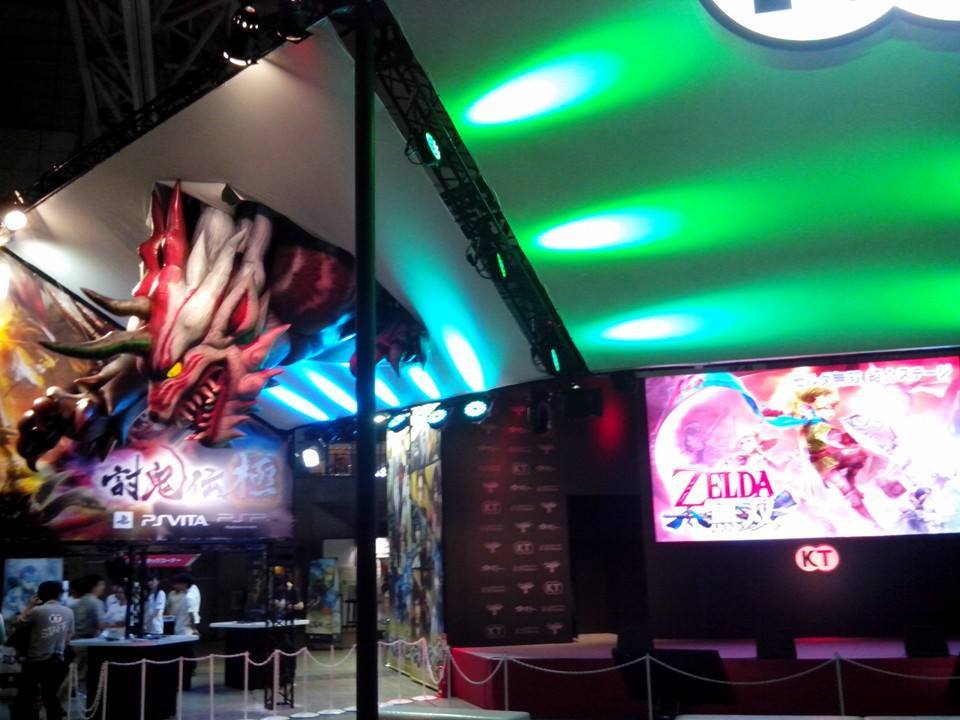
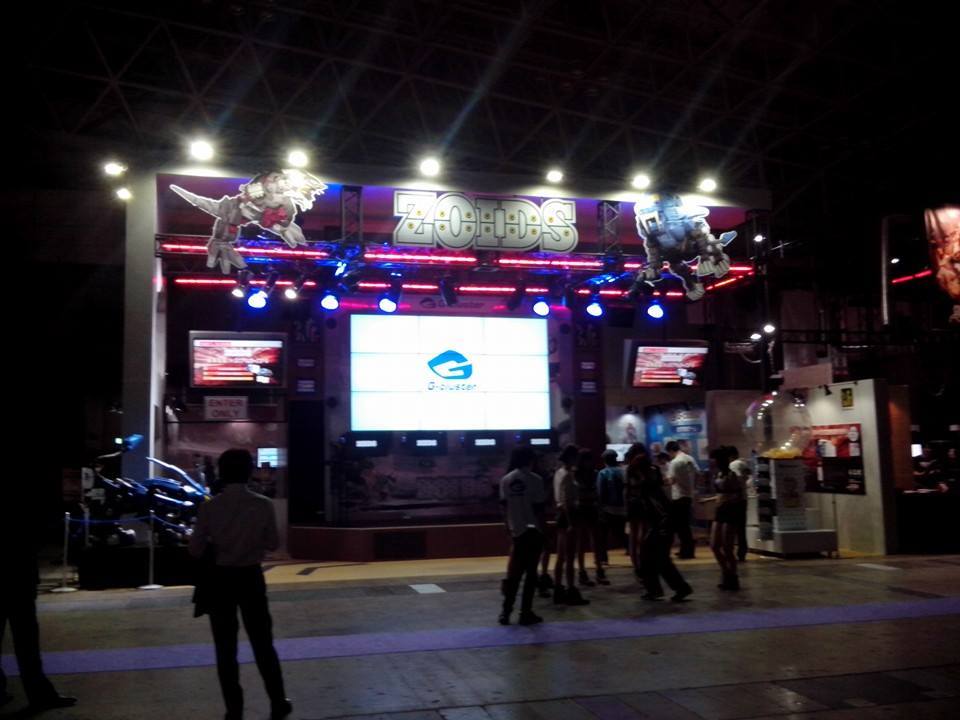
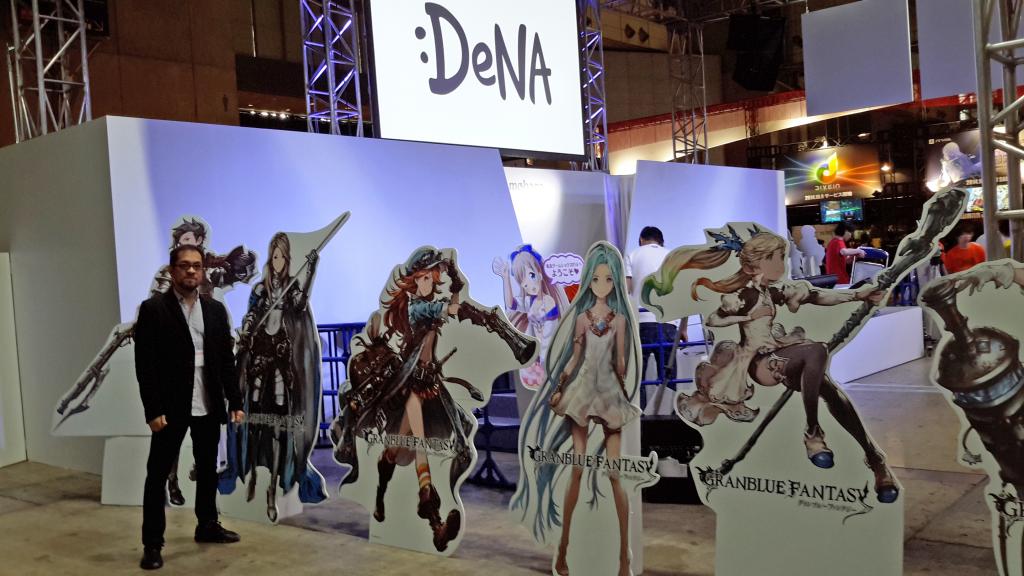
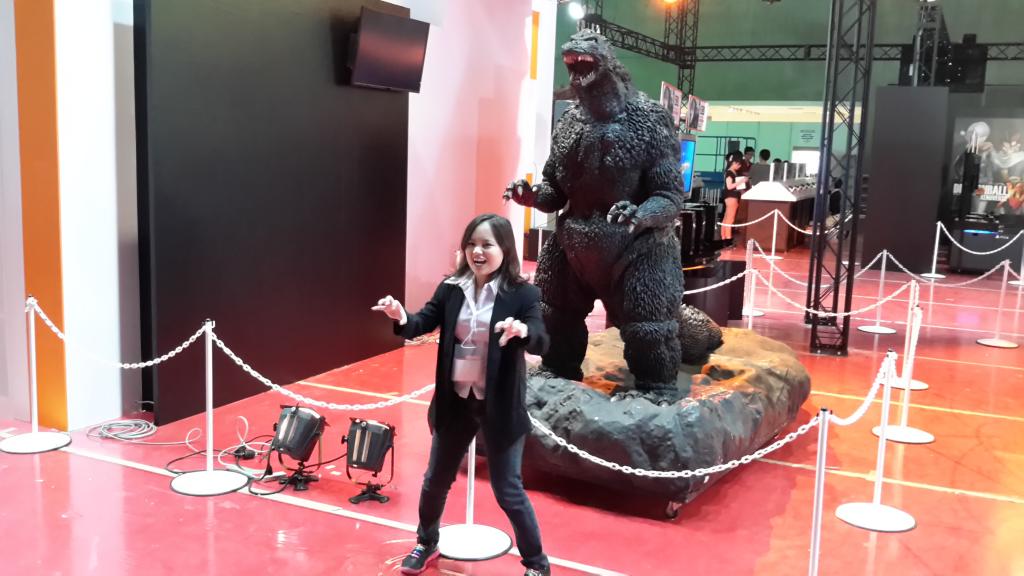
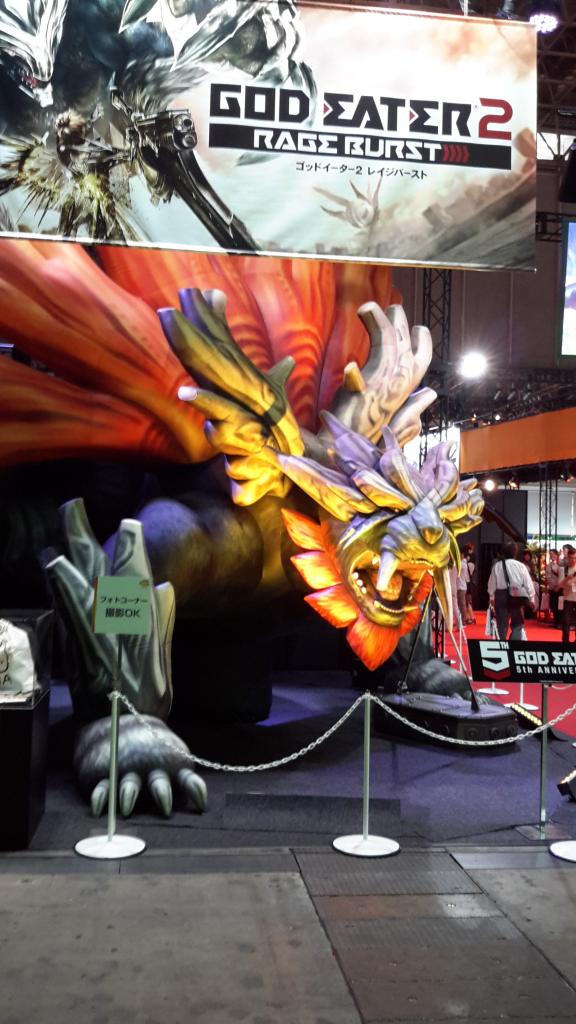
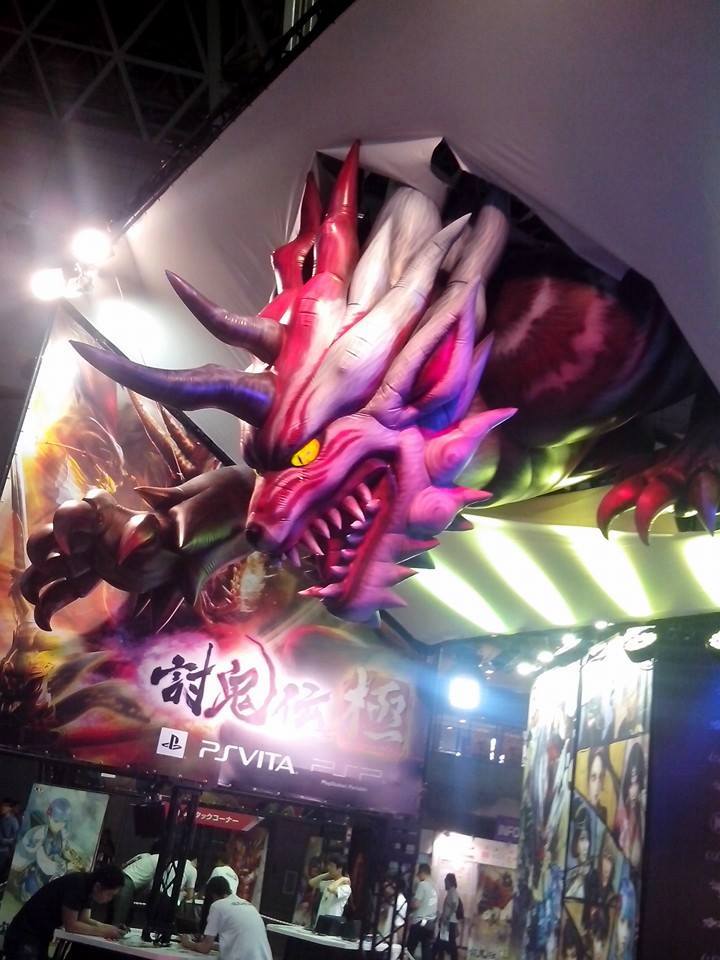
     The exhibit will enable Top Peg Animation to market their animation services for gaming companies, while at the same time give exposure to my products. I’m very excited with the exhibit as this will show not only our mobile game to prospective clients but it will also show our TV animation to the various people who might also be distributors, producers and writers for animation as well. The expected visitors for the show is about 220,000. Alstaire will also have the chance to attend seminars and take a look on what other Asean countries are doing. Other exhibitors from around the world are there from large multinationals like Sony and Microsoft and many creative independent firms. We will definitely learn a lot about gaming in this show, and from what we will learn there – we’ll apply it to our mobile game before having it programmed. Below are some of the pictures for the Tokyo Game Show 2014.

24TGSSept18103_zps114fb959

24TGSSept1848_zps62aac49d

20TGSIngress40_zpse669d616

24TGSSept187EASports_zps0af1b9d9 24TGSSept1810Dena_zps604c5e00

20TGSIngress15_zps6a8f298d20TGSIngress8Andrea_zpsb7c0d0e924TGSSept18107_zps76377ec726TGSSept1932_zpsce85b33c26TGSSept1911_zps90accc2f24TGSSept1877_zps7be319a424TGSSept1880Dragonball_zps02c0436724TGSSept18105_zpsd3f3d6f310150560_702118586531770_1258093434158544718_n     I asked Alstaire to write his experience in games and how Top Peg was invited to the Tokyo Game Show. This is his story:

How Did We Get Into Doing Game Art?

     Back in 2009, a client from New York called and scheduled to visit the studio. He said he was visiting different studios to find one that would match the style for a project. When he arrived at the studio, the first thing he asked was if we have experience in animating in Disney style or something like “Spirited Away”. We told him that the Disney style of animating was where most of us trained. They were doing a new side scrolling game based on the classic game – “A Boy and His Blob“. The story is about a boy who meets an alien blob who can transform to different objects when he is fed different flavoured jelly beans. The art director wanted an animated feel to the game. He also needed a studio to do the backgrounds for the game. He liked what he saw and we got the project.

     There were many adjustment in doing game animation from TV animation. First, the animators were limited to a specific number of drawings for each action. Like a “standing punch” should only be four drawings. Second, all the action should be returned to the same drawing, like whether it is from a “run” or “jump” animation, they should all go back to the “idle” first animation of the character. Because of this, it is strictly checked that all handouts for the different animations had the same first and last pose of the character. Third, they had a specific software that they were using, which wasn’t compatible with any other version of that software. So we had to find that specific software with the specific version as well. Finally, we had to learn how to use a drawing tablet (WACOM). It took us a week or two to finally adjust to all the requirements and the client was happy with the results, that he also had us animate the Intro Cinematic of the game.

     The game company that hired us for this game has been a regular client since then. We have done game art and animation for at least 9 games already, this includes Bloodrayne Betrayal, Batman: the Brave and the Bold the Video Game, Ducktales Remastered, Shantae Hero, A Boy and His Blob, Spider-man, Lalaloopsy and Barbie and the 3 Musketeers. The art director who visited us eventually transferred to a different game company, and because of his confidence in our work, he recommended us to supply the game art for this new company – we did another side scroller game called Pug Run. After this, we now added game art and animation to our services, after which we were able to get another game project called “Taurean Revolution” for an independent game designer from the Netherlands.

Joining GDAP

     Our game experience paved the way for us to join GDAP, or the Game Developers Association of the Philippines. Joining GDAP gave us opportunities to be invited to different game festivals and Business Networking in different countries every year. One of the events was the Games & Creative Content Networking Phils 2014 held last May 19, 2014 at the Manila Peninsula Hotel. There were 40 Japanese delegates from different game developers, animation and merchandising who were interested in establishing contact with Philippine gaming and animation companies.  Grace and I, with the help of two former Japanese clients, Mr. Hayasaki and Mr. Sekiguchi, along with their translators, Jenny and Erika, enabled us to talk to most of the Japanese companies who may need our services. But most of the companies were looking for 3D animation for their games and one company was one that produces animation for slot machine games in casinos. The said company also needed 3D animation, although they liked what we presented and they said that they will consider our services when they will need our expertise. At this event, the Tokyo Game Show 2014 was also being promoted and it was only late in July 2014 that Grace told me that I was going to the show instead of her. 

1

Mr. Sekiguchi (in white), Ms. Grace and Jenny with a Japanese exhibitor

3

Participants from GDAP and ACPI

6

Mr.Sekiguchi, Ms. Grace and organizer for the Tokyo Game Show

2

One of the Japanese speakers

7

Pierrot Co.,Ltd. – the official distributor for Naruto merchandising

8

Ms.Grace, Mr.Sekiguchi with exhibitors from Pierrot Co., Ltd

GamesampCreativeContentNetworkingPhils20147_zps3d565f80

GamesampCreativeContentNetworkingPhils20145_zpsc47ae308

The Crop Circle Warriors Mobile Game

     Back in 2012, with our experience in gaming and the advent of mobile apps for Android and iOS phones; we were imagining if “Jobert” was a video game. So it was good to hear that Edward was also interested in creating a game for Jobert and his friends. Since this will be our first in-house game, we decided on doing a mobile game and since we had some experience in side scrolling action games, this was what we decided on.

     Based on what I knew in developing a game, I created a game concept for “Jobert”, with some inputs from Edward. I used the different game documents that we had from the games that we finished and then showed it to a friend from the game industry – Martin Jimenez, who at that time was working for Kamikase, a local game company. His first feedback was that our game concept was more on the creative side and had little information on the programming side. He gave me some pointers on how to improve it, as well as suggestions to start small. He said my initial concept was a bit too big, which means expensive and time consuming to do; as I had six characters with six different powers. He even said that if he were to quote a price, it would be around P1 million and it will take a year to finish. So I went back and started to rewrite the document that would have information for both the creative and programming side and minimize the characters. The document should have the detail of the game, from the art style, different animations and physics as well (for example, what happens when the character jumps then hits the ceiling?). Also included was the storyline, the different levels, timeline and other details that would help in making the gameplay understandable to all the contractors involved.

     I finished the the document sometime in the 3rd quarter of 2013 but I needed some feedback for it. I knew that some of our voice actors in the TV series for “Jobert and the Crop Circle Warriors®” were working or worked for game companies. There is Bea Lapa (Krystel), who is an indie game developer and professor at the College of St. Benilde, Jei Vencer (Zem), who worked as a 3D animator for Anino Games a few years ago, and who is now in Singapore and Victor Cabazor (Moleth and Balhalya), who was working as a Game Developer for a local company doing mobile games. I contacted Victor since he was the most accessible at that time, and when he learned that we were doing a game for “Jobert“, he was excited that he immediately scheduled a meeting between us and his boss at his company. When I initially met him and his boss at a coffee shop in SM Megamall, the first thing he said with our game was that he was really interested in it. He also said that the document that I did still needed a lot of polishing. Victor was perfect to design the game, because he knew the story and he had connection with the characters. We agreed that he would do an Official Game Document, since that was his job as a game developer at the company he works for. The price they gave was reasonable enough and we agreed on the terms but I never gave them a copy of the game document, I just showed it to them. He said to give him 2 weeks to study it, and he will set meetings as we go along. This was the first step and it was exciting. After my first meeting with Victor, Edward was already ready to meet them and discuss the issues for the game document for the next meeting.

    Around November 2013,while we were waiting for the next schedule for a meeting with Victor and his co-workers; Victor suddenly had a heart attack and died. After this event, we haven’t heard from Victor’s boss, even though I emailed him for a follow up. As of now, I still have the original game document that I created, hopefully we’ll get another game designer to start our vision for the game after the Tokyo Game Show.


Design a site like this with WordPress.com
Get started